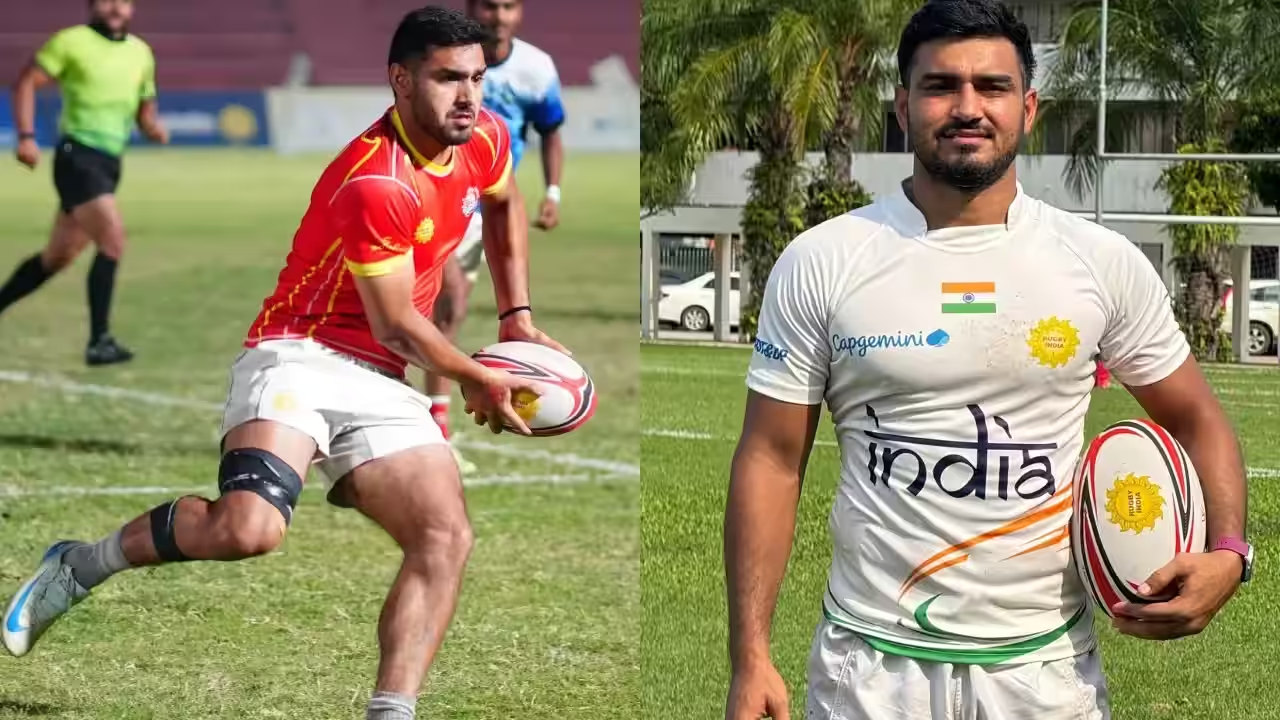
Chandigarh: Haryana is wrestling country. Everyone knows that. So when a kid from Kundli village in Sonipat district ends up chasing an Olympic dream in rugby of all sports, it’s worth asking how that happened — and the answer, in Mohit Khatri’s case, comes down to a mix of family influence, a lot of losing before winning, and sheer stubbornness.
It Started With His Brother

Mohit didn’t set out to play rugby. Like most kids in his neighbourhood, his weekends belonged to football. What changed things was his older brother, Vikas Khatri — who went on to captain the Indian rugby team himself — dragging him along to a training session one day. Mohit barely understood the rules at the time. He just liked being on the field. That casual curiosity slowly turned into something closer to obsession: first a hobby, then a daily habit, and eventually a full-blown career that would put him in India’s national jersey.
The Delhi Hurricanes Years — and a Lot of Losses
Trying to be a little more serious, Mohit set his eyes on the Delhi Hurricanes club, the same one his brother trained at. He joined it and started learning the game properly under experienced coaches. It was from this point onwards that he worked his way up through club rugby before eventually pulling on a Haryana jersey at the state level.
It wasn’t smooth going. His early years were rough — tournament after tournament ended in defeat, and there were stretches where it tested not just his own confidence but the whole team’s morale. But instead of packing it in, the losses became fuel. He and his teammates leaned into training harder, sharpening the parts of their game that kept letting them down.
The Breakthrough
That grind paid off in 2015, when Mohit won gold at the School Nationals — the moment that changed the trajectory of his career. It cemented his reputation at the state level and, soon after, opened the door to his first call-up for the Indian team.

Since then, he’s built a solid place for himself in the national setup, with backing from the Sports Authority of India, the national rugby federation, and various government sports schemes. A sports-quota job with the postal department has also given him something rare for an athlete in a non-mainstream sport in India: financial stability, without having to step away from the game.
What the Coach Sees in Him
India’s head coach, Paul Albaladejo, doesn’t hold back when talking about Mohit’s value to the squad — pointing to his pace, his technical game, and the calm he brings when matches get tight against tougher opponents. Albaladejo has also been vocal about where Indian rugby stands more broadly: there’s real room to grow, he says, and consistent results on the big stage are what will finally get the sport more attention back home.
Eyes on Suzhou — and Beyond
Right now, the team’s focus is the Asia Rugby Sevens Series 2026, which kicks off in Suzhou, China, on August 29. Mohit is honest about where India stands compared to regional powerhouses like Japan and China — there’s still a gap — but he thinks it’s closing, pointing to things like the Rugby Premier League and better training infrastructure as real drivers of that progress.
But the tournament in Suzhou isn’t the real target. Ask Mohit what he actually wants, and it’s the Olympics — pulling on the India jersey and hearing the national anthem play at the world’s biggest sporting stage. That’s the goal everything else is building toward. And for a sport still fighting for space in a country obsessed with cricket, his story is as much about what structured support and stubborn persistence can do for an athlete as it is about rugby itself.