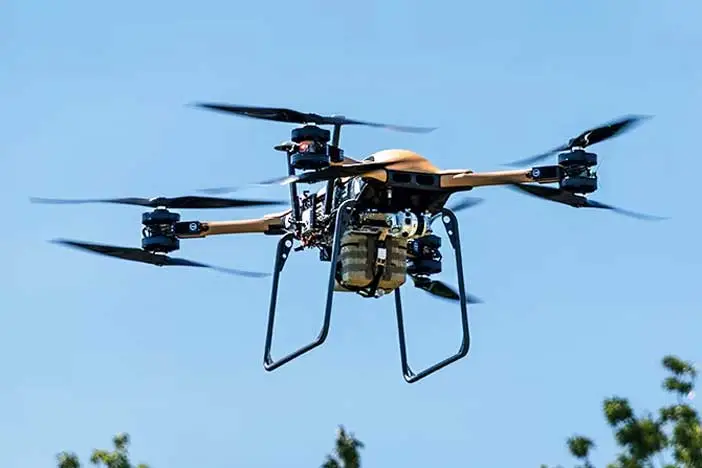
Pittsburgh: The Naval Air Systems Command (NAVAIR) has awarded a contract to Near Earth Autonomy to develop advanced autonomous systems for uncrewed ship-to-shore and shore-to-ship operations, marking a major step toward strengthening naval logistics in contested environments.
The agreement, executed under the Naval Aviation Systems Consortium, is designed to enhance the United States Marine Corps capability to conduct resilient logistics missions using autonomous aircraft, even in high-risk and infrastructure-denied scenarios.
Reducing Dependence on GPS
A key focus of the project is to enable uncrewed aerial systems (UAS) to function effectively without relying on GPS or constant communication links. In modern conflict zones, such systems are often disrupted, posing significant operational challenges.
Near Earth Autonomy’s solution is aimed at overcoming these limitations by enabling aircraft to independently carry out complex logistics missions, including transfers between ships and shore, even in electronically contested environments.
Firefly System at the Core
Central to the initiative is the Firefly autonomy system, a lightweight and adaptable platform weighing just around two pounds. Designed to integrate with multiple aircraft types, it can support a wide range of uncrewed platforms and missions.
The system has already demonstrated compatibility with several defense platforms, highlighting its flexibility and potential for widespread deployment. Under the contract, its capabilities will be further enhanced to include:
- Autonomous operations in confined spaces
- Ship landing and recovery in emission-controlled environments
- Navigation without GPS support
Advancing Autonomous Innovation
The Firefly system builds on more than a decade of innovation by Near Earth Autonomy in the field of aerial robotics. Earlier programs focused on enabling autonomous cargo delivery for military missions, particularly in challenging and remote environments.

This latest development represents a continuation of those efforts, expanding into maritime operations and supporting next-generation logistics concepts for the U.S. military.
Testing and Demonstration Planned
The program includes a series of rigorous test phases to validate system performance and refine operational capabilities. A major demonstration is scheduled later in 2026 at Naval Air Station Patuxent River, where the system will be tested in realistic operational scenarios.
These trials are expected to showcase capabilities such as ship tracking, autonomous landings on moving vessels, and night-time operations.
Strengthening Future Naval Operations
As naval forces increasingly operate in contested and GPS-denied environments, the need for reliable and flexible logistics solutions continues to grow. The new contract signals a shift toward greater adoption of autonomous technologies that can sustain operations without traditional infrastructure.
With this initiative, NAVAIR aims to pave the way for uncrewed systems capable of independently executing complex supply missions, ensuring operational continuity and enhanced mission effectiveness in future maritime conflicts.