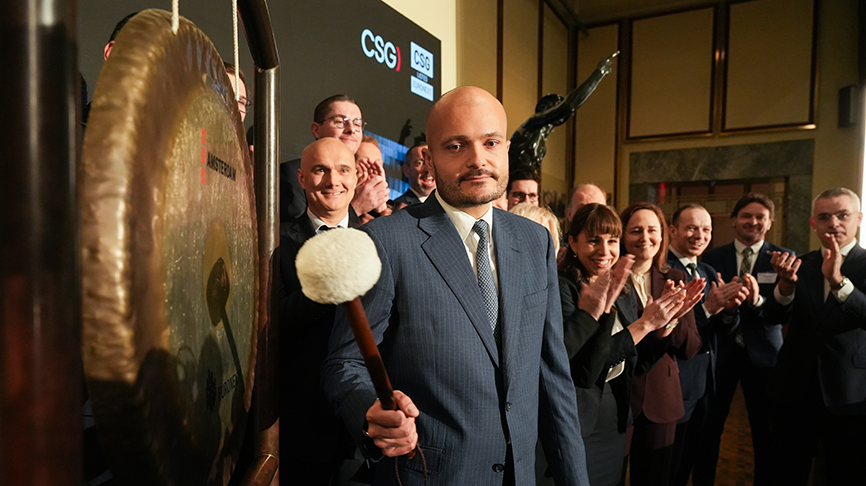
Prague– The Czech Republic’s defence industry has witnessed a remarkable rise in recent years, highlighted by the successful stock-market listing of the Czechoslovak Group (CSG). The January 2026 IPO on Euronext Amsterdam valued the company at €25 billion, rising to €32 billion shortly after, and raised €3.8 billion to fund further expansion and acquisitions. The listing marked the largest defence IPO ever recorded and made CSG the most valuable publicly listed company in the Czech Republic.
CSG, which began in the 1990s trading surplus military equipment following the Warsaw Pact’s dissolution, has evolved into a major supplier of military equipment for NATO allies and other nations. Today, it is Europe’s second-largest producer of medium- and large-calibre ammunition and the world’s largest manufacturer of small-calibre ammunition, operating 39 production facilities across eight countries, including Italy, Spain, Slovakia, the US, and the Czech Republic. The group also produces infantry fighting vehicles, artillery, heavy trucks, radars, and aerospace systems.
Other Czech defence firms are growing rapidly as well. Colt CZ manufactures firearms, small-calibre ammunition, and nitrocellulose, with facilities in North America and Europe, and has begun assembling Bren 2 rifles in Ukraine. Omnipol develops electronic-warfare systems, trainer jets, and transport aircraft, while PBS Group produces advanced jet engines for unmanned aerial systems and guided missiles, recently opening a plant in Georgia, US.
The war in Ukraine has been a key driver of this growth. Between 2022 and 2025, Czech defence exports surged from €0.6 billion to over €4.1 billion, with the Czech Ammunition Initiative and EU-backed military support playing a pivotal role. Defence spending rose from CZK 89.1 billion (€3.65 billion) in 2022 to CZK 154 billion (€6.3 billion) in 2025, while Czech companies increasingly offered full vertical integration, particularly in ammunition production.

Despite this success, challenges remain. Domestic demand is limited, meaning Czech companies rely heavily on exports, with 90% of revenue now from foreign markets. The post-war future of Ukraine as a customer is uncertain, and Czech firms will need to find alternative markets or partnerships. Limited government support for defence exports and R&D, as well as a relative lack of experience in EU defence programmes, further constrain growth.
Analysts note that sustaining momentum will require continued European demand for Czech products and better access to EU defence funding under the Multiannual Financial Framework. With these factors in place, the Czech Republic could solidify its position among Europe’s leading defence producers.