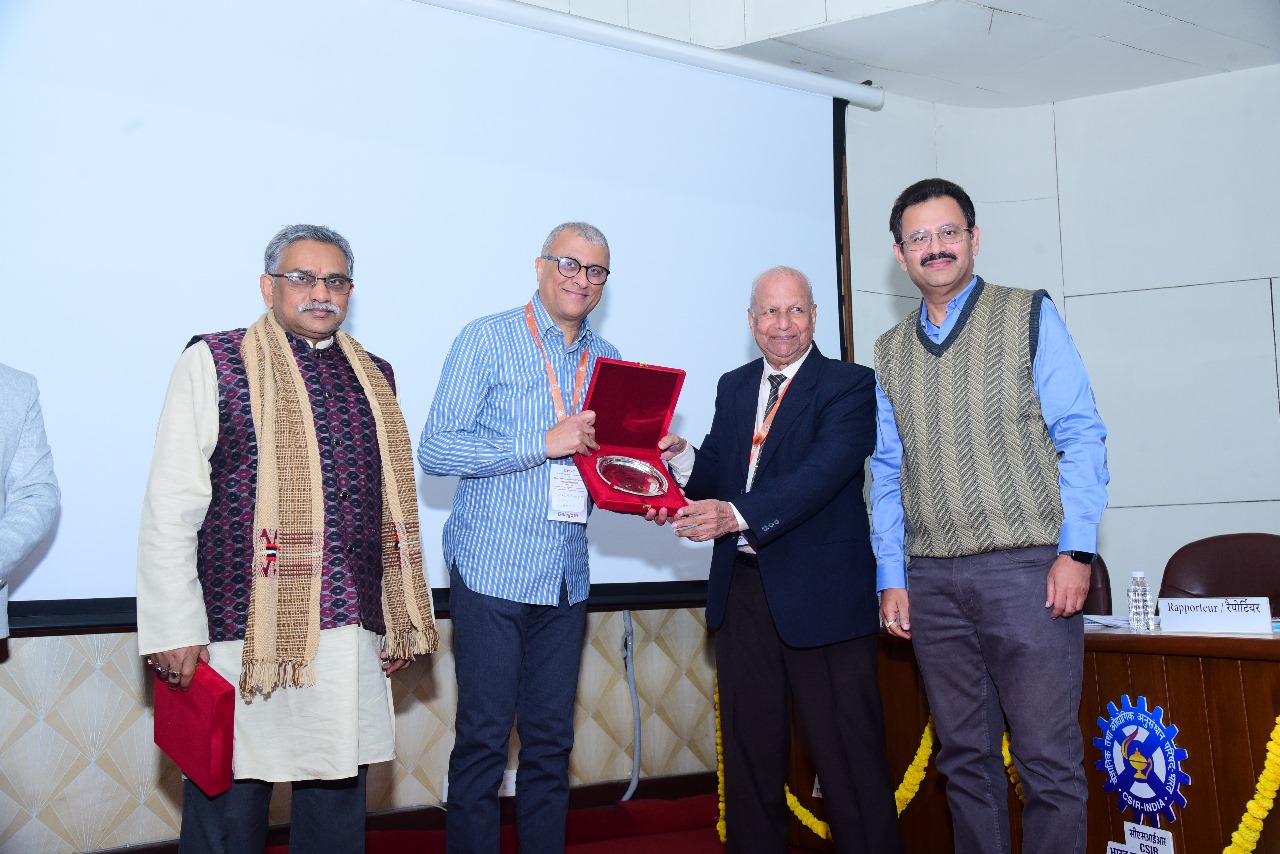
Lucknow: The second day of the 7th International Conference on Plants and Environmental Pollution (ICPEP-7), held at CSIR–National Botanical Research Institute, Lucknow featured a wide-ranging scientific dialogue enriched with international contributions. The morning began with Poster Session II, covering vital themes such as biodiversity conservation, bioeconomy and sustainable development goals, ethnobotany for food and nutritional security, and floriculture in changing climate scenarios, reflecting significant research engagement.
This was followed by a plenary session with eminent experts, including Dr. Jason C. White, Director, The Connecticut Agricultural Experiment Station, USA, who joined online and presented insights on nanobiotechnology-driven crop stress resilience; Dr. Ajit K. Shasany, Director, CSIR-NBRI, India, who discussed leveraging plant innate immunity for climate resilience; and Prof. Rishikesh Bhalerao, Swedish University of Agricultural Sciences (SLU), Sweden, who also joined online and addressed climatic impacts on plant ecosystems and adaptation strategies.

Throughout the day, the conference hosted multiple technical sessions spanning critical research domains such as biodiversity and palaeosciences, bioeconomy strategies, nature-based technologies, environmental microbiology, and assessments of emerging environmental threats like microplastic contamination, enabling comprehensive interpretation of global environmental challenges.
A special technical segment sponsored by the U.P. State Biodiversity Board featured distinguished speakers including Prof. Puneet K. Dwivedi of Clemson University, USA, discussed sustainable aviation fuel derived from wood waste using integrated supply chain perspectives; Dr. B. Prabhakar, Principal Chief Conservator of Forests (Monitoring & Working Plans), Uttar Pradesh and Secretary, UP State Biodiversity Board, emphasized local governance roles in biodiversity conservation; Dr. Ayyanadar Arunachalam, Director, ICAR-Central Agroforestry Research Institute, India, highlighted agroforestry interventions for food and ecological security; and Prof. Mahesh G. Thakkar, Director, Birbal Sahni Institute of Palaeosciences (BSIP), India, linked palaeoscientific evidence with future environmental projections.

Day 2 collectively witnessed 10 plenary lectures, 11 invited talks, and 24 oral presentations, featuring scholars from noted institutions such as Lincoln University (USA), IIT Kharagpur (India), Sher-e-Bangla Agricultural University (Bangladesh), Banaras Hindu University (India), and others, illustrating a deep multi-institutional and international scientific collaboration. The sessions reflected ongoing progress in ecosystem resilience, climate-informed crop development, soil remediation, resource-efficient agriculture and community-integrated conservation, strengthening ICPEP-7’s role as a global hub for environmental scholarship and applied botanical science.
The conference will be concluded on 02 December 2025 with a valedictory session. Awanish Kumar Awasthi, IAS & Advisor to CM of UP is expected to grace the occasion as Chief Guest.







 ---------------------------------------------------------------------------------------------------