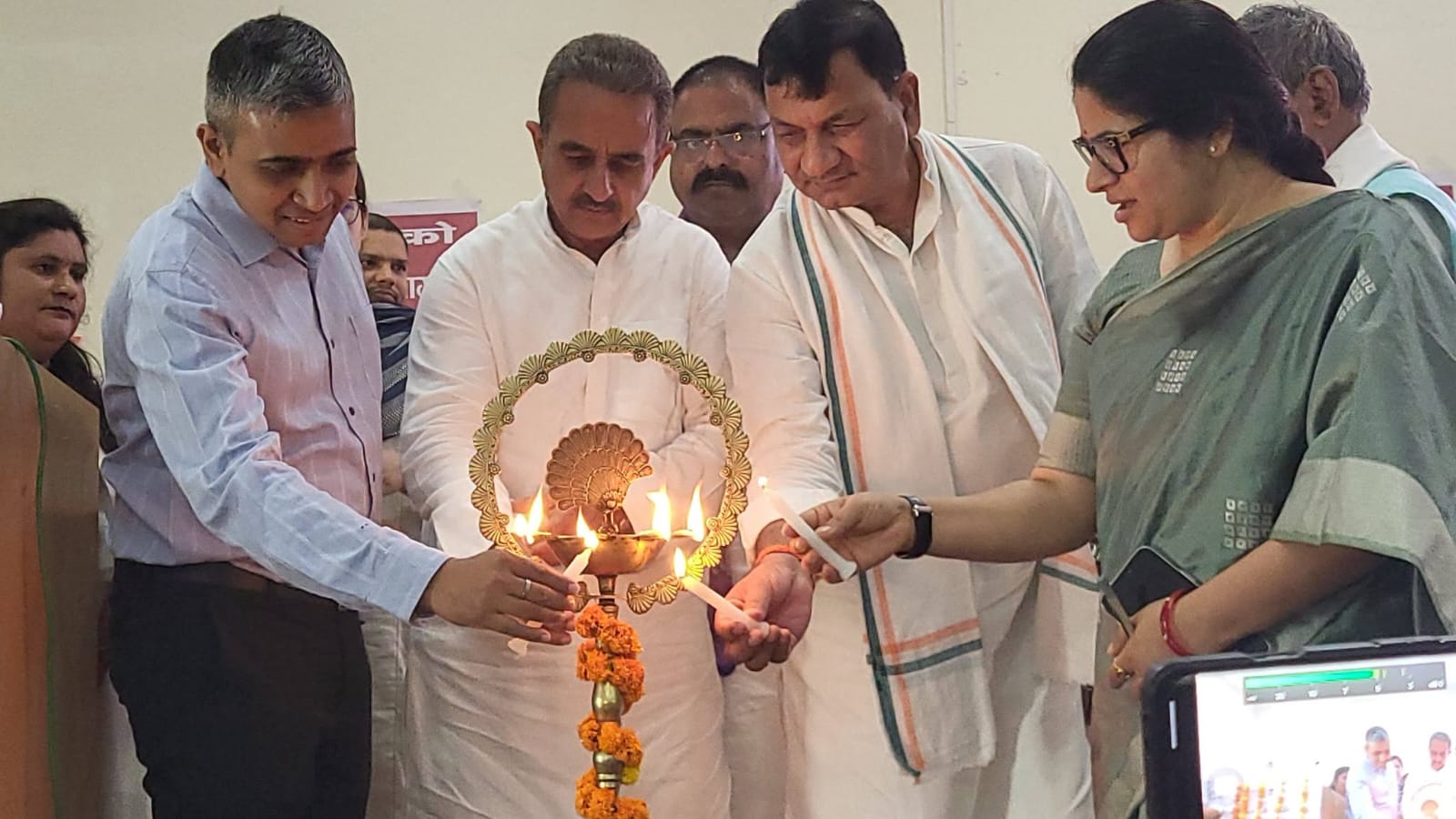
Gonda: In a major initiative aimed at promoting empowerment, mobility, and social inclusion for persons with disabilities, 709 beneficiaries received a total of 1,030 assistive devices at a Social Empowerment Camp organized under the Government of India’s Assistance to Disabled Persons (ADIP) Scheme.
The camp, organized by the Artificial Limbs Manufacturing Corporation of India (ALIMCO) at the auditorium of the Autonomous State Medical College, Gonda, was presided over by Kirti Vardhan Singh, Member of Parliament from Gonda and Minister of State for External Affairs, Government of India.

Wide Range of Assistive Devices Distributed
The beneficiaries were provided assistive devices tailored to their individual needs. The distribution included:
- 233 motorized tricycles
- 335 tricycles
- 72 folding wheelchairs
- 326 crutches
- 10 CP chairs
- 187 walking sticks
- 29 accessible canes
- 46 hearing aids
- 50 cushion supports
- 1 Activities of Daily Living (ADL) kit
- 4 Teaching Learning Material (TLM) kits
- 1 smartphone
- 8 rollators
- 55 foldable walkers
The beneficiaries had been identified and assessed during evaluation camps conducted between January 15–22, 2025, and May 6–12, 2026.
Government Committed to Disability Empowerment
Addressing the gathering, Kirti Vardhan Singh said that under the leadership of the Prime Minister, thousands of ADIP camps have been organized across the country to enhance the dignity, independence, and empowerment of persons with disabilities.
He noted that modern assistive devices are helping millions of beneficiaries lead more independent lives and participate more actively in education, employment, and social activities. Emphasizing the government’s commitment to inclusive development, he said understanding the challenges faced by persons with disabilities and providing appropriate support is a shared responsibility of both the government and society.
The Minister directed officials to ensure that all eligible beneficiaries who could not receive assistive devices during the current camp are given priority in future distribution drives. He instructed the district administration to identify and prepare a comprehensive list of all remaining eligible beneficiaries so that no deserving individual is left out of the scheme.
He also revealed that efforts are underway to develop a special card for persons with disabilities to facilitate easier access to government schemes and services.

District Administration to Conduct Fresh Survey
District Magistrate Priyanka Niranjan reaffirmed the administration’s commitment to ensuring that no eligible person with a disability is deprived of welfare benefits. She said beneficiaries are being identified through coordinated efforts between ALIMCO and various government departments to provide assistance according to individual needs.
In line with the Minister’s directions, she announced that a fresh survey would be conducted to identify remaining eligible beneficiaries, enabling them to receive assistance during upcoming camps. She also instructed concerned departments to ensure timely and transparent delivery of disability welfare schemes.
Encouraging Independence and Inclusion
At the conclusion of the programme, the Minister flagged off beneficiaries who received motorized tricycles and other mobility aids, wishing them a brighter and more self-reliant future. Speakers at the event highlighted that modern assistive devices not only improve mobility and accessibility but also help persons with disabilities lead dignified and independent lives.
The programme was conducted by Yoga Acharya Anjani Kumar Dubey.
Among those present were Ramapati Shastri, MLA from Mankapur; Prabhat Verma, MLA from Gaura; District Magistrate Priyanka Niranjan; Chief Development Officer Dayanand Prasad; BJP District President; Additional District Magistrate Alok Kumar; district officials from various departments; ALIMCO representatives; public representatives; and a large number of beneficiaries and their family members.
The camp marked another significant step toward strengthening disability inclusion and ensuring that assistive technology reaches those who need it most, enabling greater participation in social and economic life.




 ---------------------------------------------------------------------------------------------------