Calls for stronger collaboration between civilian innovation and defence needs as AI, quantum technologies, biotechnology and space capabilities redefine future warfare

New Delhi: Union Minister of State (Independent Charge) for Science & Technology, Dr. Jitendra Singh, has said that the future of national security will be determined by the convergence of emerging technologies, including Artificial Intelligence (AI), quantum technologies, biotechnology and space-based capabilities, as warfare increasingly moves beyond traditional battlefields into the realm of advanced technological operations.
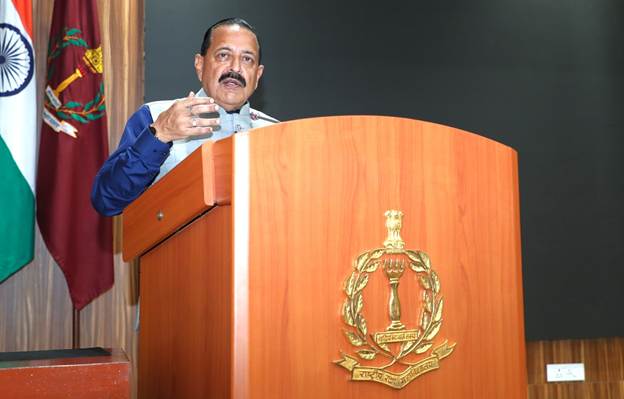
Addressing senior officers and course participants at the National Defence College (NDC) in New Delhi, Dr. Singh delivered a special lecture on “Future Trajectory of Science & Technology and its Impact on National Security.” He emphasized that scientific and technological innovation has become a central pillar of national resilience, economic strength and strategic preparedness.
Technology at the Core of Modern Warfare
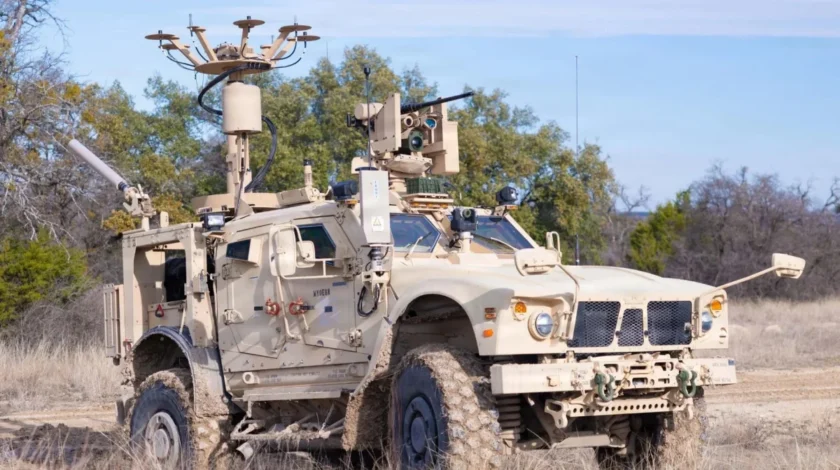
Dr. Singh noted that modern conflicts are no longer decided solely by military strength but increasingly by technological superiority. Advanced systems in communications, surveillance, space technology, precision targeting and strategic decision-making are now shaping outcomes on the battlefield.
He said India must stay ahead of the technological curve to effectively address emerging security challenges and safeguard its strategic interests in a rapidly evolving global environment.
India’s Defence Transformation
Highlighting India’s progress in defence self-reliance, the Minister said the country has made significant strides in reducing dependence on imported military systems while strengthening indigenous innovation.
According to Dr. Singh, defence production has grown substantially over the past decade, reaching nearly ₹1.54 lakh crore, while defence exports have expanded dramatically to more than ₹23,000 crore. He credited the increasing participation of private industry as a major contributor to this growth, noting that private companies now account for a significant share of India’s defence exports.
He also pointed to the contribution of over 16,000 MSMEs and hundreds of startups working in defence manufacturing and technology development, describing the sector as a model for aligning innovation, entrepreneurship and national security objectives.
AI, Quantum and Biotechnology to Shape Future Security
Dr. Singh identified Artificial Intelligence, Quantum Technologies and Biotechnology as the key pillars of future security architecture.
He said AI-powered autonomous systems, intelligent surveillance networks, predictive analytics and advanced decision-support mechanisms will transform military operations, logistics, training and threat assessment.

On quantum technologies, he highlighted the importance of quantum sensing, secure communications and quantum cryptography in strengthening strategic capabilities. Referring to India’s National Quantum Mission launched in 2023, he said the initiative reflects the country’s commitment to becoming a global leader in next-generation computing and secure communication systems.
The Minister also stressed the growing significance of biotechnology and synthetic biology in addressing emerging biosecurity challenges. Continuous innovation in life sciences, he said, will be essential to prepare for future health and security threats.
Three Priorities for India’s Security Framework
Outlining the roadmap for the future, Dr. Singh said India’s security strategy should focus on three major priorities:
- Predictive and proactive threat management
- Protection of digital and cyber infrastructure
- Greater self-reliance in strategic technologies and supply chains
He noted that emerging technologies would enable dynamic threat detection, autonomous response systems and stronger cybersecurity frameworks capable of protecting national interests in an interconnected world.
Need for Civil-Military Innovation Ecosystem
The Minister called for deeper collaboration among government agencies, industry, academia, startups and research institutions to accelerate innovation and convert scientific breakthroughs into deployable solutions.
He stressed that India’s long-term strength will depend on creating an ecosystem where civilian technological advancements and military requirements evolve together. Such a model, he said, would not only strengthen national security but also position India as a leading technology-driven economy and a trusted global partner in advanced strategic technologies.
Tribute to the Armed Forces
Dr. Singh also praised the contributions of India’s Armed Forces, acknowledging their role not only in safeguarding national borders but also in disaster relief, emergency response and humanitarian missions.
“Their dedication and sacrifice continue to strengthen the fabric of national life,” he said.
The address concluded with an interactive discussion on emerging technologies, innovation-led security strategies and the evolving challenges facing national security in the twenty-first century.