Admission Within 24 Hours Mandatory to Avail Benefits
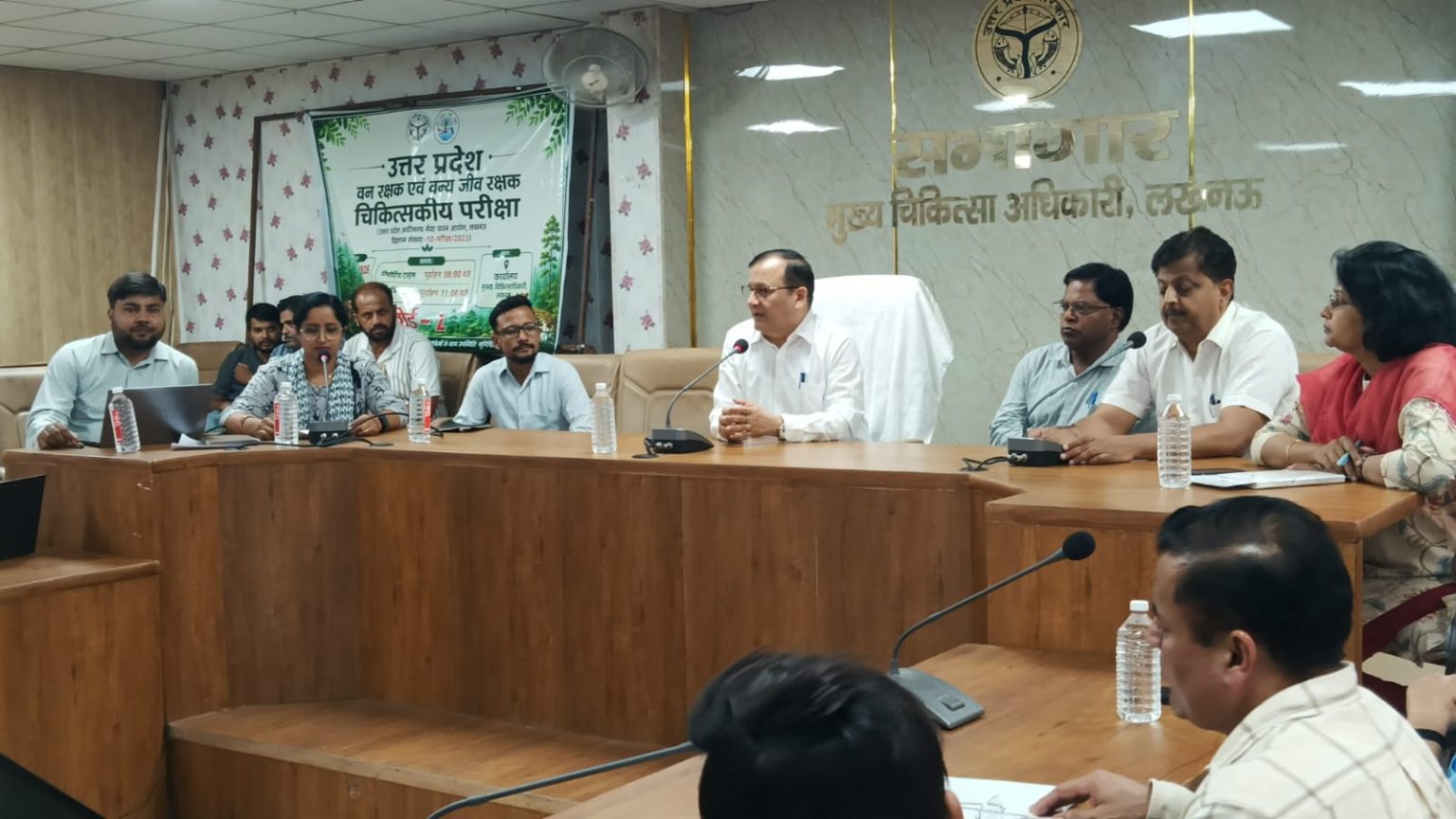
Lucknow: A comprehensive cashless treatment scheme for road accident victims has been rolled out to ensure timely medical care and reduce financial burdens on affected families. To facilitate the effective implementation of the PM-Rahat (Prime Minister Road Accident Victim Hospitalisation and Assured Treatment) Scheme, a one-day training workshop was organized at the auditorium of the Chief Medical Officer’s Office in Lucknow.
Addressing the workshop, Dr. N.B. Singh, Chief Medical Officer, Lucknow, described the PM-Rahat Scheme as a significant initiative aimed at providing immediate and cashless medical treatment to road accident victims.

He emphasized that hospitals, police authorities, and other concerned agencies must work in close coordination and strictly follow prescribed procedures to ensure that eligible beneficiaries receive timely assistance under the scheme.
During the training session, officials informed participants that road accident victims would be entitled to cashless medical treatment of up to ₹1.5 lakh for the first seven days following the accident. The scheme will cover eligible victims of road accidents occurring on national highways, state highways, and urban roads alike.
Under the programme, hospitals will receive reimbursement for treatment expenses from the Motor Vehicle Accident Fund, while the entire process has been integrated with a digital platform to ensure transparency and efficiency.
Officials highlighted that one of the primary objectives of the scheme is to provide quality treatment during the crucial “Golden Hour” immediately after an accident, significantly improving the chances of survival and recovery.
The workshop also clarified that PM-Rahat will be the primary treatment mechanism for eligible road accident victims. Even if a patient possesses an Ayushman Bharat card, admission and treatment will first be processed under the PM-Rahat Scheme.

A key eligibility condition discussed during the session was that victims must be admitted to a hospital within 24 hours of the accident. Patients admitted beyond this stipulated period will not be eligible for benefits under the scheme.
Experts further explained that for a victim to receive the benefits, the police must generate a Victim ID through the eDAR (Electronic Detailed Accident Report) System within the prescribed timeframe. Failure to create the Victim ID may lead to delays or difficulties in accessing the scheme’s benefits.
The workshop therefore stressed the importance of seamless coordination between hospitals and law enforcement agencies to ensure timely registration, verification, and treatment of accident victims.
Participants were also trained on technical and procedural aspects of the scheme, including registration on the eDAR portal, Victim ID generation, claim processing, reporting requirements, and treatment documentation. The entire workflow—from reporting an accident and hospital admission to police approval and reimbursement procedures—was explained in detail.
Among those present at the workshop were Dr. Anil Kumar Srivastava, Additional Chief Medical Officer; Dr. Kislay Vajpayee, Nodal Officer, Ayushman Bharat Scheme; Dr. Namita Verma, OSD, Lead Medical Health Agency, Road Safety, Transport Commissioner’s Office, Lucknow; Inderjit Singh, TSI In-charge, Police Department; Wazir Ali, DRM IRAD-DAR, NIC; Dr. Deepti Kaushal; Vivek Chitransh, District Grievance Manager; Masarrat Jama Khan, District Information System Manager; representatives from the Implementation Support Agency including Sanchit; and members of the BFA team, including Ayushman Mitras Sheezan Sadar and Wazir.
Officials expressed confidence that the PM-Rahat Scheme will strengthen emergency medical response systems and ensure that road accident victims receive prompt, quality healthcare without worrying about immediate treatment costs.