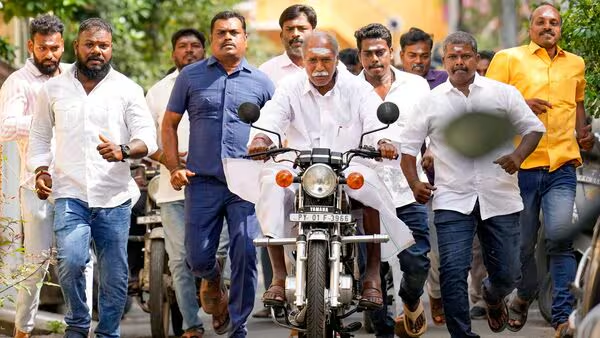
Puducherry | The 2026 Assembly election in the Union Territory of Puducherry delivered a decisive mandate in favour of continuity, with the ruling alliance led by N. Rangasamy returning to power for a second consecutive term. The counting of votes, which began at 8:00 am on May 4 across six designated centres, confirmed that the National Democratic Alliance (NDA), anchored by the All India NR Congress (AINRC) and supported by the Bharatiya Janata Party (BJP), had successfully retained control of the 30-member Assembly.
The result came after a high-voltage campaign and an intensely contested triangular battle involving the Congress-DMK-led opposition bloc and other regional players. Ultimately, a combination of governance record, leadership continuity, and a strong pro-incumbency wave helped the NDA overcome the challenge and reaffirm its political dominance in the Union Territory.

Counting Day: Early Leads Turn into Clear Victory
The counting process began with postal ballots at 8:00 am, followed by Electronic Voting Machine (EVM) votes at 8:30 am. Security was tight across all counting centres, including key locations such as the Women’s Engineering College in Lawspet and Motilal Nehru Government Polytechnic College.
Early trends showed the AINRC gaining momentum, leading in multiple constituencies within the first hour. By mid-morning, the NDA had established a clear edge, with leads widening steadily as more rounds were counted.
By afternoon, it became evident that the NDA would return to power. Chief Minister N. Rangasamy himself led comfortably in his constituency, while several key candidates from both AINRC and BJP registered decisive victories.
Electoral Context: A Competitive Political Landscape
Elections to all 30 Assembly constituencies in Puducherry were held in a single phase on April 9, 2026. The poll saw a remarkable voter turnout of nearly 90%, reflecting high levels of public engagement across the four regions of the Union Territory—Puducherry, Karaikal, Mahe, and Yanam.
The contest was primarily triangular:
- The ruling NDA, led by AINRC and BJP
- The opposition INDIA bloc, comprising the Indian National Congress and Dravida Munnetra Kazhagam (DMK)
- Smaller parties and independents, including regional outfits
Despite internal friction within the opposition alliance, the Congress-DMK combine mounted a strong campaign to unseat the incumbent government. However, the NDA’s cohesive strategy and organizational strength ultimately proved decisive.
Key Results and Constituency Highlights
Among the most closely watched contests was Chief Minister N. Rangasamy’s seat in Thattanchavady. He secured victory with a margin of over 4,400 votes, reaffirming his personal popularity and leadership appeal.
In Mannadipet, BJP leader A. Namassivayam registered a significant win, defeating his Congress rival by over 6,000 votes—an improvement over his previous margin and a sign of growing support for the BJP in the territory.
Other notable victories included AINRC candidates:
- E. Mohandoss in Embalam
- P. Rajavelu and several others across key constituencies
These wins collectively strengthened the NDA’s tally, ensuring a stable majority in the Assembly.
Leadership and Campaign Strategy
The NDA’s campaign was built around the leadership of N. Rangasamy, whose governance style and grassroots connect have remained central to the AINRC’s appeal. Often regarded as a pragmatic administrator, Rangasamy focused on welfare delivery, administrative stability, and development initiatives.
The BJP complemented this with organizational support and the projection of central government schemes. Campaign messaging emphasized continuity, infrastructure development, and welfare benefits.
Prime Minister Narendra Modi had earlier highlighted the vision of a “Best Puducherry,” a theme that resonated with voters and was reiterated during the campaign.
Opposition Challenge and Limitations
The opposition INDIA bloc, led by the Congress and DMK, attempted to capitalize on anti-incumbency sentiments. Their campaign focused on issues such as governance gaps, local development concerns, and economic challenges.
However, internal differences within the alliance and fragmented voter support limited its effectiveness. While the opposition secured pockets of support, it failed to build the momentum required to dislodge the incumbent government.

Statements from leaders like Rahul Gandhi acknowledged the efforts of party workers, but the outcome highlighted the challenges facing the opposition in consolidating votes.
National Reactions: NDA Celebrates Momentum
The Puducherry result was part of a broader electoral cycle that included major state elections across India. Reacting to the outcome, Prime Minister Narendra Modi described the results as a reflection of the strength of Indian democracy, pointing to high voter participation across states.
Senior leaders, including Nirmala Sitharaman and Rajnath Singh, thanked the people of Puducherry for their support, emphasizing trust in the NDA’s governance model.
Union Minister Piyush Goyal also expressed gratitude, noting that the mandate reflected confidence in development-oriented policies and welfare initiatives.
Why NDA Won: Key Factors
1. Leadership Stability
N. Rangasamy’s leadership provided continuity and credibility. His reputation for accessibility and governance played a crucial role in voter confidence.
2. Pro-Incumbency Wave
Unlike many elections where anti-incumbency dominates, Puducherry witnessed a pro-incumbency trend, with voters rewarding perceived performance and stability.
3. Effective Alliance Coordination
The synergy between AINRC and BJP ensured efficient campaign management and voter mobilization.
4. Welfare and Development Focus
The NDA’s emphasis on welfare delivery, infrastructure, and administrative efficiency resonated with voters across regions.
5. Opposition Fragmentation
Despite forming an alliance, the opposition struggled with internal cohesion and failed to present a unified alternative narrative.
Broader Significance
The 2026 Puducherry election holds importance beyond the Union Territory:
- It reinforces the NDA’s growing influence in southern India
- It highlights the effectiveness of regional leadership aligned with national support
- It underscores the importance of governance delivery in shaping voter preferences
The result also complements the NDA’s performance in other states, contributing to a broader narrative of political momentum at the national level.
Challenges Ahead
While the victory is decisive, the new government faces several challenges:
- Economic Development: Enhancing employment opportunities and attracting investment
- Infrastructure Needs: Improving urban and rural connectivity
- Regional Balance: Addressing the unique needs of Karaikal, Mahe, and Yanam
- Social Welfare: Sustaining and expanding welfare programs
Balancing these priorities will be essential for maintaining public trust and ensuring long-term growth.
Continuity with Expectations
The 2026 Puducherry Assembly election has reaffirmed the electorate’s preference for stability and continuity. By returning the NDA to power, voters have endorsed the leadership of N. Rangasamy and the alliance’s governance approach.
At the same time, the high voter turnout and competitive contest reflect a vibrant democratic process, where accountability and performance remain central.
As the NDA prepares to form the government for a second consecutive term, the focus will now shift from electoral success to governance delivery. The mandate is clear—but so are the expectations.