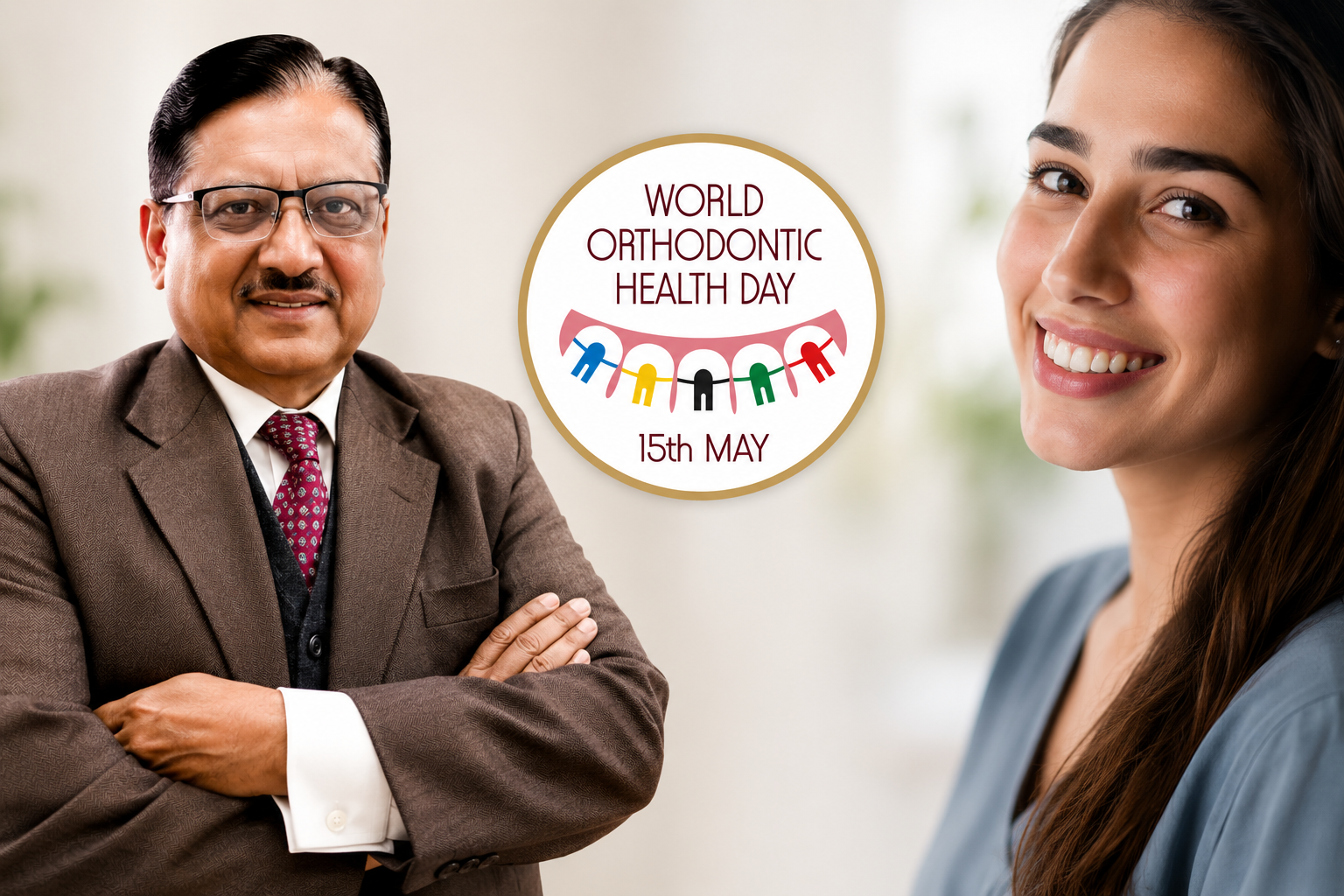
Lucknow: Orthodontics is that specialized field of dentistry which deals with the diagnosis and rectification of malpositioned teeth and jaws.
The specialist who performs such corrections in dental irregularities and improves facial appearance is called an Orthodontist.

Malocclusion causes harmful effects on an individual. Because of irregular teeth, the tissues surrounding the teeth become weak. Thus, the support is reduced and incidence of caries (tooth decay causing cavities) is more, and chewing of food is impaired. This might lead to strain on the jaw joints and muscles when teeth do not come together properly. Speech might be impaired and facial appearance too. This can have a profound psychological impact on the child, which can cause psychological disturbances.
For the prevention of malocclusion, abnormal oral habits such as thumb sucking, mouth breathing, etc., in children have to be checked. Proper care should be given to the deciduous or milk teeth. These milk teeth influence the growth and development of jaws and face. Preventive measures should be taken before malocclusion develops. Therefore, as soon as a child gets all his deciduous teeth between two and a half and three years, he should be taken to a dentist. These visits should be continued regularly for regular dental care and early detection of irregularities. This will assure normal growth of the teeth and jaws.
If a child’s milk tooth is lost prematurely, a dentist should be consulted. Periodic check-ups are essential during the phase when milk teeth are shed and permanent teeth erupt between 7–13 years so that the permanent teeth are properly aligned.
Diagnostic Aids
An orthodontist examines the child clinically and utilizes diagnostic aids such as photographs, study models, orthopantomogram, and cephalogram to analyze the case. These aids help in diagnosis, treatment planning, and prognosis of various cases.
After evaluation, the orthodontist decides whether treatment should be done with extraction of teeth or without extraction. This helps in retracting protruding upper and lower front teeth. The first premolars are commonly extracted during orthodontic treatment. Extraction of teeth causes no harm to the individual.
Types of Treatment
Treatment can be done with removable and fixed braces.
In fixed treatment, brackets are rigidly fixed to the teeth. Wires are attached to exert force on the teeth. Brackets can be bonded to the tooth surface. Metallic braces are routinely used.


Nowadays, ceramic brackets are being used, which match the shade of the tooth. These are aesthetically acceptable to adult patients.
For aligning teeth, forces are used depending upon the type of movement required. With the introduction of vastly improved orthodontic materials, better treatment facilities are being provided to patients, thus enabling orthodontists to achieve good results.
In cases where jaws are not aligned properly, surgical intervention along with orthodontic treatment can rectify the problem. This specialized area is known as Surgical Orthodontics.
People often have the misconception that orthodontic treatment is only for children. There is no reason why adults cannot avail orthodontic treatment, provided their gums and bones supporting the teeth are in good condition.
Patient Co-operation
Co-operation of patients is essential for orthodontic treatment. If the child is co-operative, excellent results can be achieved. A child should pay more attention to oral hygiene. He should brush teeth properly and regularly.
Treatment time depends on the type of malocclusion. It usually lasts for 18 to 30 months. Treatment improves facial appearance by bringing about harmony between various parts of the face such as teeth, upper and lower jaws, nose, cheeks, lips, and chin.
Nowadays, clear aligners are the latest in orthodontic treatment modalities. It should be done only by a qualified and certified orthodontist. Patients should avoid DIY (Do It Yourself) aligners, and direct company-manufactured aligners to orthodontic patients should be discouraged. Regulating and monitoring tooth movements with aligners should be done under the supervision of an experienced orthodontist.
For Patient and Parent Information
Treatment with braces is usually painless and causes less discomfort to the patient.










 https://www.youtube.com/watch?si=RtToJsBhYBatUrym&v=mOuYNSdhjHA&feature=youtu.be