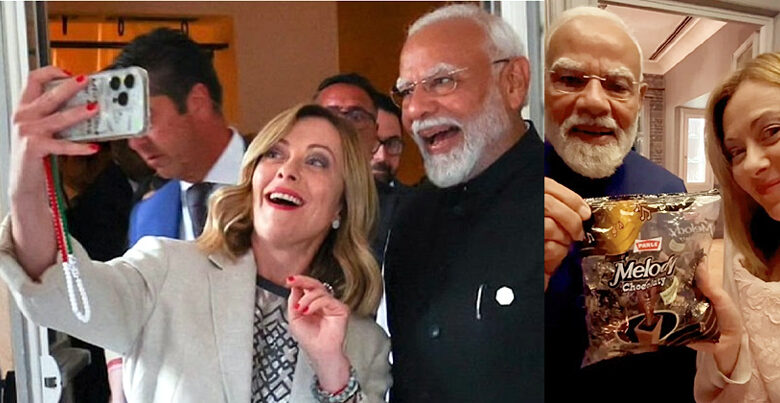
Rome/New Delhi — Prime Minister Narendra Modi’s recent visit to Italy has drawn global attention not only for its diplomatic outcomes but also for the warmth and symbolism that accompanied it. A light-hearted moment in which Modi gifted Italian Prime Minister Giorgia Meloni a packet of “Melody” toffees quickly went viral online, but behind the smiles and social media buzz lies a deeper strategic message shaping the future of India–Italy relations.

Political observers describe the interaction as an example of “Melody Diplomacy” — a blend of cultural warmth, personal chemistry, and strategic engagement that reflects India’s increasingly confident global positioning. Far from being limited to symbolic gestures, the visit marked the elevation of India–Italy ties to a “Special Strategic Partnership,” opening new avenues of cooperation across defence, trade, technology, energy, and connectivity.
During the visit, both leaders reviewed the Joint Strategic Action Plan 2025–2029 and discussed multiple agreements aimed at strengthening bilateral collaboration. Key areas of cooperation include defence manufacturing, critical minerals, maritime transport, higher education, agriculture, artificial intelligence, and healthcare workforce mobility.
A major focus of the discussions was the India–Middle East–Europe Economic Corridor (IMEC), a project expected to reshape trade and connectivity between Asia and Europe. Italy’s strategic location in the Mediterranean region makes it a vital gateway for India’s growing engagement with Europe and global supply chains.
The leaders also emphasized expanding defence cooperation through co-development and co-production initiatives. Analysts believe the partnership reflects India’s broader strategy of diversifying technological and strategic alliances while strengthening domestic manufacturing capabilities under the “Make in India” framework.

Beyond economics and defence, the visit carried strong geopolitical significance. Modi and Meloni reportedly exchanged views on energy security, supply chain resilience, maritime stability, and evolving global power dynamics. Both countries also agreed to establish a foreign ministers-led review mechanism to monitor progress under the strategic action plan.
The growing personal rapport between the two leaders has also become a talking point internationally. Their interactions during official events, including a joint visit to Rome’s historic landmarks and cultural engagements, projected a sense of warmth rarely seen in formal diplomacy. Meloni’s references to Indian culture and her public admiration for India’s growth story further highlighted the strengthening cultural connect between the two nations.
Observers note that India’s expanding partnership with Italy comes at a time when global economies are seeking alternatives to overdependence on single supply chains and are increasingly looking toward India as a stable strategic and economic partner.
While political reactions within India have varied, foreign policy experts believe the visit demonstrated how modern diplomacy now combines strategic negotiations with cultural outreach and soft power engagement. The Rome visit is being seen as another step in India’s efforts to position itself as a leading voice in shaping emerging global partnerships and geopolitical alignments.
As India deepens ties with key European partners, the Modi–Meloni engagement reflects a broader shift toward stronger, multidimensional cooperation built on shared economic interests, strategic trust, and cultural understanding.