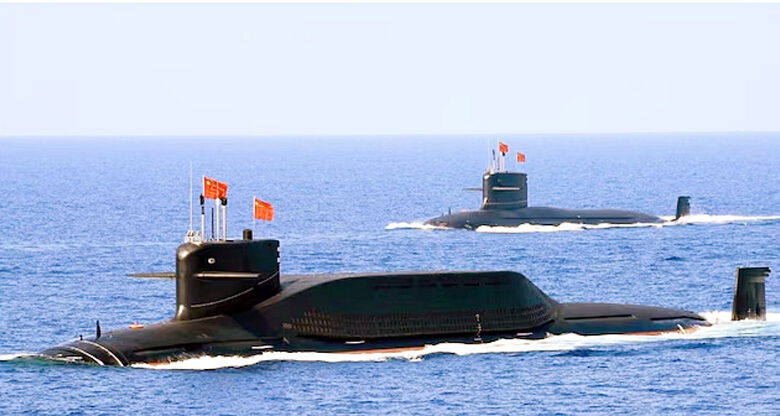
New Delhi: China’s rapid expansion of its naval capabilities is increasingly extending beyond the western Pacific, raising questions about its future ability to operate farther into the Indian Ocean. While the number of warships and aircraft carriers remains an important indicator of naval strength, the more significant issue is whether Beijing can sustain carrier operations over long distances with trained personnel, technical support and reliable logistics.
China has been placing growing emphasis on developing a larger pool of carrier pilots and aviation personnel. Its efforts reportedly include identifying young candidates at an early stage and preparing students from naval aviation, science and engineering backgrounds for carrier aviation. The objective is to build a sustainable human-resource base capable of supporting an expanding carrier fleet.

An aircraft carrier is more than a ship carrying combat aircraft. Effective carrier operations require trained pilots, deck crews, engineers, commanders, instructors, maintenance teams and a dependable logistics network. Pilots must also be available in sufficient numbers to accommodate training, operational rotations, rest periods and emergencies.
For India, the significance of China’s preparations lies in the possibility of Beijing developing the ability to maintain a regular and sustained naval presence far from its home waters. A greater Chinese capacity to deploy carrier groups into the Indian Ocean could add complexity to India’s maritime security planning.
However, operating a carrier in the Indian Ocean presents challenges that differ from those faced in the western Pacific. Long-distance deployments require fuel, spare parts, weapons, maintenance facilities, communications and intelligence support. Sending a carrier into a distant maritime area is considerably different from sustaining effective operations there for weeks or months.
India therefore faces a broader strategic requirement than simply increasing the number of ships. Its priorities include maintaining a strong pool of carrier pilots, expanding training infrastructure, developing technical specialists and ensuring adequate availability of carrier-based fighter aircraft.
Training facilities, simulators and shore-based carrier training systems can help pilots gain experience without relying exclusively on operational carriers. At the same time, deck crews and technical personnel require continuous specialised training because carrier aviation depends on coordinated performance across multiple disciplines.


Operational experience is another important factor. Advanced military platforms can be acquired, but sustained operational proficiency comes through regular exercises and deployments. India’s experience with carrier operations provides an established foundation, but maintaining that capability will require continued training and investment as technology and naval aviation requirements evolve.
Maritime surveillance will also remain central to India’s response. Aircraft, drones, satellites, submarines, surface warships and coastal surveillance systems can collectively provide a broader picture of activity across the Indian Ocean. Early detection can give decision-makers more time to assess developments and prepare an appropriate response.
India’s maritime partnerships in the Indian Ocean region are another component of its broader security architecture. Information sharing, joint exercises, logistics cooperation and maritime-domain awareness networks can improve the ability of participating countries to monitor and respond to developments at sea.
The emerging competition, therefore, is unlikely to be determined solely by the number of aircraft carriers each country possesses. More meaningful indicators include how many platforms are operational, the availability of aircraft, the number of trained personnel, maintenance capacity, logistical reach and the ability to sustain deployments over extended periods.
China’s expanding naval and aviation training efforts do not automatically translate into an immediate threat to India. They do, however, highlight the importance of long-term preparedness. For India, strengthening human resources, training systems, carrier aviation, maritime surveillance and logistics will be important as the strategic environment in the Indian Ocean evolves.
The future maritime balance will depend not only on ships and aircraft, but on the ability to operate them effectively and continuously. China’s emphasis on developing the personnel required for carrier operations underlines that broader dimension of naval power.












 https://www.youtube.com/watch?si=RtToJsBhYBatUrym&v=mOuYNSdhjHA&feature=youtu.be