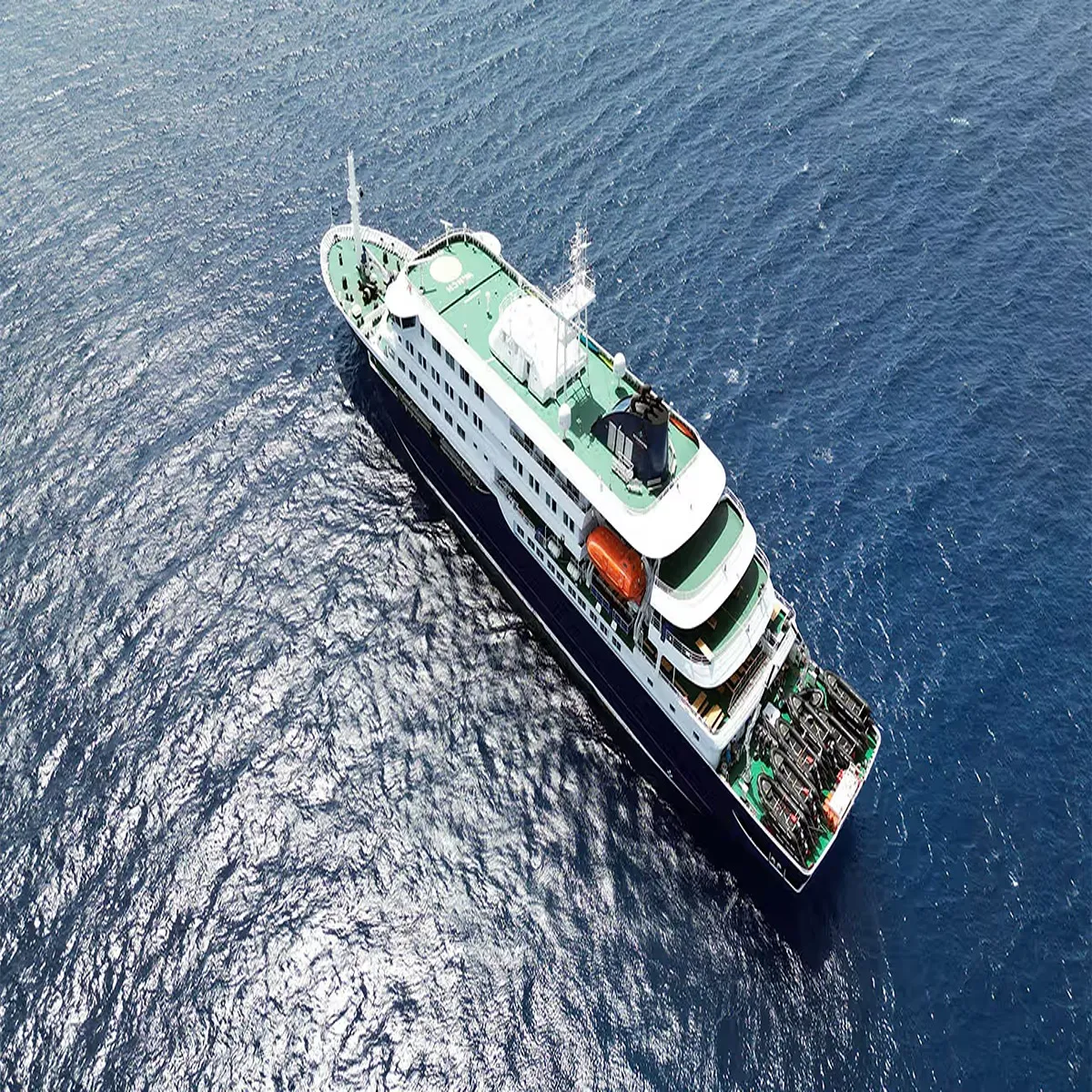
Geneva: A rare and concerning health event has emerged aboard an international cruise vessel sailing across the Atlantic, prompting global attention from public health authorities. The World Health Organization (WHO) has confirmed multiple hantavirus infections linked to passengers aboard the Dutch-registered expedition ship Hondius, currently en route from Cape Verde to Tenerife, Spain.
While the situation has resulted in fatalities and triggered international monitoring, health officials stress that the overall public health risk remains limited at this stage, though investigations are ongoing.

Confirmed Cases and Fatalities
According to WHO updates, the outbreak has so far resulted in:
- Five laboratory-confirmed hantavirus infections
- Three additional suspected cases under investigation
- Three confirmed passenger deaths
The infections were identified after several passengers developed severe respiratory symptoms during and after the voyage. The United Kingdom was among the first to alert WHO after unusual illness patterns were detected onboard.
WHO Director-General Dr. Tedros Adhanom Ghebreyesus confirmed that the organization is closely monitoring the situation in coordination with multiple national health agencies.
The Vessel and Voyage Timeline
The affected ship, Hondius, is an expedition cruise vessel known for scientific and nature-focused travel routes. The outbreak timeline, as reconstructed by investigators, suggests a complex chain of infection:
- April 6: First passenger reportedly develops symptoms
- April 11: First death occurs, initially not linked to hantavirus
- April 25: Second passenger, the spouse of the first victim, dies in Saint Helena
- May 2: Third passenger dies after a week-long illness
Authorities believe early cases were not immediately identified due to symptom overlap with other respiratory conditions.
Understanding Hantavirus and the Andes Strain
Hantaviruses are typically rare but potentially severe diseases transmitted primarily through contact with infected rodents or contaminated environments.
However, the strain under investigation—the Andes hantavirus—is of particular concern because it is one of the few variants capable of limited human-to-human transmission under close contact conditions.
Most infections occur through:
- Inhalation of particles from rodent droppings or urine
- Direct contact with contaminated surfaces
- Exposure in rural or wilderness environments
Symptoms can include:
- High fever
- Severe fatigue
- Muscle pain
- Rapid respiratory distress in advanced cases
In severe cases, the disease can progress quickly to life-threatening complications.
Possible Source of Exposure: South American Expedition
Preliminary investigations suggest that the earliest infected passengers may have contracted the virus during a bird-watching expedition in South America, covering regions of:
- Chile
- Argentina
- Uruguay
These areas are known habitats for rodent species associated with the Andes strain.
Argentine health authorities are now working closely with WHO to trace passenger movements and identify possible exposure points before the cruise began.

Global Health Response and Surveillance Measures
In response to the outbreak, international health systems have been activated across multiple countries. Key measures include:
- Monitoring of passengers who disembarked at Saint Helena
- Alerts issued to 12 countries, including the United Kingdom, United States, Canada, Germany, and Singapore
- Enhanced screening protocols for respiratory symptoms
- Distribution of approximately 2,500 diagnostic test kits across five countries
Public health agencies are urging individuals who were onboard or in close contact with passengers to remain alert for symptoms for up to six weeks.
WHO Assessment: Controlled but Cautious Outlook
Despite the severity of individual cases, WHO has stated that the global risk level remains low, primarily because:
- Hantavirus outbreaks are generally rare
- Transmission requires specific exposure conditions
- No widespread community transmission has been detected
However, officials emphasize caution due to:
- The unusual setting (a cruise ship environment)
- The possibility of delayed symptom onset
- The rare human-to-human transmission potential of the Andes strain
Why Cruise Ships Pose Unique Epidemiological Challenges
Health experts note that cruise ships present a distinct environment for infectious disease monitoring due to:
- High-density close-contact living conditions
- Shared dining and recreational facilities
- International passenger movement across borders
- Delayed detection due to incubation periods
In this case, the incubation period of hantavirus—potentially up to six weeks—adds complexity to tracking transmission chains.
International Coordination and Investigation Efforts
The outbreak has triggered a coordinated global response involving:
- WHO epidemiological teams
- National health ministries across Europe, the Americas, and Asia
- Laboratory surveillance networks
- Travel and maritime health authorities
Argentina is playing a key role by supplying diagnostic resources and tracking possible exposure sites linked to the South American tour segment of the voyage.
Public Health Advisory
Authorities continue to advise:
- Early medical consultation for fever, fatigue, or breathing difficulty
- Monitoring of individuals who were onboard the vessel or part of related travel groups
- Strict adherence to hygiene protocols in high-risk environments
- Avoiding unnecessary panic, as no widespread transmission has been confirmed
A Contained But Closely Watched Incident
The hantavirus cases linked to the Hondius cruise represent a rare intersection of global travel, zoonotic disease exposure, and maritime epidemiology.
While the situation has resulted in tragic losses and triggered international concern, current assessments indicate that the outbreak remains localized and contained, with no evidence of broader global spread.
However, the event underscores an increasingly important reality in global health: in an era of high mobility and international travel, even rare pathogens can rapidly become multinational monitoring challenges, requiring swift coordination, transparency, and scientific vigilance.
WHO and partner agencies continue to investigate the origin, transmission pathway, and risk factors as surveillance efforts remain active across multiple continents.