Lucknow: Marking a significant step towards promoting environmental education, biodiversity conservation and India’s rich botanical heritage, the CSIR-National Botanical Research Institute (CSIR-NBRI) on Saturday dedicated its Eco-Educational Hub “Prakriti Gyan Dham” at the Maharishi Parashar Bioresource Centre (MPBC), Banthra, to the nation.
The integrated facility has been developed as a first-of-its-kind eco-educational hub centre aimed at blending scientific research with conservation, culture and public awareness.

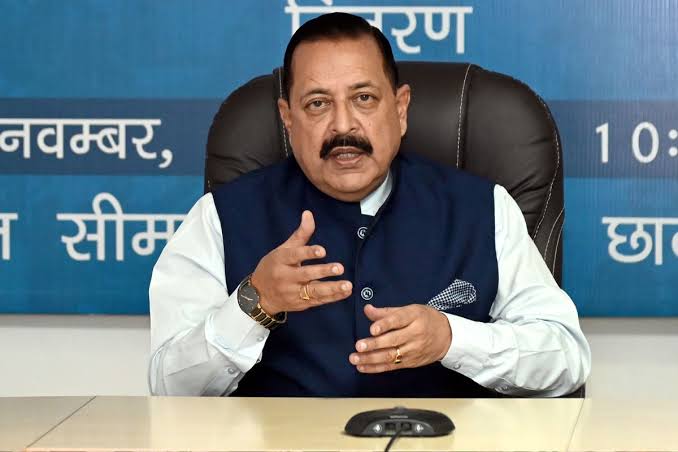
The ‘Eco-Educational Hub’ was inaugurated by Hon’ble Union Minister of Science and Technology (independent charge) and Vice-President of CSIR, Dr Jitendra Singh.
Addressing the gathering, Dr Jitendra Singh said India’s scientific institutions are increasingly moving beyond laboratories to create solutions that directly benefit society. He said the Eco-Educational Hub reflects Hon’ble Prime Minister Narendra Modi’s vision of combining science, sustainability and public participation while preserving the country’s rich botanical wealth for future generations.
The Chief Guest of the programme, Minister Dr. Jitendra Singh, extended his best wishes for the initiative and said that the Centre represents a unique blend of science, culture and conservation. On the occasion, he emphasised the need to strengthen inter-institutional collaboration, particularly among institutions under the Ministry, and to organise joint activities and programmes.
He emphasized that scientific institutions must continue to integrate traditional knowledge with modern technologies to address emerging environmental and climate challenges
The Minister said that the facility would serve as a unique platform for environmental education, biodiversity conservation and experiential learning, particularly for students, researchers and nature enthusiasts.
He also appreciated CSIR-NBRI for translating scientific research into technologies and products that benefit farmers, industry and the general public.

Earlier, delivering the welcome address, Dr Zabeer Ahmed, Director, CSIR-NBRI and CSIR-IIIM Jammu, welcomed the chief guest and dignitaries and highlighted the institute’s contributions in plant science research, conservation and technology development.
He said the Eco-Educational Hub has been conceived as a living repository of India’s botanical diversity where visitors can experience the country’s rich plant heritage through interactive and immersive learning.
Dr Ahmed said the facility integrates environmental education, biodiversity conservation and cultural interpretation through thematic gardens, heritage trails and digital learning platforms. He noted that the project reflects CSIR-NBRI’s commitment to promoting sustainable development while inspiring future generations towards environmental stewardship.
The newly developed Eco-Educational Hub features an Indian Heritage Garden, Paavan Path heritage trail, gardens dedicated to threatened and state plants of India, rare plant collections, Navgrah Vatika, Nakshatra Vatika and a dedicated Bamboosteum housing 43 bamboo species.
The institute showcased its QR-enabled interpretation system that allows visitors to access scientific, historical and cultural information about plants through digital platforms. Nature trails, eco-friendly electric vehicle transport and a proposed Miyawaki urban forest have also been incorporated to promote sustainable tourism and environmental awareness.
On the occasion, the Hon’ble Minister released a documentary film showcasing India’s Heritage Gardens, highlighting the country’s remarkable botanical wealth and the cultural, historical and ecological significance of plant diversity.
Reaffirming CSIR-NBRI’s commitment to translating scientific research into societal benefits, several innovative products and technologies were unveiled and transferred during the programme. A herbal formulation for male reproductive health, developed in collaboration with Himalaya, was formally launched. In addition, four plant-based technologies—Herbal Anti-Dandruff Hair Care Oil, Frotus – Lotus-inspired Perfume, Frotus – Rudra Perfume and Herbal Nano Serum—were transferred to Kudumbashree State Poverty Eradication Mission, Kerala, aiming to promote women-led entrepreneurship and livelihood generation through science-based value-added products.
Further strengthening industry-academia collaboration, CSIR-NBRI transferred the Design and Development of a Low-Cost Photobioreactor technology to Witwake Solutions Pvt. Ltd., Lucknow, demonstrating the institute’s continued emphasis on affordable and sustainable technological innovations.
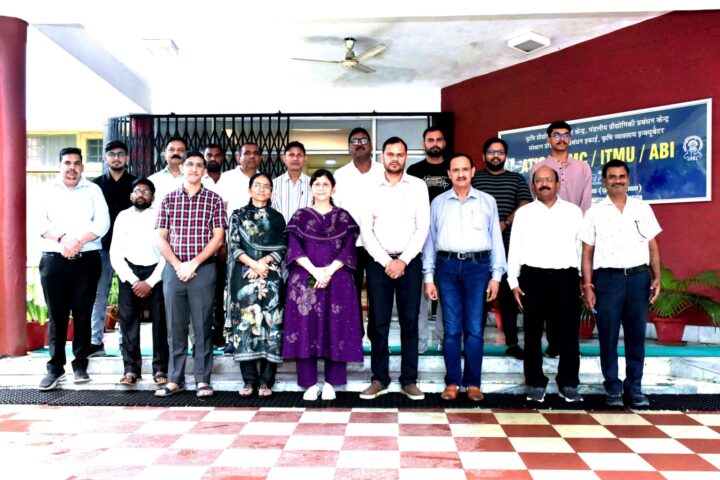
The event was attended by Dr G.N. Singh,Advisor (Health) to the Uttar Pradesh Chief Minister, Dr Ajit Kumar Shasany, , Vice-Chancellor of Central University of Odisha Director of CSIR-NBRI and CSIR-IIIM Jammu Dr Zabeer Ahmed, senior scientists, researchers, farmer beneficiaries of CSIR Floriculture Mission and invited guests.







 ---------------------------------------------------------------------------------------------------