By Cultural Correspondent | Lucknow
There is a distinct magic to Hazratganj on an October evening. As the golden hour softens over the colonial-era facades and neon signs begin to blink awake, the city’s historic thoroughfare takes on a timeless charm. But on Monday, October 5, 2026, the real gravitational pull wasn’t the evening breeze or the bustle of the street—it emanated from the warm, paper-scented interior of Universal Booksellers.

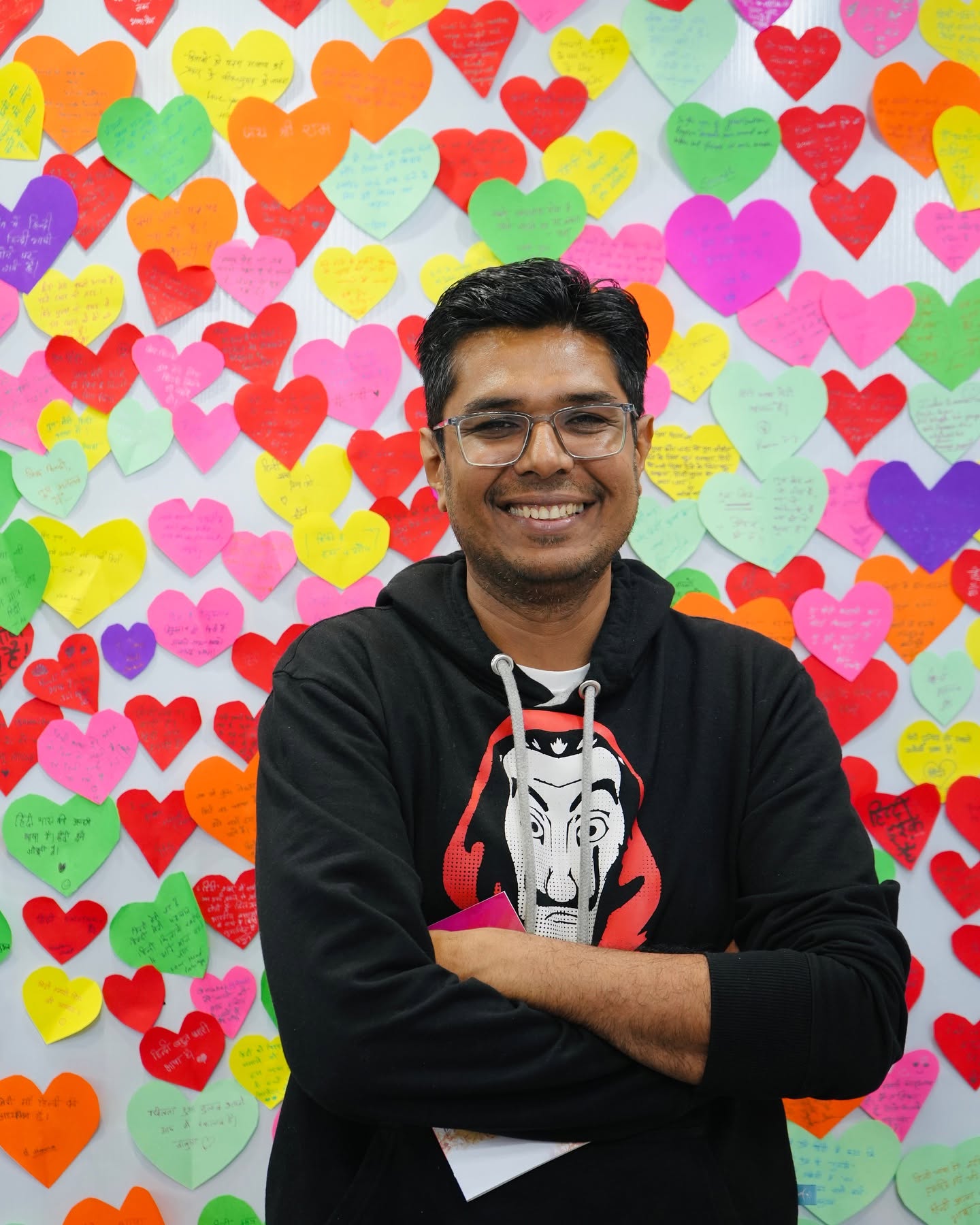
For decades, this legendary bookstore has stood as a quiet sentinel of Lucknow’s intellectual life. Tonight, however, it felt less like a traditional retail space and more like a bustling urban salon. The occasion? A much-anticipated “Meet the Author” session with Divya Prakash Dubey, the man who has quietly revolutionized contemporary Hindi literature by capturing the messy, beautiful, and deeply relatable realities of modern Indian youth.
Centering around his celebrated works—Musafir Café and Almost Pyar—the evening was a masterclass in connection. It brought together readers from all walks of life: university students clutching dog-eared paperbacks, young corporate professionals seeking solace from deadline culture, and veteran bibliophiles curious about the new wave of vernacular writing.
The Man Who Put Words to Our Unspoken Thoughts
To understand why a crowd packed the aisles of Universal Booksellers, one must understand the unique place Divya Prakash Dubey holds in contemporary Indian reading culture. Often hailed as the voice of a generation caught between traditional expectations and modern ambitions, Dubey does not write lofty, inaccessible prose. Instead, his books read like coffee-table conversations with an old friend who understands your deepest insecurities and unspoken heartbreaks.
Dubey’s literary journey is as unconventional as his narrative style. Leaving behind the secure corridors of a corporate career, he chose to champion contemporary Hindi storytelling, proving that the language is not confined to dusty textbooks or academic syllabi. It lives, breathes, and evolves in the corporate cafeterias of Noida, the shared apartments of Mumbai, and the quiet railway platforms connecting small-town dreams to metropolitan realities.
As he took his seat at the venue, greeted by a wave of applause, Dubey immediately broke the fourth wall. There was no podium separating him from his audience, no formal academic lecture. Instead, seated comfortably with a microphone in hand, he began the evening not with a prepared speech, but with a question that instantly bonded the room: “How many of us are actually living the lives we planned at twenty-two?”
A ripple of knowing laughter swept through the crowd. The ice was broken.
Inside Musafir Café and Almost Pyar
The core of the conversation naturally gravitated toward the books that have become cultural touchstones for young readers: Musafir Café and Almost Pyar.
Musafir Café has long been celebrated as an anthem for the modern wanderer—not necessarily someone traveling across geographical borders, but someone navigating emotional crossroads. Dubey spoke candidly about the inspiration behind the book, noting how modern relationships are often plagued by the fear of commitment versus the terror of loneliness.
“We spend so much of our lives trying to fit into predefined boxes of love, career, and success,” Dubey shared with the rapt audience. “Musafir Café was my way of asking: What happens when you stop running toward a destination and simply learn to sit with yourself on the journey?”
Transitioning to Almost Pyar, the dialogue shifted toward the gray areas of romance. In an era dominated by swift swipes, algorithmic matching, and instant gratification, Dubey’s writing explores the agonizingly beautiful space of “almost”—those connections that shape us profoundly even if they never culminate in a neat, happily-ever-after ending.

Readers in the audience nodded in vehement agreement. In a literary landscape often polarized by hyper-romanticized fantasy or bleak cynicism, Dubey’s genius lies in his radical authenticity. His characters make mistakes, say the wrong things, harbor quiet regrets, and yet, somehow, manage to heal.
An Intimate Dialogue: The Reader Q&A
One of the most compelling segments of the evening was the interactive Q&A session. Unlike typical book events where questions remain stiff and transactional, the exchange at Universal Booksellers felt like a late-night chat over cutting chai.
A young management student asked about the challenge of preserving emotional nuance while writing in contemporary Hindi. Dubey’s response was illuminating:
“Language is not just a tool of grammar; it is an emotion. When you speak to someone in their mother tongue—or in the mixed ‘Hinglish’ rhythm of our daily lives—you bypass the brain and go straight to the heart. I don’t write in Hindi to preserve a language; I write in it because that is how my characters cry, laugh, and dream.”
Another attendee, an IT professional who had traveled from a neighboring district just for the event, shared how Musafir Café helped him navigate a difficult career transition and a broken relationship. Moments like these underscored the profound impact Dubey’s work has on individuals who rarely see their daily emotional struggles validated in mainstream English fiction.
Hazratganj Moments: The Book Signing and Beyond
As the formal conversation drew to a close, the energy shifted from contemplative listening to palpable excitement. The book signing session transformed the bookstore into a vibrant hive of activity.
Fans queued up patiently, clutching copies of Musafir Café, Almost Pyar, and his other works like precious artifacts. Dubey took time with every single person who approached him. There were no rushed signatures; he listened intently to brief personal anecdotes, jotted down personalized notes, and posed for photographs with a warmth that left every fan feeling uniquely valued.
Among the crowd was a group of college friends who had pooled their resources to buy matching special editions of his books. “We’ve quoted his lines in our Instagram captions, our journal entries, and even during late-night hostel arguments,” one of them beamed, holding up a freshly signed copy. “Meeting him today feels like meeting the keeper of our collective diary.”
The Enduring Spirit of Lucknow’s Literary Culture
As the clock ticked past 7:00 PM, the evening finally wound down, but the crowd lingered outside Universal Booksellers, reluctant to break the spell. Groups of readers stood under the warm streetlamps of Hazratganj, discussing favorite quotes, debating character arcs, and promising to stay in touch.
In an age dominated by digital screens, algorithmic content, and fleeting attention spans, the turnout at Universal Booksellers was a powerful testament to the enduring magic of physical books and shared spaces. It proved that stories still matter—and that when an author has the courage to speak absolute truth about the human condition, readers will always show up.
Divya Prakash Dubey’s visit to Lucknow was more than just a book promotion; it was a celebration of modern storytelling, a tribute to the messy art of growing up, and a reminder that no matter how lost we might feel in our individual journeys, there is always a Musafir Café waiting for us along the way.