Lucknow: There are certain places that a city needs, whether it knows it or not. Not the famous ones—not the monuments tourists photograph or the luxury restaurants where deals are sealed behind private doors. I’m talking about the ordinary places. The ones with worn wooden tables, coffee stains on the saucers, and conversations that have no official agenda. These spaces are increasingly rare, and we should be alarmed about it.
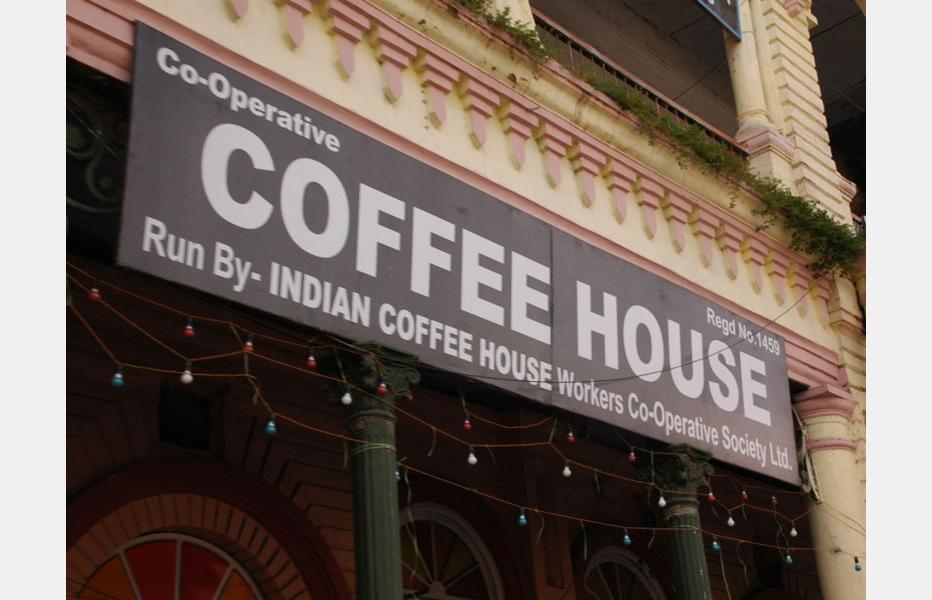
The Indian Coffee House in Lucknow sits locked right now. Eighty-eight years old, its doors have been shut for nearly three months. When I first heard this, I felt something between sadness and indignation. Not because I’ve sat there—I haven’t—but because I understand what it represents. It’s a place where a young student could overhear a former prime minister and, if brave enough, ask him a question. Where a chief minister could resign from office and walk straight into the crowd without guards or ceremony. Where the price of entry was just the cost of a cup of coffee.

We’ve forgotten how radical that is. In our age of algorithms and carefully curated feeds, we’ve accepted the notion that public life should be segmented. The powerful meet in boardrooms. Activists organize in private groups. Students gather in closed WhatsApp chats. We’ve traded the messy, unpredictable collision of different perspectives for the comfort of finding people who already agree with us. We call it efficiency. It feels like defeat.
The Coffee House wasn’t just a café. It was an institution of democratic practice. Not in the formal sense—there were no bylaws or official procedures. But in the lived, daily sense, it was where democracy actually happened. It was where someone could change their mind by overhearing an argument. Where young people could learn by proximity to older ones. Where the questions you asked mattered more than your credentials. That’s almost impossible to find now.
Walk through any modern city and you’ll see the problem clearly. The expensive restaurants with reservation systems that keep strangers apart. The corporate cafés where you’re expected to work quietly or leave. The shopping malls designed to move you through efficiently rather than linger. Even our public parks have been sanitized, with rules about noise and gathering. We’ve made public spaces that are no longer actually public. They’re controlled, managed, profitable. They don’t leave much room for the messiness of real democracy.
Lucknow had something precious, and it wasn’t because the city was wealthy or because the building was grand. The Coffee House worked because of what it refused to do. It refused to create hierarchies. It refused to charge enough to keep out ordinary people. It refused to optimize itself out of hospitality. It was run as a workers’ cooperative—a small economic act of resistance against the idea that businesses exist only to extract maximum profit. In the 1930s, when communism was still a word people whispered, this mattered.
The stories of who walked through those doors read like a hall of fame of modern India, but that’s not really the point. The point is that these weren’t separate visits. They weren’t orchestrated celebrity moments. The prime ministers and the poets and the student radicals shared the same space, breathed the same air, and were all equal in the face of a two-rupee coffee. That’s what made it an archive of a different way of thinking about power and community.
The reasons for its closure sound mundane: staff shortages, rising costs, changing habits. A nearby eatery charges five times as much. People prefer premium experiences now, apparently. But this understates what’s actually happening. We’re witnessing the slow disappearance of affordable public space. Not because there’s no demand for it, but because no one is willing to subsidize it anymore. Every room needs to be profitable. Every space needs to justify itself through revenue. We’ve accepted the logic that if a thing can’t make money, it doesn’t deserve to exist.

This is a catastrophic mistake. Not every valuable thing is economically valuable. Not every essential service shows up on a balance sheet. The Coffee House didn’t make money because it never tried to. It existed because people cared about conversation more than commerce. Because Lucknow, at a certain point in its history, understood that some spaces needed to be protected for reasons beyond profit.
When public spaces die, we don’t just lose the room. We lose something about ourselves. We lose the possibility of being surprised by an idea. We lose the chance encounters that change people. We lose the everyday practice of democracy—the constant negotiation with difference, the willingness to listen to someone you disagree with because you’re sitting at the same table. We become more siloed, more certain, more alone.
I think often about what cities need to be livable. Obviously they need housing and jobs and transportation. But they also need places where strangers can become interlocutors. Where a person of no particular importance can sit next to someone powerful and the difference doesn’t matter. Where ideas clash but people listen. Where money isn’t the only language spoken.
The irony is that preserving such a place doesn’t require enormous resources. It requires will. It requires a decision that some things matter more than profit. It requires citizens to show up. It requires the city to recognize that an 88-year-old café isn’t nostalgia—it’s infrastructure. Just as important as roads and power lines, though harder to quantify.
The document I read about the Coffee House outlined some practical paths forward. A public-private arrangement that keeps the cooperative character. Open sessions with schools and universities. An archive of oral histories. Heritage listing. These aren’t romantic gestures. They’re the unglamorous work of keeping something valuable alive in a world that doesn’t automatically protect value unless it can be sold.
But ultimately, it comes down to whether Lucknow—and by extension, all of us—believes such spaces are worth fighting for. A locked door is temporary. The Coffee House has been resurrected before. But it requires people who refuse to let the conversation end. Who understand that cities are built not just of brick and mortar, but of the moments when strangers sit down together and argue about what matters.
The tables are still there. The cups can be filled again. The question is whether we’ll remember why they ever mattered in the first place.







 ---------------------------------------------------------------------------------------------------