Dhaka: The recent developments surrounding Bangladesh’s Mongla Port and the Teesta River management project are far more than just stories of two infrastructure ventures. They signal a major realignment in the South Asian balance of power. For India, the underlying challenge is not merely countering China’s expanding footprint, but continuously reinforcing strategic trust and deep-rooted partnerships with its neighbors. Geopolitical vacuums do not remain empty for long; wherever an established influence recedes, another power will inevitably step in. The trajectory of India-Bangladesh relations will heavily depend on how effectively both nations can leverage their shared history into a resilient, future-oriented partnership.
A Foundation Built on Shared History
The bedrock of India-Bangladesh ties is deeply intertwined with the 1971 Liberation War, where India played a decisive role in Bangladesh’s independence. In the decades that followed, bilateral cooperation expanded significantly across trade, security, energy, roads, railways, and waterways. This relationship reached its zenith during the tenure of former Prime Minister Sheikh Hasina, a period marked by settled border disputes, robust counter-terrorism cooperation, and rapid cross-border connectivity initiatives. India extended billions of dollars in lines of credit and actively planned to participate in upgrading key maritime assets like Chittagong and Mongla ports.

However, the geopolitical landscape has shifted significantly. The special economic zone project at Mongla Port has been awarded to China, and Beijing’s footprint in the Teesta River restoration framework is poised to expand. These developments are reshaping the contemporary dynamics of South Asian geopolitics.
The Catalysts of Change
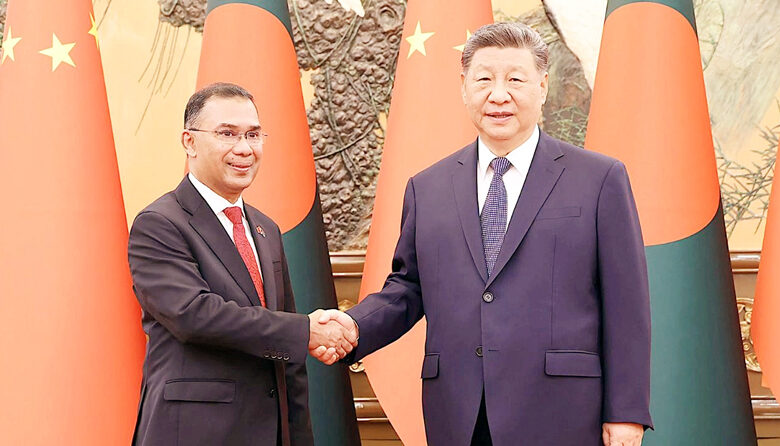
Following the exit of the Sheikh Hasina administration, Bangladesh’s political and strategic priorities began to pivot. The incoming administration signaled a strong intent to deepen economic and infrastructural ties with Beijing. This shift materialized during Prime Minister Tarique Rahman’s official visit to China, where several high-profile agreements were inked. The most critical outcome was the decision to allocate the development of the Special Economic Zone near Mongla Port to China instead of India, transforming a standard investment opportunity into a direct theater for regional influence.
The Strategic Value of Mongla Port
As Bangladesh’s second-largest maritime gateway, Mongla Port sits a mere 80 kilometers from India’s maritime boundary. Under the new agreement, Chinese firms will build modern container terminals, logistics hubs, warehouses, and industrial zones, drastically amplifying the port’s commercial capacity. India’s anxieties extend well beyond trade statistics. Strategic analysts note that China has historically utilized commercial port developments to secure long-term strategic access across the Indo-Pacific, with Sri Lanka’s Hambantota Port frequently cited as a precedent. While no military utilization has been officially declared for Mongla, its proximity to Indian waters keeps security establishments highly vigilant.
Security Dimensions of the Teesta Project
While Mongla represents a maritime focus, the Teesta River management project hits closer to India’s land vulnerabilities. The proposed development zone sits dangerously close to the Siliguri Corridor, popularly known as the “Chicken’s Neck”—the narrow strip of land linking India’s northeastern states to the rest of the country. A long-term Chinese engineering and technical presence in this sensitive border zone naturally introduces fresh surveillance and defensive challenges for Indian security agencies, elevating the project from simple river management to a sensitive security issue.
Four Critical Challenges Facing India
India faces four distinct structural hurdles in this evolving relationship.
First, the diplomatic challenge is evident as projects once earmarked for Indian participation are redirected to Beijing, intensifying the contest for regional alignment.
Second, the security challenge mounts as China’s economic anchoring in the Bay of Bengal could eventually pave the way for a persistent naval or intelligence presence.
Third, India faces a commercial setback; New Delhi had envisioned using Mongla and Chittagong ports as cost-effective, transit-efficient maritime corridors to supply and integrate its landlocked northeastern states. The new arrangements could complicate or delay these transit frameworks.

Fourth, the broader challenge of regional dominance remains, as China systematically deploys capital into ports, railways, and industrial corridors across South Asia and the Indian Ocean, executing a comprehensive maritime encircle strategy.
Investment vs. Strategic Footprint
The pivotal question remains whether China’s activities are purely commercial. Beijing’s foreign policy heavily relies on state-backed investments, massive infrastructure lending, and trade pacts to build long-term leverage. While it is premature to assume Mongla will morph into a fully functional military base, the structural economic leverage gained by Beijing allows it to project power near vital Indian trade routes.
The Way Forward for India
To protect its regional interests, India must move away from reactive diplomacy and embrace a highly proactive neighborhood policy.
First, New Delhi must sustain open, institutionalized political and diplomatic channels with Dhaka. Governments and regimes will inevitably change, but geographical realities remain permanent.
Second, India must eliminate bureaucratic delays and ensure the time-bound completion of its ongoing cross-border connectivity projects, as delays open doors for competing powers.
Third, the economic integration of Northeast India must be accelerated, turning the region into an industrial and trading hub that naturally draws in neighboring commerce.
Fourth, India needs to fast-track its maritime infrastructure projects, naval modernization, and international security partnerships across the wider Indian Ocean Region.
Redefining the South Asian Matrix
The ties binding India and Bangladesh are resilient, anchored by a shared culture, common language, deep trade links, and extensive people-to-people connections. Yet, historical sentiment alone cannot fully sustain modern alliances. Retaining regional influence requires swift decision-making, competitive financing, reliable execution, and active diplomacy. The shifting dynamics at Mongla and Teesta signal a new balance of power in South Asia. India’s ultimate success will depend not just on countering external actors, but on presenting an unmatched regional model of growth, mutual trust, and shared prosperity.




 ---------------------------------------------------------------------------------------------------