Pyongyang: China’s renewed diplomatic outreach to North Korea has drawn global attention, highlighting a possible reconfiguration of alliances in Northeast Asia amid rising geopolitical uncertainty.
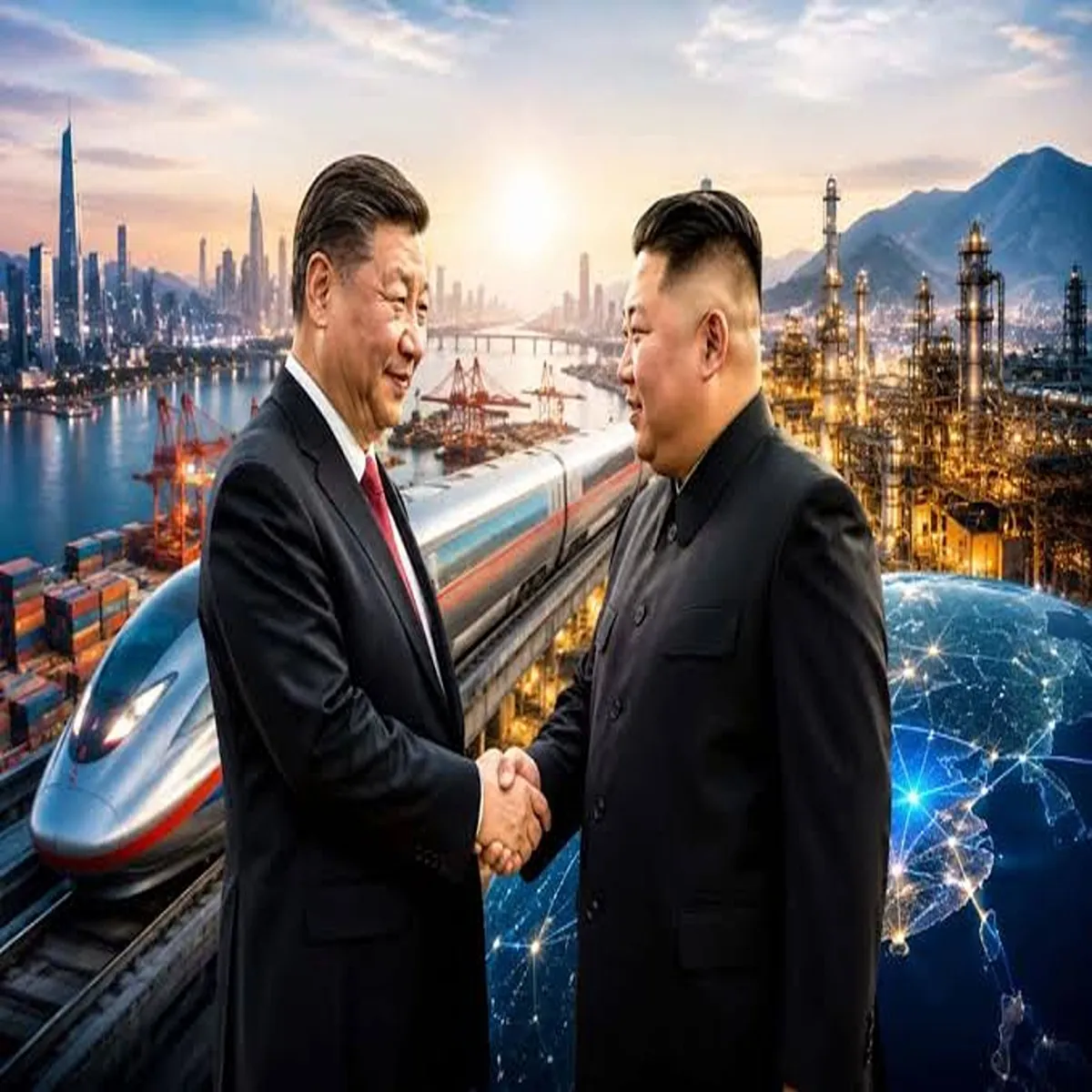
Chinese President Xi Jinping recently visited Pyongyang on June 8–9, marking his first trip to the North Korean capital in seven years. The visit underscored the strengthening ties between Beijing and Pyongyang, while also signalling a broader strategic alignment involving Russia and North Korea.

North Korean leader Kim Jong-un hosted Xi with high-level ceremonial honours, reflecting the continued importance both sides attach to their long-standing partnership.
Deepening Trilateral Engagement
In recent months, interactions among China, North Korea, and Russia have increased noticeably, prompting analysts to reassess the evolving regional order.
Kim Jong-un’s attendance at a major military parade in China in 2025, alongside Xi Jinping and Russian President Vladimir Putin, was seen as a symbolic demonstration of closer political alignment among the three nations.
Shortly afterward, Pyongyang hosted senior delegations from both Beijing and Moscow during military displays showcasing advanced weapons systems, further reinforcing perceptions of growing coordination.
China Reasserts Its Strategic Influence
Xi’s visit comes at a time when China is seeking to reaffirm its position as North Korea’s most important strategic partner, even as Russia’s influence in Pyongyang continues to expand due to military cooperation linked to the Ukraine conflict.
During high-level meetings, both Xi and Kim emphasised long-standing friendship, mutual strategic interests, and the importance of maintaining stability amid global uncertainty.
The Chinese delegation included senior officials from Beijing, underlining the political weight attached to the visit.
For North Korea, the engagement provided an opportunity to reinforce its diplomatic visibility despite international sanctions and continued isolation from Western institutions.
Shifting Stance on Nuclear Issue
One of the most closely watched aspects of China’s evolving North Korea policy is its apparent shift in rhetoric on denuclearisation.
Unlike earlier years, Beijing has recently avoided explicit calls for North Korea to abandon its nuclear weapons programme. Analysts interpret this as a pragmatic adjustment to the reality of Pyongyang’s entrenched nuclear posture.
Experts suggest that North Korea’s nuclear capability has now become deeply integrated into its national defence doctrine, making reversal increasingly unlikely. In this context, China appears to be prioritising stability over policy rollback.

Historical Foundations and Strategic Tensions
Relations between China and North Korea date back to 1949 and were cemented during the Korean War, where Chinese forces played a decisive role. During Xi’s visit, both leaders paid tribute at memorials honouring fallen Chinese soldiers, reinforcing historical bonds.
However, the relationship has experienced periods of strain. Beijing’s establishment of diplomatic ties with South Korea in 1992 and its support for United Nations sanctions after North Korea’s first nuclear test in 2006 created friction with Pyongyang.
Despite these setbacks, diplomatic engagement resumed in the late 2010s, and cooperation has gradually recovered following disruptions during the COVID-19 pandemic.
Emerging China–Russia–North Korea Alignment
The growing interaction among China, Russia, and North Korea is increasingly shaping regional security dynamics.
North Korea’s expanding military cooperation with Russia, particularly in connection with the Ukraine conflict, has strengthened Moscow–Pyongyang ties. At the same time, China continues to maintain its position as North Korea’s primary economic lifeline.
This triangular relationship has led analysts to describe a gradual realignment in Northeast Asia, where traditional diplomatic frameworks are being recalibrated.
Strategic Calculations in Beijing
China’s approach to North Korea is largely driven by long-term strategic considerations. A key priority for Beijing remains maintaining stability on the Korean Peninsula, which acts as a buffer zone between China and United States military presence in South Korea.
Chinese policymakers remain wary of any scenario that could trigger regime collapse in Pyongyang or lead to a unified Korea aligned closely with Washington.
At the same time, Beijing must also balance its influence against Russia’s growing role in North Korea, creating a complex dynamic of cooperation and competition.
Evolving Regional Order
Xi Jinping’s visit highlights a broader transformation underway in Northeast Asia’s geopolitical landscape. As China, Russia, and North Korea deepen their engagement, traditional assumptions about diplomatic isolation and denuclearisation-led frameworks are being reconsidered.
While differences remain among the three countries, their increasing coordination suggests a gradual shift toward a more multipolar and strategically interconnected regional order.
The visit ultimately reflects not just a bilateral strengthening of ties, but a wider recalibration of power and priorities across one of the world’s most sensitive security regions.





 ---------------------------------------------------------------------------------------------------