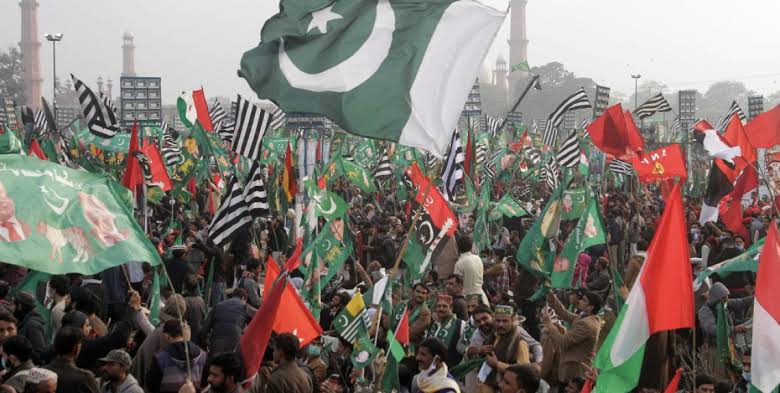
Washington/Islamabad: Fresh political controversy has erupted in Pakistan after a classified diplomatic cable reportedly suggested that senior American officials had expressed strong displeasure with former Prime Minister Imran Khan and his government’s foreign policy stance shortly before his removal from power in 2022.
The revelations, highlighted in a report by Drop Site News, have reignited long-standing allegations by Khan and his party that foreign influence played a role in the collapse of his government through a parliamentary no-confidence vote.

According to the report, the diplomatic communication dated March 7, 2022, was allegedly sent by Pakistan’s then-ambassador to the United States, Asad Majeed Khan, after a meeting with senior US diplomat Donald Lu.
The cable reportedly documented concerns raised by the American side regarding Pakistan’s position on the Russia-Ukraine conflict and Khan’s growing proximity to Moscow. At the time, Khan’s visit to Russia coincided with the beginning of the Ukraine war, drawing international attention and criticism from Western capitals.
As per the reported contents of the document, US officials allegedly indicated that bilateral tensions could ease if Khan was removed through constitutional means, including a parliamentary vote of no confidence. The remarks have since been interpreted by Khan’s supporters as evidence of external pressure aimed at changing Pakistan’s political leadership.
The alleged revelations have once again fueled debate over whether foreign powers influenced the political developments that led to Khan’s ouster on April 9, 2022. Khan has repeatedly accused elements within Pakistan’s establishment and foreign actors of working together to sideline him politically — claims that both Washington and Pakistan’s military leadership have consistently denied.

The controversy has resurfaced at a sensitive time for Pakistan’s regional diplomacy. Pakistan is reportedly attempting to position itself as a mediator in ongoing tensions involving Iran and the United States, while simultaneously managing complex domestic political challenges.
Pakistan is currently governed by Prime Minister Shehbaz Sharif, while the country’s military establishment is led by Army Chief Asim Munir. Khan, meanwhile, remains imprisoned and continues to command significant political support through his party, Pakistan Tehreek-e-Insaf.
Political analysts note that although the leaked document may not conclusively prove a coordinated conspiracy, it has intensified questions about diplomatic influence, military-civilian power dynamics, and the fragility of democratic institutions in Pakistan.
Observers also point out that the timing of the reported diplomatic exchange and Khan’s eventual removal has strengthened public perception among his supporters that external pressure may have contributed to the political crisis.
The issue is expected to remain a major flashpoint in Pakistan’s already polarized political landscape as debates over accountability, sovereignty, and foreign influence continue to dominate public discourse.