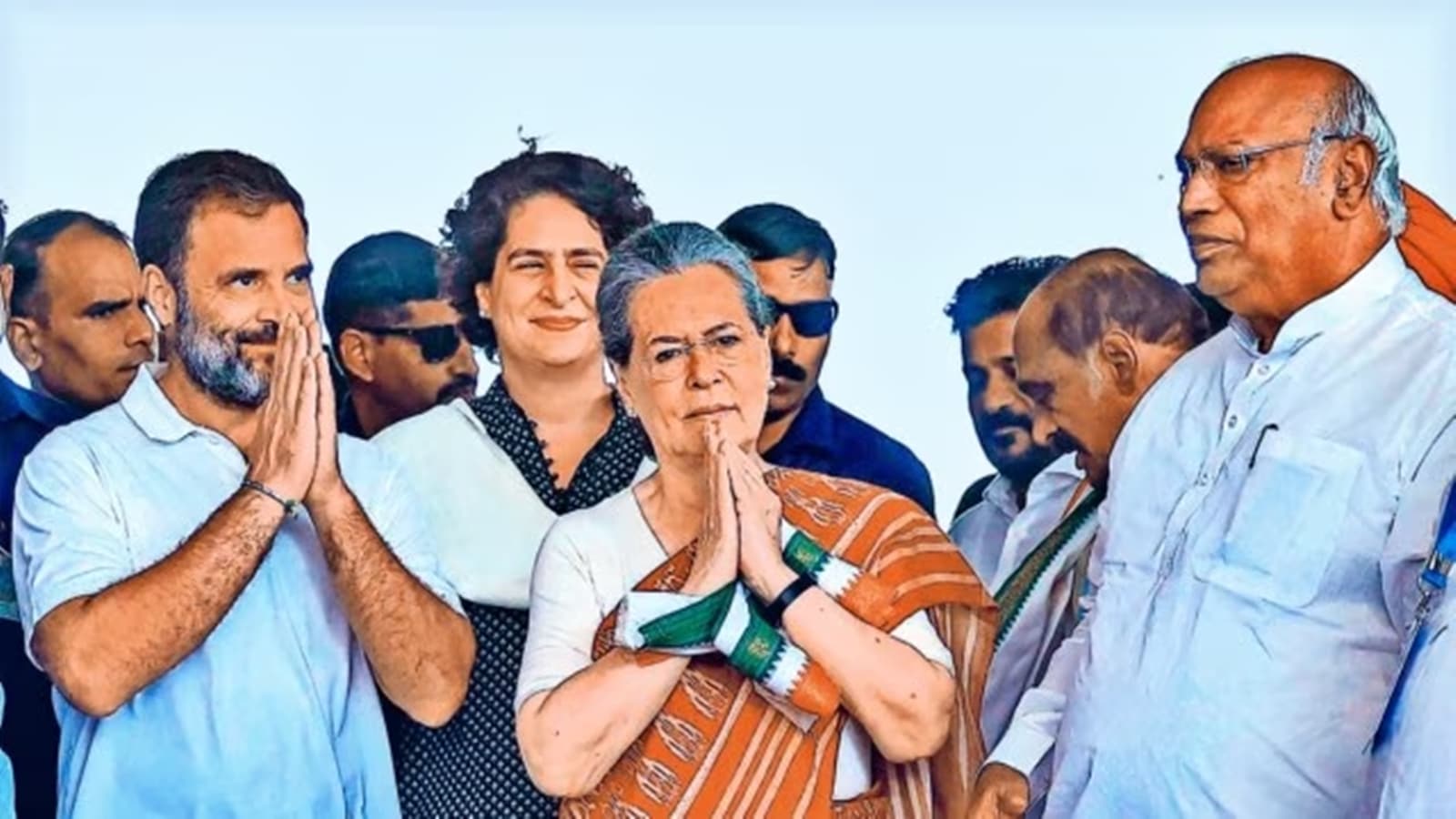
New Delhi | Political currents in India are witnessing a decisive shift, with the contest between the Indian National Congress and the Bharatiya Janata Party entering a new phase. While the Congress appears to be finding renewed confidence in southern India, its struggle to reinvent itself in the Hindi heartland of North India continues to raise difficult questions about leadership, generational change, and organisational inertia.
South India: a story of tactical maturity
In contrast to its northern challenges, the Congress under Rahul Gandhi has demonstrated a more adaptive political approach in the south. In Tamil Nadu, for instance, the emergence of actor-turned-politician Vijay’s TVK movement reshaped alliances, with Congress opting for strategic accommodation rather than confrontation. The party’s role in coalition politics in states like Karnataka, Telangana, and Kerala has helped it retain relevance and influence.

Observers note that this flexibility has allowed Congress to remain a key partner in southern power structures, even as it struggles to assert dominance independently.
North India: the unresolved leadership puzzle
However, the political narrative sharply changes as one moves north of the Vindhyas. Despite securing a notable share of the popular vote in recent elections, Congress continues to face an internal crisis of leadership renewal.
Party insiders and analysts argue that the core issue is not voter rejection but organisational stagnation. The persistence of entrenched leadership groups has slowed the rise of younger leaders such as Sachin Pilot, Deepender Singh Hooda, Jitu Patwari, and Kanhaiya Kumar.
These leaders are often seen as energetic and connected to grassroots realities, yet party structures reportedly continue to revolve around long-established figures who maintain organisational control despite limited electoral appeal.
BJP’s contrasting strategy
In contrast, the Bharatiya Janata Party has aggressively pursued generational change in key states such as Madhya Pradesh and Rajasthan, replacing veteran leaders with younger faces and more centralised campaign structures. This shift has helped the BJP maintain electoral momentum and organisational discipline.
Youth concerns and economic pressure
Beyond organisational politics, broader socio-economic challenges are also shaping voter sentiment. Rising unemployment among youth, inflationary pressures, and dissatisfaction over recruitment policies such as Agniveer have created underlying frustration in North India.

The latest economic indicators cited in political discourse suggest that youth unemployment remains significantly higher than the national average, reinforcing the demand for job-centric governance rather than symbolic politics.
The central question: reform or repetition?
Political commentators argue that the Congress still retains a significant vote base, but its inability to transition leadership from the “old guard” to a younger generation remains its most critical weakness.
The debate is no longer about whether the party has public support, but whether it can restructure itself to convert that support into electoral victories.
The road ahead
Analysts suggest that the future of Congress in North India depends on whether it undertakes what some describe as an “organisational surgery” — reducing dependence on ageing power centres and empowering younger leaders with real decision-making authority.
Without this transformation, the party risks remaining a significant but structurally constrained opposition force, even as political competition intensifies across the country.
For now, the question remains unresolved: how long will Congress continue to be bound by its past in the very region that decides India’s political future?







 ---------------------------------------------------------------------------------------------------