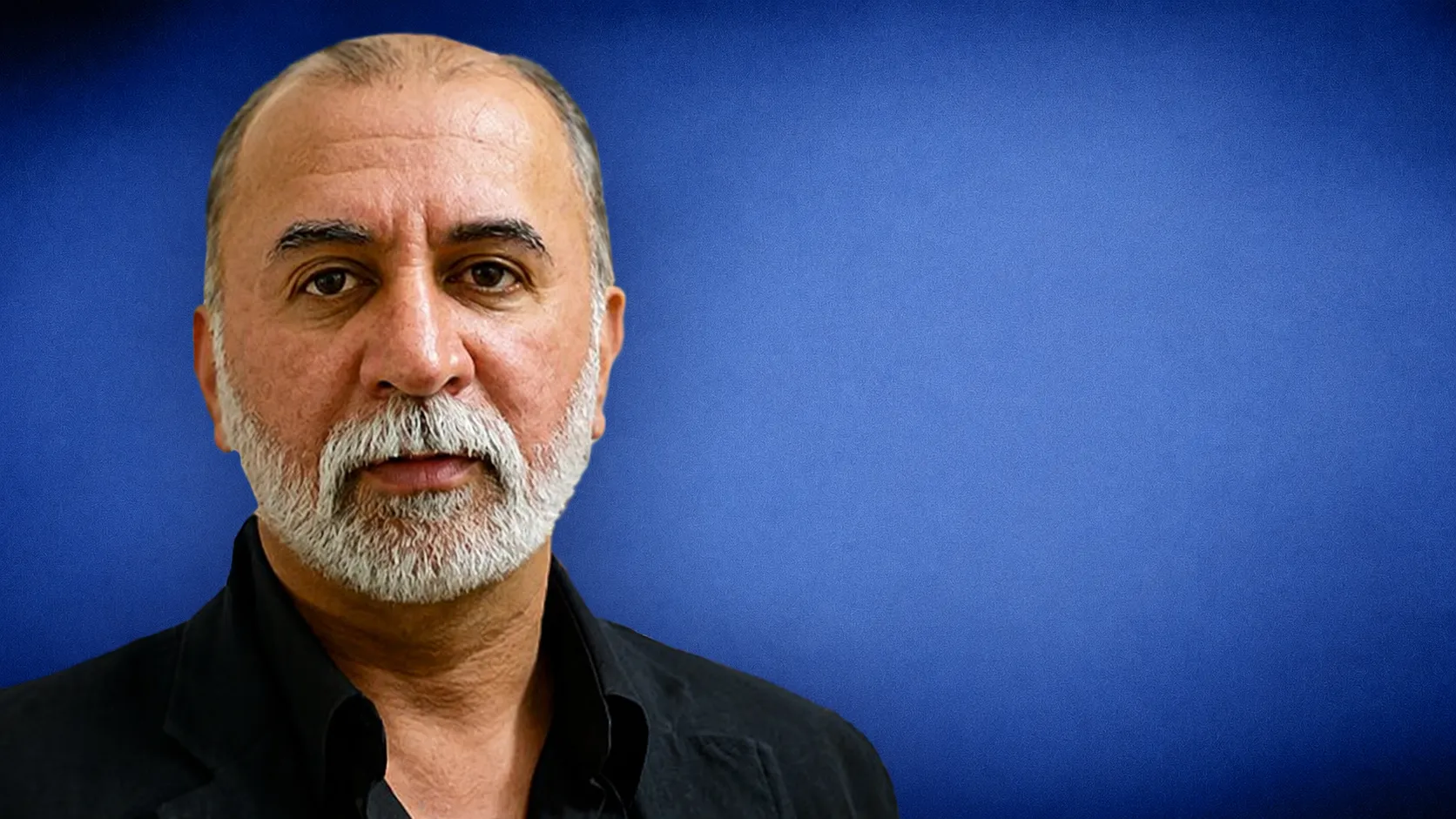
New Delhi / Goa: There was a time when Tarun Tejpal’s name meant something specific in Indian journalism — fearlessness, an appetite for confrontation with power, a willingness to burn bridges in service of a story. That reputation is gone now, replaced by something far darker: a ten-year rigorous imprisonment sentence, handed down by the Bombay High Court’s Goa bench, for the rape of a young colleague in a hotel elevator thirteen years ago. It’s a fall so complete, so thoroughly documented in his own words, that it reads less like a scandal and more like a slow-motion collapse captured on record.
To understand how far Tejpal fell, you have to understand how high he’d climbed.

The Making of a Crusader
Born in 1963, Tejpal cut his teeth at India Today and The Indian Express before striking out on his own in 2000 with Tehelka — initially just an online portal, unremarkable on paper. What made it matter was Operation West End, a 2001 sting in which Tehelka journalists posed as arms dealers and, with hidden cameras rolling, appeared to catch senior army officers, bureaucrats, and even the BJP’s own party president Bangaru Laxman taking bribes over a defence deal. It was the kind of story that ends careers and topples reputations, and it did exactly that — forcing resignations, rattling the NDA government, and turning Tehelka overnight into a name synonymous with fearless reporting.
From there, Tejpal kept building. Tehelka took on cricket match-fixing, human rights abuses, and a string of other investigations that cemented its identity as an institution unafraid of powerful people. Tejpal himself became something more than an editor — a public intellectual, a novelist (The Alchemy of Desire among his works), a man who spoke with authority on ethics, power, and accountability. By the early 2010s, Tehelka had positioned itself as a progressive institution, vocally opposed to violence against women. Tejpal hosted ThinkFest, a glossy annual gathering that pulled in international names — Robert De Niro among them at the 2013 edition, held at the Grand Hyatt in Bambolim, Goa.
It was at that same event, in that same hotel, that everything unraveled.
What Happened in the Elevator
A young journalist working for Tehelka — assigned to assist high-profile guests at the festival — later alleged that Tejpal sexually assaulted her inside a hotel elevator, not once but on two consecutive nights, November 7 and 8. Her account, laid out in an email to Tehelka’s then-managing editor Shoma Chaudhury, described force, restraint, and the abuse of a power imbalance that could hardly have been starker: he was her employer and her editor.
The story broke publicly around November 20-21, and Tejpal’s initial response has since become one of the most scrutinized documents in the entire case. He didn’t deny the incident outright. Instead, he wrote of a “bad lapse of judgement,” a “misreading of the situation,” an “unfortunate incident” — offering an unconditional apology and announcing he’d step back from Tehelka’s editorship for six months as what he called “penance.”
It wasn’t enough to contain the fallout. Goa police opened an investigation. Tejpal’s anticipatory bail was rejected, and he was arrested on November 30, 2013, spending roughly seven months behind bars before the Supreme Court granted him bail the following July. The chargesheet that followed invoked serious provisions of the Indian Penal Code — rape by a person in a position of trust or authority, sexual harassment, outraging modesty, wrongful restraint.
And then, for years, the case simply moved at the glacial pace such cases often do — charges framed long after the arrest, a trial conducted mostly behind closed doors, further delayed by the pandemic.
A Controversial Acquittal

In May 2021, a sessions court in Goa acquitted Tejpal on every count. The ruling ran to hundreds of pages, and its reasoning became almost as controversial as the verdict itself: the court found the prosecution hadn’t proven its case beyond reasonable doubt, and in doing so, dissected the complainant’s behavior before and after the alleged assault, finding it didn’t match what the court called “normative behaviour” expected of a survivor.
That framing didn’t sit well with a lot of people. Women’s rights advocates and legal experts pushed back hard, arguing the judgment leaned on outdated, stereotyped assumptions about how victims are “supposed” to act — assumptions that have quietly undermined sexual assault prosecutions for decades. The Goa government wasn’t satisfied either, and appealed the acquittal to the Bombay High Court.
The Reversal
That appeal reached its conclusion on August 6, 2026, when a division bench of Justices Neela Gokhale and Amit S. Jamsandekar set aside the trial court’s verdict entirely. The High Court convicted Tejpal under Sections 376(2)(f) and 376(2)(k) — aggravated rape involving someone in a position of trust or authority — along with additional charges covering sexual harassment, assault with intent to disrobe, and wrongful confinement.
The bench didn’t mince words about the trial court’s earlier reasoning, criticizing it for applying what it called an outdated and impermissible “perfect victim” standard. In its own assessment, the High Court found the survivor’s testimony credible, consistent, and of what it described as sterling quality — and it treated Tejpal’s own apology emails not as statements made under duress, but as voluntary admissions. The lower court’s handling of the evidence, the bench said, was perverse and out of step with the record.
The sentence: ten years of rigorous imprisonment on the rape counts, running concurrently, plus fines exceeding ₹10 lakh payable to the survivor. Tejpal was given time — first two weeks, later extended to four — to surrender, giving him room to approach the Supreme Court. He has continued to deny the allegations and says he intends to appeal.
A Reputation That Can’t Be Un-Broken
Whatever the Supreme Court eventually decides, something has already been settled outside the courtroom. Tehelka never recovered its footing after 2013 — its credibility took a hit it couldn’t shake, and much of its staff eventually moved on. Tejpal’s standing as a public voice on power and accountability didn’t just erode; it inverted. The uncomfortable irony has been pointed out again and again: a publication that built its identity partly on opposing violence against women became the site of a workplace sexual assault case involving its own founder.
There’s something almost instructive in how this story unfolded — the way it hinges not on ambiguous evidence but on Tejpal’s own words, written in the immediate aftermath, when he still believed an apology and a temporary step-back might be enough. Those emails, dismissed by one court as insufficient and treated by another as damning admissions, tell you something about how differently the same facts can be read depending on the assumptions a court brings to them.
As of now, the legal chapter isn’t fully closed — the Supreme Court appeal still looms. But the reputational one already is. A man once celebrated for holding power accountable spent over a decade being investigated, tried, acquitted, and ultimately convicted for abusing exactly that kind of power himself. It’s the kind of story that doesn’t need embellishment. The facts, laid out plainly, already make the point.