Islamabad — Pakistan’s reported unveiling of the D-248, a new long-range loitering munition, has generated considerable interest in defence circles because of its claimed range, endurance and striking visual resemblance to Iran’s Shahed-series attack drones.
The system was showcased by Heavy Industries Taxila (HIT) at the Indus Robotics and Autonomous Systems (RAS) Expo 2026. According to specifications presented at the event, the D-248 is claimed to have an operational range of between 2,200 and 3,000 kilometres and an endurance of up to 12–14 hours.

If independently verified, those figures would place the D-248 among the longest-range one-way attack drones currently being developed or fielded internationally. However, key technical details remain undisclosed, making it difficult to independently assess the manufacturer’s claims.
Shahed-like configuration
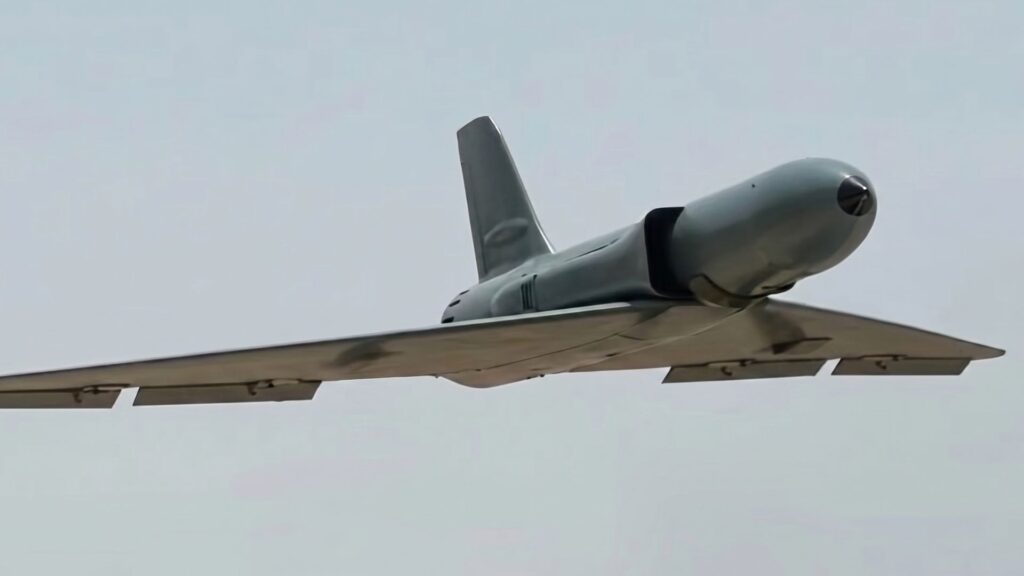
The D-248 reportedly features a tailless delta-wing configuration, a compact fuselage and a rear-mounted propeller. Its overall aerodynamic layout has prompted comparisons with Iran’s Shahed-136, a loitering munition that has become widely associated with the use of inexpensive, long-range drones in contemporary warfare.
The specifications displayed at the RAS Expo reportedly include a maximum take-off weight of around 240 kilograms, a warhead capacity of approximately 30–50 kilograms, a wingspan of about 3.3 metres, a maximum operating altitude of 4,500 metres and a cruising speed of around 185 kmph, with a claimed maximum speed of approximately 225 kmph.
The combination of relatively modest size, a substantial payload and the claimed range is one of the most significant aspects of the system. Such performance would require careful optimisation of the airframe, propulsion system, fuel capacity and onboard electronics.
Range claims remain unverified
The D-248’s reported 3,000-kilometre range has attracted particular attention. Pakistan already operates long-range missile systems, including the Babur cruise missile family and Shaheen ballistic missile series. A drone capable of travelling several thousand kilometres would nevertheless represent a different type of capability, potentially offering a lower-cost option for long-range strikes.
Loitering munitions can also present challenges for air-defence networks because they generally fly at relatively low speeds and can be employed in large numbers. Their relatively low unit cost can allow an attacker to place sustained pressure on expensive defensive systems.
However, the D-248’s claimed performance raises substantial technical questions. An aircraft weighing around 240 kilograms and carrying a payload of up to 50 kilograms would need highly efficient propulsion, considerable fuel endurance and a lightweight structure to achieve a flight lasting more than 12 hours.
No detailed information has publicly emerged regarding its engine, fuel capacity, guidance architecture or communications systems. As a result, the headline performance figures should currently be treated as manufacturer claims rather than independently established capabilities.
Iranian design influence suspected
The D-248’s external configuration has inevitably led to speculation about possible Iranian influence. Its triangular wings, compact fuselage and rear-propeller arrangement bear a broad resemblance to the design philosophy associated with the Shahed family.
Iran’s experience with relatively inexpensive, mass-produced loitering munitions has attracted worldwide attention. The concept relies on combining long range, low production costs and the ability to deploy drones in numbers large enough to complicate an adversary’s air-defence calculations.
There is, however, no publicly established evidence that Iran directly supplied or co-developed the D-248. Similar aerodynamic configurations can also emerge independently because delta-wing designs offer advantages for certain long-range unmanned aircraft, including structural simplicity and efficient use of internal volume.
Possible Chinese technology
Questions have also emerged over the potential origin of the D-248’s propulsion, avionics and other internal systems.
Pakistan has maintained extensive defence-industrial cooperation with China for decades. The two countries have collaborated on major programmes, including the JF-17 fighter aircraft, unmanned aerial systems and various missile and military technologies.

China possesses a large and increasingly sophisticated unmanned-systems industry, producing technologies ranging from airframes and propulsion systems to satellite-navigation equipment, flight-control computers and communications components.
That background has led some observers to speculate that Chinese-origin components could feature in the D-248. However, no specific Chinese company or supplier has publicly been identified as a source for the system, and the precise provenance of its major components remains unclear.
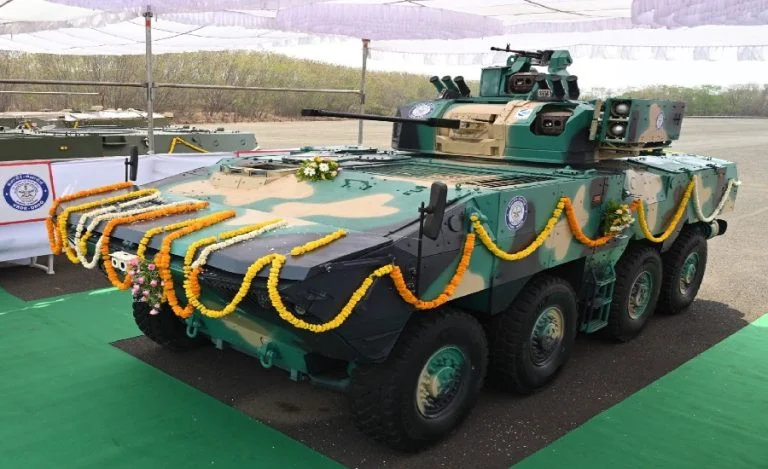
The involvement of HIT is also noteworthy. The organisation has traditionally been associated with Pakistan’s armoured-vehicle and defence manufacturing sector rather than the development of sophisticated aircraft. This could indicate cooperation with other Pakistani organisations or overseas technology partners, although the available information does not establish the precise development chain.
Part of a wider transformation in warfare
The D-248’s reported development comes amid a broader transformation in military technology. Conflicts in recent years have demonstrated how relatively inexpensive unmanned systems can be used against high-value targets and can impose significant costs on conventional air-defence networks.
For military planners, long-range loitering munitions offer several potential advantages. They can potentially be produced more cheaply than conventional cruise missiles, stored in large numbers and launched against a variety of fixed targets.
The reported endurance of the D-248 could also provide operators with greater flexibility. Rather than following a purely ballistic or predetermined flight path, a loitering munition can potentially remain in an area before engaging a designated target, depending on its guidance architecture and mission configuration.
Questions over testing and operational status
Despite the attention surrounding the system, several fundamental questions remain unanswered.
Publicly available information does not yet establish the extent of flight testing undertaken by the D-248 or whether the displayed specifications have been demonstrated under operational conditions. Details concerning its propulsion system, navigation methods, resistance to electronic warfare and terminal guidance capability have also not been fully disclosed.
It is similarly unclear whether the claimed 3,000-kilometre range represents an actual demonstrated operational capability, an estimated maximum under specific conditions or a projected performance figure.
These distinctions are critical. Long-range endurance, payload and speed cannot be evaluated in isolation; achieving a particular combination of range and payload depends heavily on fuel fraction, engine efficiency, airframe weight, atmospheric conditions and mission profile.
A potentially significant development
The D-248’s public appearance nevertheless highlights Pakistan’s growing interest in long-range unmanned strike systems.
Its design has prompted comparisons with Iran’s Shahed family, while Pakistan’s established defence relationship with China has fuelled speculation about the possible origin of its internal technologies. At present, however, neither a direct Iranian connection nor specific Chinese technical assistance has been publicly established.
For now, the D-248 is best viewed as a system of significant interest but with several important capabilities yet to be independently verified. Demonstrated flight testing, further technical disclosures and evidence of serial production will ultimately determine whether its ambitious specifications translate into a genuine long-range strike capability.
If the claimed performance is eventually confirmed, the system could mark another step in Pakistan’s effort to expand its unmanned warfare capabilities and would add to the growing global trend toward relatively inexpensive, long-range precision attack drones.