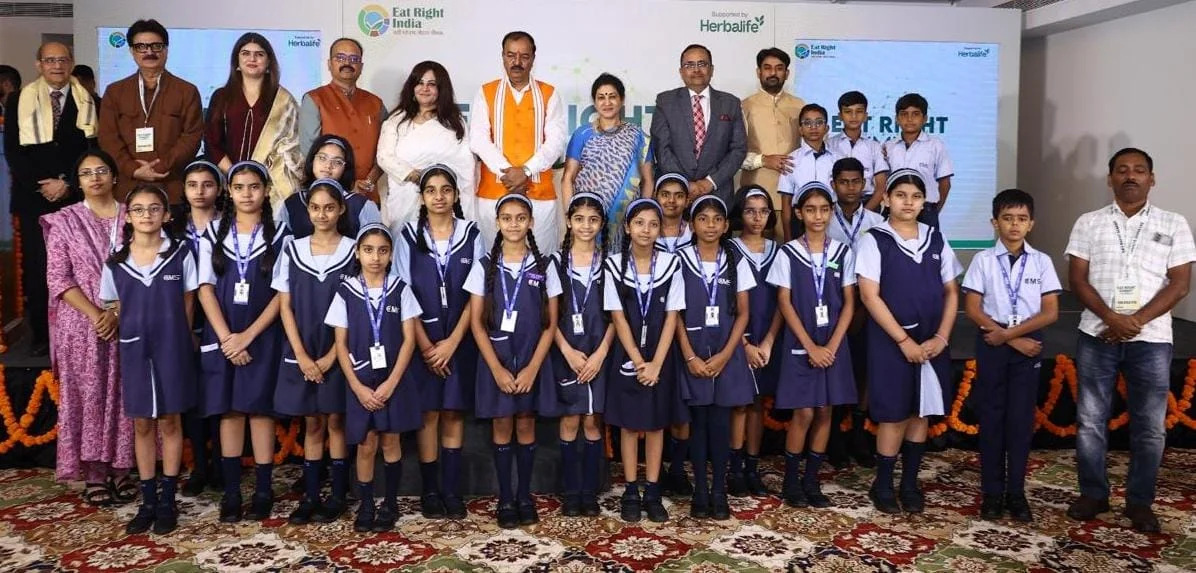
Lucknow: The Eat Right Summit – Lucknow 2026 brought together government representatives, food safety officials, health and nutrition experts, educators, food industry stakeholders, cultural personalities and wellness professionals to discuss food safety, balanced nutrition, protein awareness, obesity prevention and preventive healthcare.
The summit was organised in alignment with the Eat Right India Movement of the Food Safety and Standards Authority of India (FSSAI), under the Ministry of Health and Family Welfare, Government of India. Supported by Herbalife, the initiative focused on translating awareness into practical food and lifestyle choices and strengthening collective efforts towards healthier communities.

Uttar Pradesh Deputy Chief Minister Keshav Prasad Maurya addressed the inaugural session. He said good health does not begin in hospitals but starts in kitchens, on plates and through everyday choices, stressing the importance of making safe and nutritious food choices part of daily life.
Herbalife India Managing Director Ajay Khanna said collaboration is essential for building healthier communities and reiterated the company’s stated commitment to nutrition awareness, quality and safety standards.
The summit featured Vijay Pratap Singh, Assistant Commissioner, Food Safety, Lucknow; Dr Anita Bhatnagar Jain, IAS (Retd.), former Additional Chief Secretary, FSDA, Uttar Pradesh; Jayant Krishna, former CEO, NSDC and Senior Fellow, CSIS; and Dr Anees Ansari, former Additional Chief Secretary, Uttar Pradesh, among others.


Two panel discussions focused on obesity prevention and improved nutrition. Sessions titled “Eat Right India: From Awareness to Action for Obesity Prevention” and “Protein for Progress: A Collaborative Approach to Better Nutrition” examined public awareness, affordable protein-rich food choices, dietary diversity, balanced diets and active lifestyles.
Author, artist, cartoonist, playwright, screenwriter and environmentalist Abid Surti and Padma Shri Dr Vidya Bindu Singh also delivered special addresses, bringing cultural and social perspectives to the discussions.
The summit highlighted the importance of a multi-sectoral approach involving healthcare, food, education, industry, wellness, media and culture in advancing nutrition awareness and preventive healthcare.











 https://www.youtube.com/watch?si=RtToJsBhYBatUrym&v=mOuYNSdhjHA&feature=youtu.be