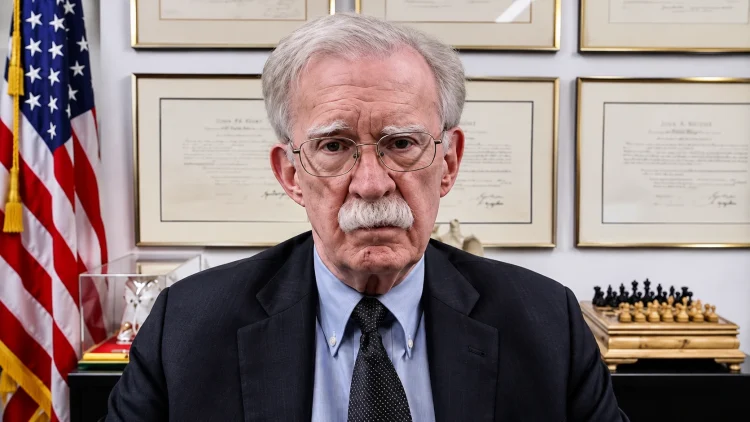
Washington: Former US National Security Adviser John Bolton has urged Democrats to use their expanded congressional strength to challenge Donald Trump’s trade policies, calling for legislation to repeal tariffs that have strained relations with key trading partners, including India.
Bolton has suggested that Democratic lawmakers introduce a bill in January to reverse Trump’s trade measures. Although the legislation could face a presidential veto, he believes the move would draw attention to the economic consequences of the tariffs and put pressure on the administration.
Trade Disputes Overshadow Strategic Partnership
Bolton expressed concern that disagreements over tariffs have diverted attention from areas where India and the United States share important strategic interests, particularly regional security and the growing influence of China in the Indo-Pacific.
“The tragedy is that a lot of important issues that the US and India have in common, concerns about security with respect to China, have been lost in the shuffle while we’ve been arguing about these tariff issues,” Bolton said.
India and the United States have expanded cooperation in defence, technology, intelligence sharing and regional security in recent years. Bolton believes these areas should remain central to bilateral engagement despite differences over trade.
He warned that prolonged economic disagreements could undermine the broader relationship and weaken cooperation on issues of mutual interest.
Democrats Seek to Challenge Trump’s Trade Policy
The reported Democratic gains in the midterm elections have changed the political equation in Washington, giving the party greater influence over congressional proceedings and legislative priorities.
With control of both chambers of Congress, Democrats could intensify scrutiny of the administration’s decisions through committee hearings, investigations and legislative initiatives.
Bolton’s proposal to introduce a tariff repeal bill in January is aimed at putting Trump’s trade policy under renewed political pressure. Even if the legislation fails to become law, the debate could bring the impact of tariffs on businesses, consumers and international relations into sharper focus.
Trade restrictions and rising living costs have remained important issues in the American political debate, giving Democrats an opportunity to challenge the administration’s economic approach.
Presidential Veto Remains a Major Obstacle
Any attempt to reverse Trump’s trade measures through legislation could face resistance from the White House. Under the US constitutional system, the president can veto bills passed by Congress, making it difficult for lawmakers to overturn major policy decisions without sufficient support.
Bolton acknowledged this possibility and suggested that Washington could enter a prolonged period of political confrontation.


He described the likely situation as one of political “trench warfare”, with the White House and Congress repeatedly challenging each other’s positions.
Trump, meanwhile, has indicated that he does not want the coming two years to be dominated by legislative battles and repeated presidential vetoes. However, he is also expected to defend his administration’s policy priorities.
Ro Khanna Points to Cost-of-Living Concerns
Indian-American Congressman Ro Khanna has also commented on the Democratic gains, linking the election outcome to voter dissatisfaction with Trump’s political and economic direction.
Khanna pointed to the rising cost of living as a major factor influencing voters and predicted a substantial Democratic majority in the House of Representatives.
His remarks underline the importance of household expenses, consumer affordability and economic policy in shaping the political debate.
Democratic lawmakers will now face pressure to translate their electoral gains into concrete legislative action, particularly on issues affecting ordinary Americans.
India-US Relations at a Critical Juncture
Bolton’s remarks draw attention to the need to separate trade disagreements from the wider strategic relationship between New Delhi and Washington.
While tariffs remain a contentious issue, cooperation between the two countries on defence, regional stability and concerns over China’s growing influence remains significant.
A change in congressional priorities could open the door to fresh discussions on trade restrictions. However, any meaningful reversal of Trump’s tariff policy will depend on the balance of power between Congress and the White House.
For India, the key concern is whether economic disputes will affect progress in strategic and defence cooperation. Bolton’s position is that both countries should give greater attention to their shared security interests rather than allowing trade disagreements to dominate bilateral relations.








 https://www.youtube.com/watch?si=RtToJsBhYBatUrym&v=mOuYNSdhjHA&feature=youtu.be