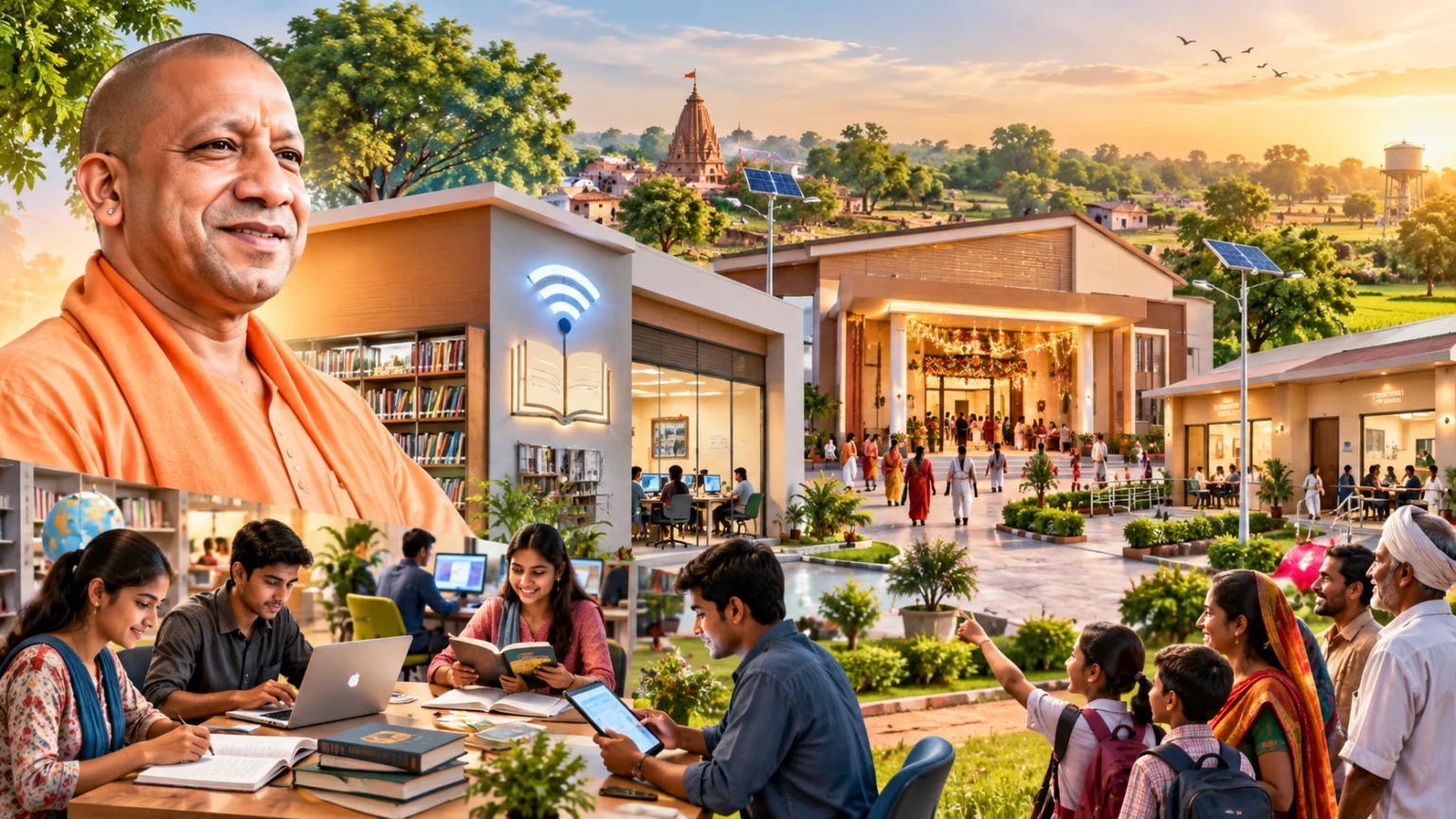
Lucknow: The Uttar Pradesh government, under Chief Minister Yogi Adityanath, is accelerating efforts to transform gram panchayats into modern centres for education, digital access and community activities. The state’s 2026-27 Budget places a strong emphasis on digital libraries, multipurpose panchayat buildings and community facilities in rural areas.
A provision of ₹454 crore has been made for establishing digital libraries at the gram panchayat and ward levels. The initiative is aimed at bringing digital educational resources closer to rural students and young people, including e-books, online study material and content for competitive examinations.

The proposed digital libraries are envisioned as more than conventional reading spaces. They will provide rural youth with access to digital learning resources and support digital literacy while encouraging reading and self-learning habits. The government is also focusing on equipping these facilities with appropriate IT infrastructure, furniture, books and e-content.
In several districts, the supply of furniture and books has reportedly been completed, while administrative and payment processes are continuing at some locations. Standard Operating Procedures (SOPs) are also being emphasised to ensure proper maintenance and effective functioning of the libraries.
Alongside digital infrastructure, the 2026-27 Budget provides around ₹57 crore for the construction of 1,000 multipurpose panchayat buildings. The government’s broader approach is to move beyond using panchayat buildings solely for administrative functions and develop them as centres for education, social engagement and community activities. The facilities are expected to provide rural residents with better spaces for public programmes and local development activities.


Another major component is the proposed provision of ₹100 crore for Panchayat Utsav Bhawans/Barat Ghars in rural areas of each Assembly constituency. These facilities can be used for weddings, social functions and other community events. The initiative is intended to provide villages with accessible community spaces while strengthening the social infrastructure available at the grassroots level.
The government is also seeking to ensure that the infrastructure created under the initiative remains functional and useful. Key areas identified for digital library operations include building safety and cleanliness, management of books and furniture, IT equipment, inspection and reporting, citizen feedback, accountability and compliance.
The emphasis on monitoring indicates that the programme is not limited to creating infrastructure but also focuses on its regular operation, maintenance and public utilisation. With digital libraries providing rural youth access to modern learning resources and community buildings creating spaces for social activities, the government sees gram panchayats evolving beyond administrative units into centres of education, digital empowerment and community development.












 https://www.youtube.com/watch?si=RtToJsBhYBatUrym&v=mOuYNSdhjHA&feature=youtu.be