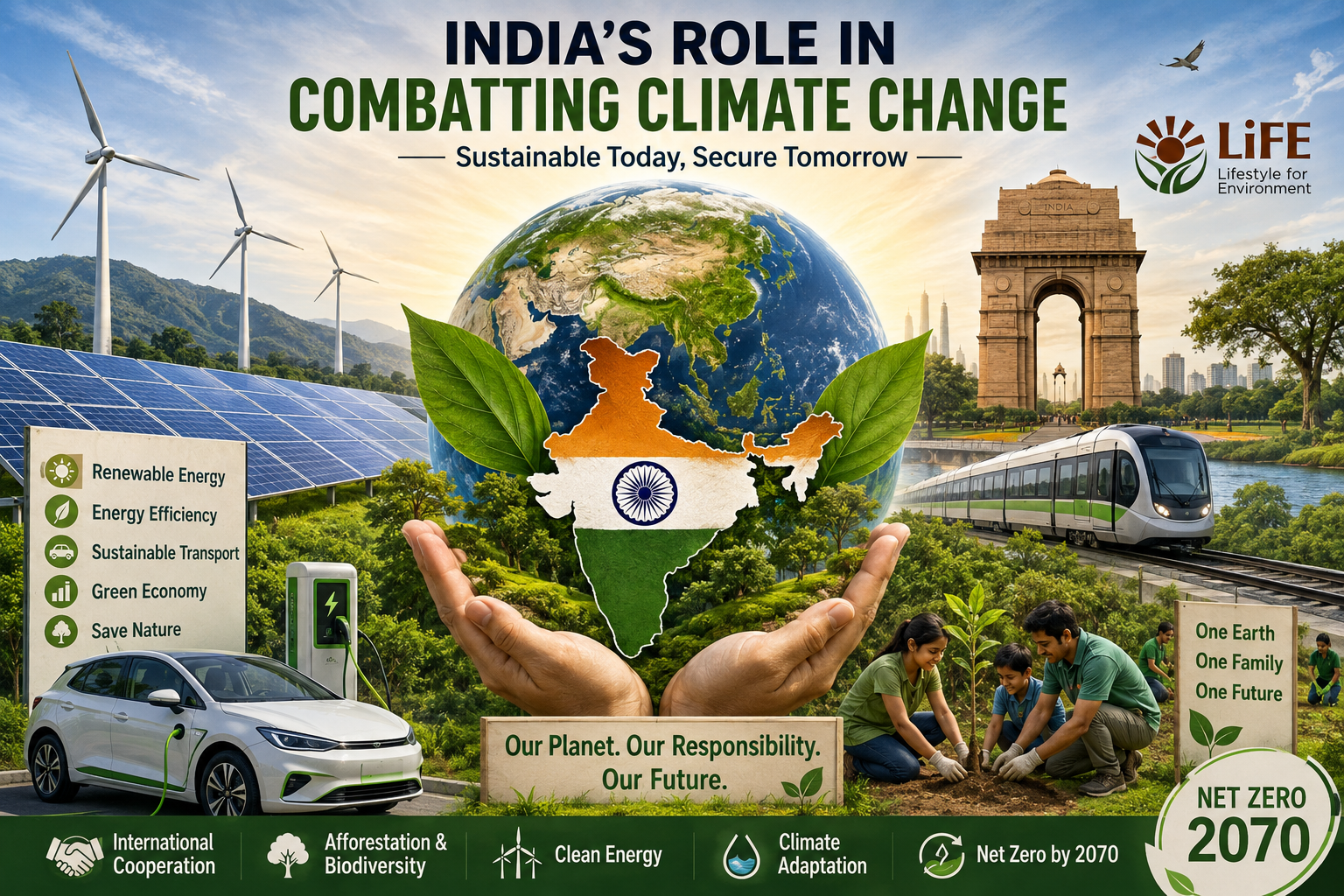
New Delhi: India occupies a fairly unique position in the global climate debate. It’s the world’s third-largest emitter of greenhouse gases in absolute terms, yet its per capita emissions remain well below those of developed economies. As a rapidly developing nation of more than 1.4 billion people, India faces a genuine balancing act — sustaining economic growth while working to shrink its environmental footprint.
India’s climate commitments

India has sharpened its climate ambitions under the Paris Agreement by updating its Nationally Determined Contributions. Its key pledges include:
- Cutting the emissions intensity of its GDP by 45% from 2005 levels by 2030
- Sourcing around 50% of installed electricity capacity from non-fossil fuels
- Creating an additional carbon sink through expanded forest and tree cover
- Reaching net-zero emissions by 2070
Together, these targets reflect India’s attempt to reconcile development needs with climate responsibility.
Progress so far
The country has made real strides in renewable energy. It’s become one of the world’s largest markets for solar power, driven by initiatives like the National Solar Mission, while wind, hydropower and bioenergy continue to grow. Large solar parks and rooftop installations are steadily expanding clean electricity generation, and the government is pushing electric mobility through incentives for EVs and battery manufacturing. Green hydrogen has also emerged as a major priority, backed by the National Green Hydrogen Mission — alongside continued investment in energy efficiency through LED lighting, efficient appliances, and greener building standards.
A voice for climate justice
India has positioned itself as a leading advocate for climate justice on the world stage, arguing that developed nations — which bear the greatest responsibility for historical emissions — should shoulder a bigger share of the burden when it comes to financing climate action and transferring clean technology to developing countries.
The country co-founded the International Solar Alliance, which now brings together more than 120 nations working to accelerate solar deployment, and it has also launched the Coalition for Disaster Resilient Infrastructure to help strengthen climate resilience globally.

Challenges ahead
Despite this progress, India still faces significant hurdles: heavy reliance on coal for power generation, rising energy demand driven by rapid urbanisation and industrial growth, and mounting climate impacts such as heatwaves, floods, droughts and glacier melt. There’s also a pressing need for substantial climate finance to support the energy transition, and the delicate task of protecting livelihoods in coal-dependent regions even as clean energy expands.
India’s strengths
On the plus side, India brings real advantages to the table — abundant solar and wind resources, a fast-growing renewable energy industry, strong government backing for clean technologies, and rising investment in green manufacturing, battery storage and hydrogen. Its young workforce is also seen as a key asset in driving innovation in sustainable technologies.
Where India stands globally
India is increasingly viewed as a climate leader among developing nations, and international assessments have often rated its climate policies more favourably than those of several major economies, largely because its current trajectory tracks closely with what it has actually committed to. Still, meeting its longer-term goals will require faster rollout of renewables, a modernised electricity grid, greater investment in storage technology, and a gradual weaning off coal.
India’s climate strategy reflects the realities of a developing economy trying to grow sustainably — not choosing between development and environmental protection, but attempting both at once. How far it gets will depend on sustained policy support, technological innovation, international cooperation, and greater access to climate finance, all of which will shape whether India can meet its ambitious targets and play a decisive role in the global fight against climate change.