Lucknow: Uttar Pradesh is rapidly emerging as a leader in India’s electric vehicle (EV) revolution, with the state now accounting for 18% of the country’s total EV sales. Riding on the success of its Electric Vehicle Manufacturing and Mobility Policy-2022, the Yogi Adityanath government has set an ambitious target of increasing this share to 25–30% over the next two years.

According to the state’s Transport Department, demand for electric vehicles has witnessed remarkable growth, reflected in a 241% year-on-year increase in approved EV subsidy applications during the financial year 2025-26. So far, 86,489 subsidy applications have been approved, with financial assistance already disbursed to more than 43,000 beneficiaries.
Official figures show that between July 19, 2023, and March 31, 2024, the state approved 15,091 subsidy applications for electric two-wheelers, four-wheelers, e-buses, and electric goods carriers. This was followed by 13,950 approvals in 2024-25, while the number surged to 47,514 during 2025-26. Between April 1 and June 22, 2026, nearly 9,934 applications were approved in less than three months, indicating sustained momentum in EV adoption.
Electric two-wheelers continue to dominate the market, with 61,417 subsidy approvals issued in this category. The state has also approved subsidies for 24,959 electric four-wheelers, 104 electric goods carriers, and nine electric buses.
The state’s growing prominence has also been acknowledged nationally. According to the NITI Aayog’s 2024 report, Uttar Pradesh accounts for around 18% of all electric vehicles sold in India. Government officials and industry experts believe that the introduction of a ₹440 crore subsidy package, combined with expanding charging infrastructure, could help the state capture up to 30% of the national EV market in the coming years.

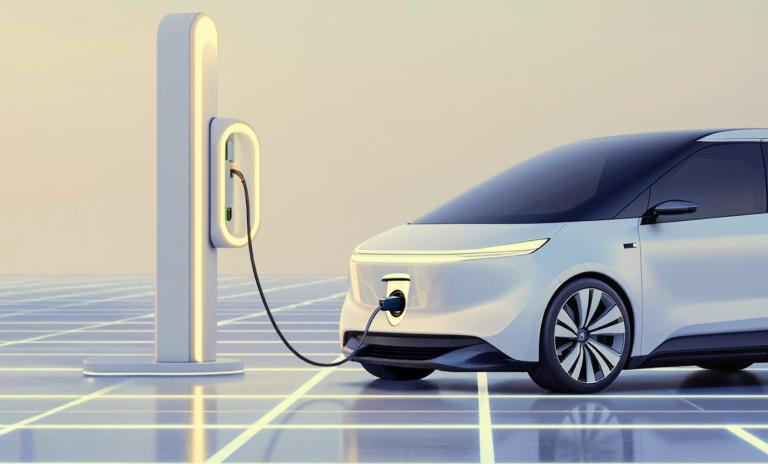
Uttar Pradesh currently has more than 1.5 million registered electric vehicles, supported by a steadily expanding charging network. Over the past five years, the state has established 2,316 EV charging stations, including 540 fast chargers and 1,776 slow chargers.
Experts estimate that nearly 38,000 charging stations will eventually be required to meet future demand. To address this, Uttar Pradesh Renewable and EV Infrastructure Limited (UPREV) is developing additional charging facilities through the Public-Private Partnership (PPP) model at expressways, major cities, bus terminals, railway stations, and tourist destinations. High-speed charging stations have already been installed along the Yamuna Expressway, Delhi–Meerut Expressway, and Lucknow–Agra Expressway.
The state government has also digitised the subsidy distribution process to ensure transparency and efficiency. Under the Uttar Pradesh Electric Vehicle Manufacturing and Mobility Policy-2022, implemented on October 14, 2022, applicants can complete the entire subsidy process online through the dedicated portal. After multi-level verification of vehicle registration, Aadhaar, bank details, and other required documents, the subsidy amount is transferred directly to beneficiaries’ bank accounts, while applicants can track their application status online.
With rising consumer demand, expanding infrastructure, and continued policy support, Uttar Pradesh is positioning itself as one of India’s fastest-growing electric mobility hubs and a key driver of the country’s transition to sustainable transportation.












 https://www.youtube.com/watch?si=RtToJsBhYBatUrym&v=mOuYNSdhjHA&feature=youtu.be