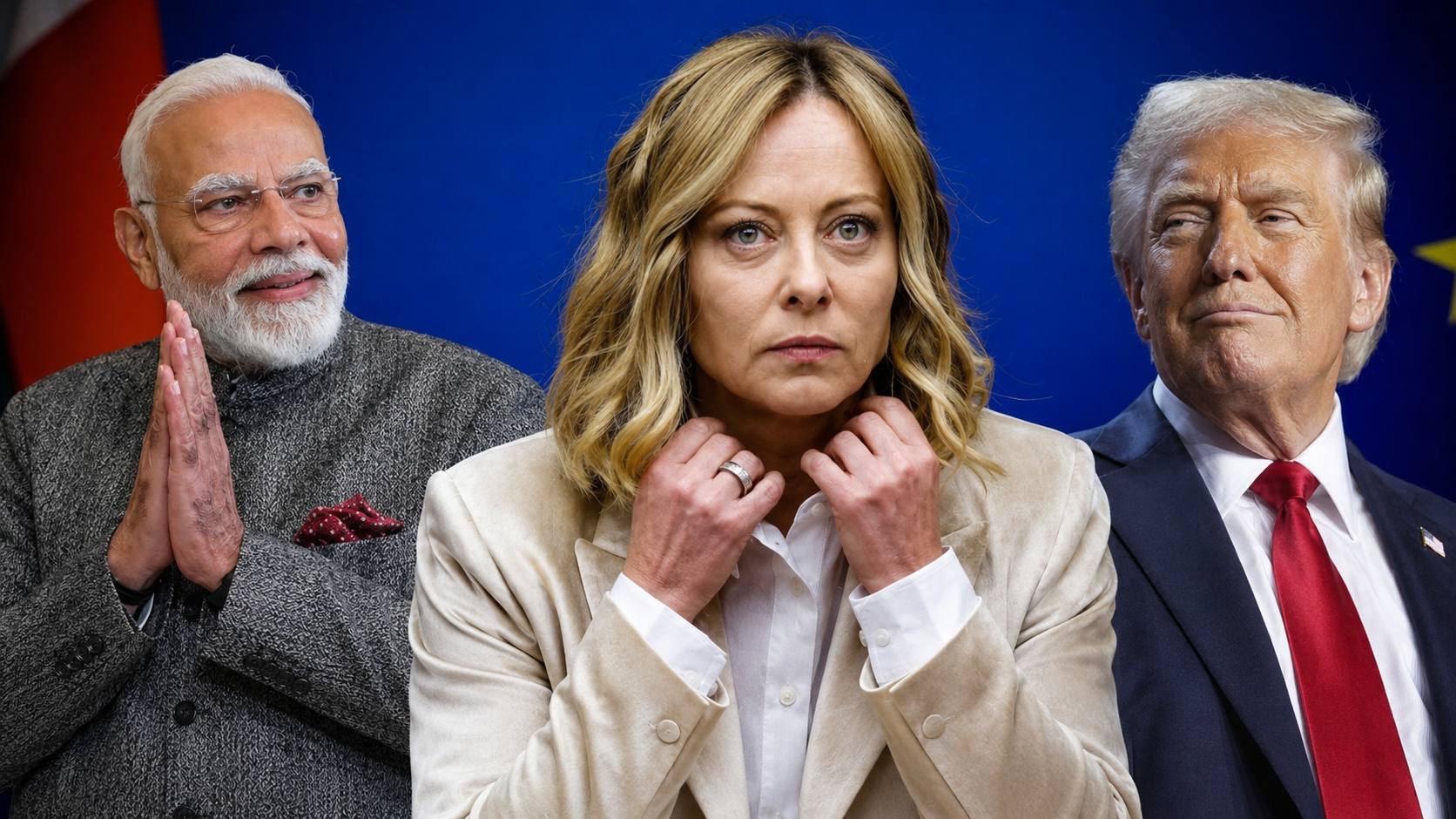
New Delhi: A recent exchange of sharp public remarks between U.S. President Donald Trump and Italian Prime Minister Giorgia Meloni has sparked international debate about national sovereignty, strategic autonomy, and the limits of personal diplomacy. While the developments have drawn attention across global political circles, they also offer a broader discussion on how nations balance partnerships with the protection of their independent foreign policy interests.
The episode has highlighted a key principle of international relations: strong bilateral ties are often tested when national interests diverge. Political observers note that the situation underscores the importance of maintaining a clear distinction between personal rapport among leaders and the long-term strategic priorities of their respective countries.

Strategic Differences Take Centre Stage
According to reports, differences emerged between Washington and Rome over security and foreign policy issues, particularly concerning military cooperation and regional conflicts. While Italy remains a close Western ally of the United States and a member of NATO, the Italian government has emphasized that decisions involving military facilities and national security must align with domestic priorities and constitutional processes.
The developments have been viewed by many analysts as an example of a country seeking to protect its decision-making autonomy while maintaining constructive international partnerships.
Sovereignty and National Interest
Foreign policy experts often argue that sovereignty is most visibly demonstrated when governments take positions based on national interest, even when dealing with powerful allies. In this context, Italy’s approach has been cited as an illustration of how countries can maintain strategic relationships while preserving independent policy choices.
Political commentators note that modern diplomacy increasingly requires nations to balance cooperation with self-reliance. As geopolitical competition intensifies, countries are being compelled to define clear red lines regarding security, trade, and foreign policy.
Lessons for Emerging Powers
For countries aspiring to play larger roles on the global stage, the debate reinforces the significance of strategic autonomy. Analysts suggest that successful diplomacy is not solely built on personal relationships between leaders but on institutions, long-term interests, and consistent policy frameworks.

India, which has expanded its engagement with major powers while maintaining an independent foreign policy tradition, is often cited as a leading example of balancing multiple international partnerships. Experts believe that emerging powers must continue strengthening their ability to engage with all sides while preserving freedom of decision-making.
Beyond Personal Diplomacy
The discussion has also revived a longstanding debate about the role of leader-to-leader diplomacy. While personal chemistry can help strengthen bilateral ties, foreign policy specialists point out that enduring international relationships are ultimately guided by national priorities, economic interests, security concerns, and strategic calculations.
Modern diplomatic practice increasingly demands that governments communicate their positions clearly and confidently when issues of sovereignty or national interest are involved. Clear messaging, analysts say, helps maintain credibility both domestically and internationally.
The Broader Takeaway
The recent diplomatic friction serves as a reminder that international partnerships are strongest when built on mutual respect and recognition of each country’s independent decision-making authority. As global power dynamics continue to evolve, nations are likely to place greater emphasis on strategic autonomy, policy flexibility, and the protection of national interests.
For policymakers around the world, the episode offers an opportunity to reflect on the evolving nature of diplomacy in an era where cooperation and competition often coexist. Ultimately, the debate highlights a fundamental principle of international relations: strong alliances endure not through dependence, but through mutual respect, sovereign equality, and a shared commitment to national interests.







 ---------------------------------------------------------------------------------------------------