New Delhi: Relations between India and Bangladesh occupy a unique place in South Asian diplomacy. India’s political, military, and humanitarian support during Bangladesh’s Liberation War in 1971 laid the foundation for a partnership built on trust, shared history, and mutual respect. Over the past five decades, the two neighbours have made remarkable progress in trade, security cooperation, connectivity, energy partnerships, water management, and cultural exchanges.
India’s “Neighbourhood First” policy and Bangladesh’s development-oriented foreign policy have contributed significantly to strengthening bilateral ties. Yet, despite these achievements, recent years have witnessed growing signs of mistrust and unease between the two countries. This evolving situation highlights an important reality: relations between neighbouring nations are shaped not only by strategic interests but also by perceptions, sensitivities, and public sentiment.

India and Bangladesh share a 4,096-kilometre border, the longest land border India shares with any neighbouring country. Deep cultural, linguistic, and historical connections bind the people of both nations. Major achievements such as the Land Boundary Agreement, enhanced border management, counter-terrorism cooperation, energy trade, and regional connectivity projects have demonstrated the potential of this partnership. Bangladesh has emerged as one of India’s key trading partners, while also playing a vital role in connecting India’s northeastern states with the rest of the country.
For this reason, trust and cooperation between India and Bangladesh are not merely bilateral concerns; they are essential for the stability and prosperity of the entire South Asian region.
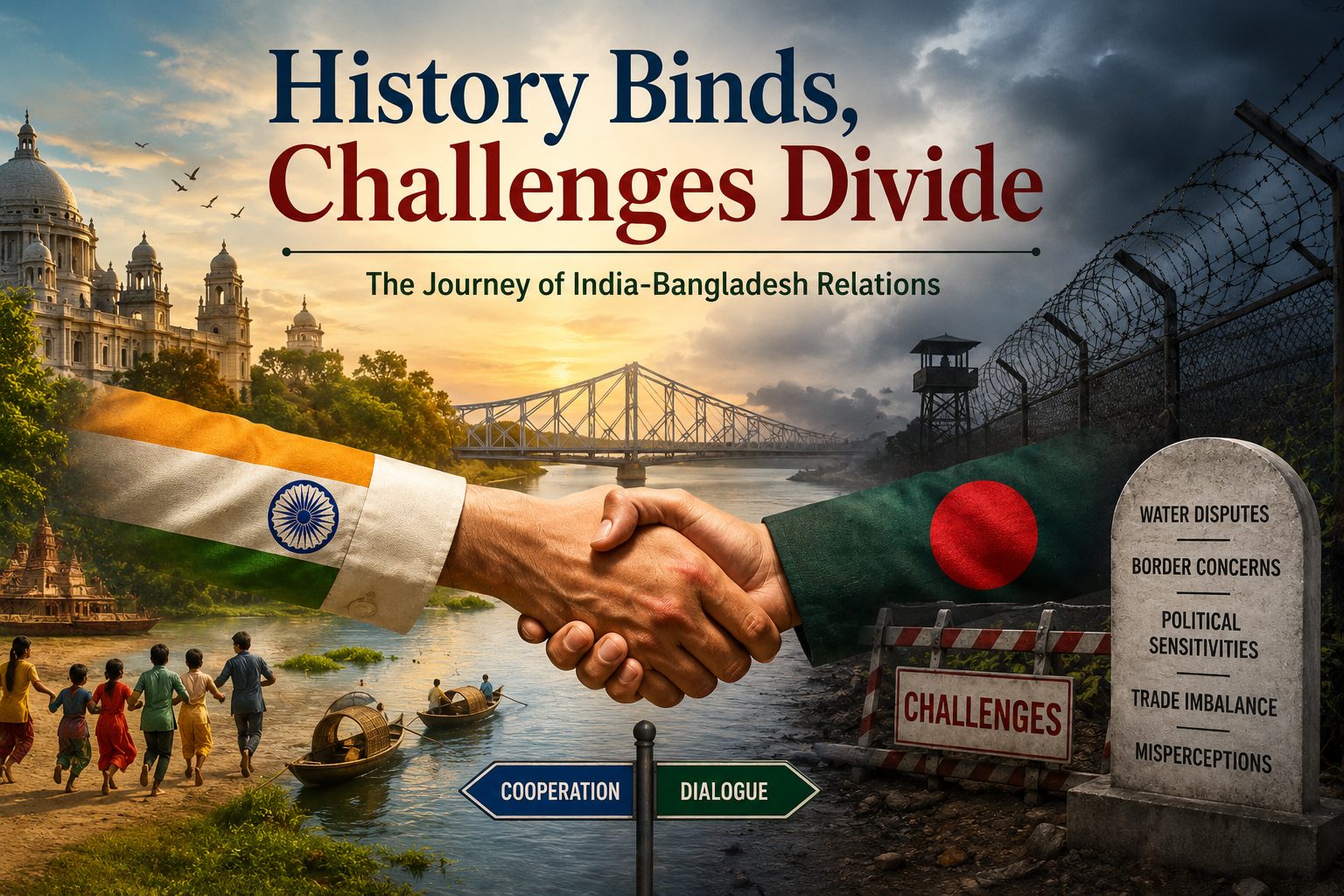
One of the factors influencing recent tensions has been political change within Bangladesh. Shifts in domestic politics, political competition, and changing public narratives have created differing perceptions regarding India’s role in the country’s internal affairs. Some political groups in Bangladesh have expressed concerns that India appears closer to certain political forces, while India has consistently maintained that its primary objective is regional stability and development. Whether such perceptions are accurate or not, they influence public opinion and can create psychological distance between neighbours.
The long-pending Teesta River water-sharing agreement remains another major challenge. For Bangladesh, Teesta water is critical for agriculture and livelihoods in northern regions. Delays in reaching a mutually acceptable agreement have contributed to frustration and perceptions that Bangladesh’s concerns have not received adequate attention. India’s federal structure, where state governments also play an important role in water-related decisions, has complicated negotiations. Nevertheless, prolonged delays have allowed mistrust to grow. Sustainable and equitable water-sharing arrangements remain essential for long-term confidence-building.
Border-related issues continue to be another sensitive area. Challenges such as smuggling, illegal migration, and security concerns have occasionally resulted in unfortunate incidents along the border. Civilian casualties and reports of border violence often generate strong reactions within Bangladesh and affect public perceptions of India. While border security forces from both countries have increased coordination and cooperation, such incidents continue to carry emotional and political consequences. Borders are not merely security zones; they are also spaces where human, social, and economic relationships intersect.
Issues such as the Citizenship Amendment Act (CAA) and the National Register of Citizens (NRC) have also generated concerns in Bangladesh. Although India has repeatedly described these measures as internal policy matters, some voices in Bangladesh have expressed apprehension about their potential long-term implications. In international relations, perceptions often matter as much as realities, and concerns arising from domestic policies can sometimes influence diplomatic discourse.
China’s expanding presence in South Asia has added another dimension to India-Bangladesh relations. Bangladesh has sought economic partnerships and infrastructure investments from multiple countries, including China, to support its development ambitions. From India’s perspective, the growing influence of external powers in the region naturally raises strategic concerns. At the same time, Bangladesh seeks to maintain a balanced foreign policy and diversify its economic opportunities. In such circumstances, transparency and continuous dialogue become critical to preventing misunderstandings.

Trade imbalances also contribute to concerns. Although bilateral trade has grown substantially, Bangladesh has often sought greater access for its products in the Indian market and the reduction of non-tariff barriers. If perceptions of economic imbalance persist, they can eventually influence political attitudes. Building a more balanced and inclusive economic partnership would therefore benefit both nations.
The rise of social media and digital communication has further complicated bilateral relations. Misinformation, misleading narratives, and emotionally charged content can spread rapidly across borders, often amplifying minor incidents into major controversies. Such developments can create misunderstandings among citizens and place additional pressure on governments. In this environment, responsible media practices and fact-based public discourse are more important than ever.
For India, one of the key challenges is balancing its strategic interests with the sensitivities of neighbouring countries. As the region’s largest economy and a major power, India’s actions naturally have a significant impact on its neighbours. A policy approach focused solely on national interests may not always be sufficient; understanding the expectations and concerns of neighbouring countries is equally important. Similarly, Bangladesh must recognize India’s legitimate security concerns, particularly those related to its northeastern region. Mutual respect for each other’s priorities is essential for a stable partnership.
Rebuilding trust requires concrete action. Progress on the Teesta water-sharing agreement could send a strong positive signal. Adopting a more humanitarian approach to border management, expanding joint patrols, and strengthening technological cooperation can help address security concerns while reducing tensions. Greater market access for Bangladeshi products and deeper economic integration would also contribute to a more balanced relationship.
Regular and institutionalized high-level political dialogue remains equally important. Frequent communication between leaders helps prevent misunderstandings and facilitates timely resolution of disputes. At the same time, people-to-people engagement through education, culture, tourism, sports, and media exchanges should be encouraged. Trust between governments is vital, but trust between citizens is just as important.
Regional platforms such as BIMSTEC and BBIN can also play a constructive role. Cooperation in areas such as climate change, disaster management, maritime security, renewable energy, and regional connectivity can create shared benefits and strengthen mutual confidence.
Ultimately, India-Bangladesh relations are far more than a conventional diplomatic partnership. They are rooted in a shared history, common cultural heritage, geographic proximity, and a legacy of cooperation. While recent tensions and mistrust highlight the complexities of managing neighbourly relations, they also offer an opportunity for both countries to renew their commitment to dialogue, mutual respect, and shared development.
If India and Bangladesh can successfully address current challenges and rebuild trust on a stronger foundation, they will not only strengthen their bilateral relationship but also contribute significantly to peace, stability, and prosperity across South Asia.