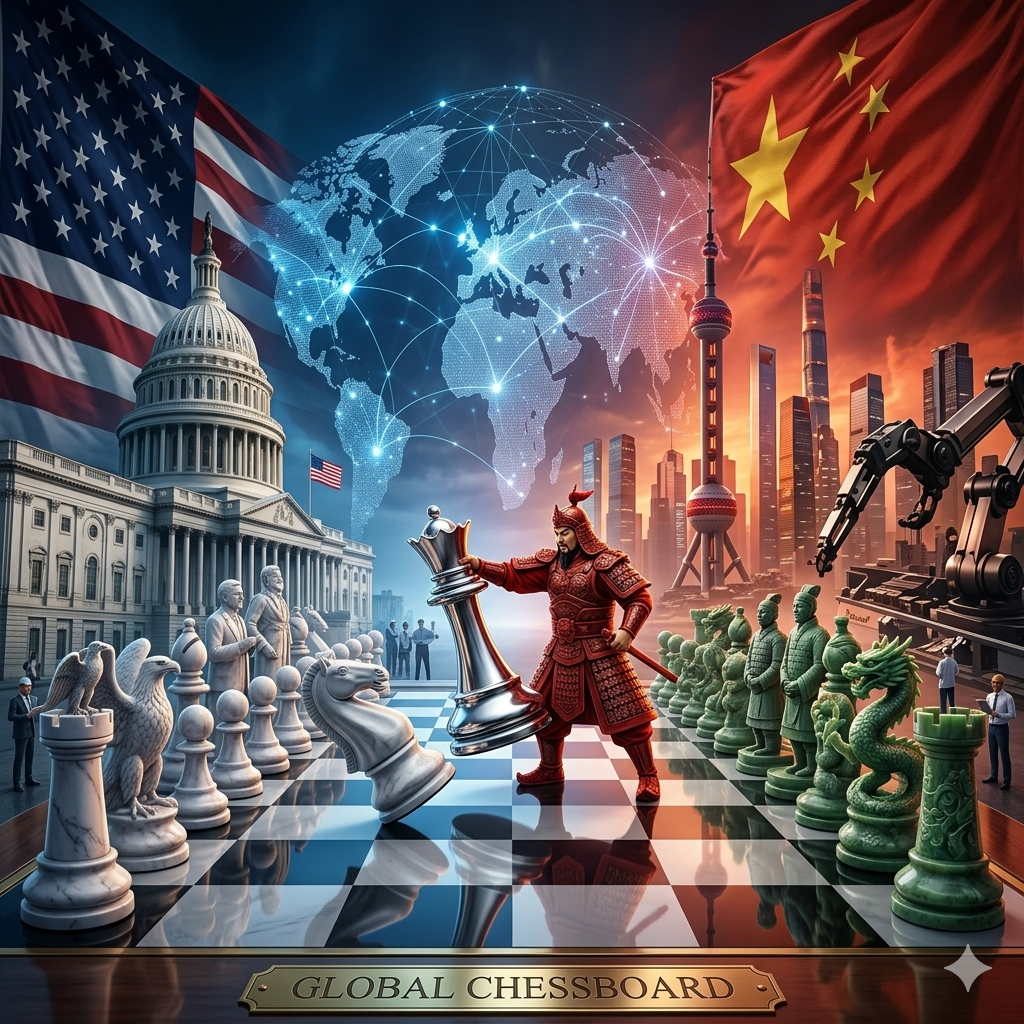
Washington, D.C. — A bipartisan group of influential US lawmakers has introduced new legislation that would prevent certain Chinese companies and organizations from obtaining American patents, marking the latest effort by Washington to tighten safeguards around technology, intellectual property, and national security.
The proposed legislation, known as the Prohibiting Adversarial Patents Act, seeks to restrict patent protections for entities that appear on designated US government security watchlists. Supporters argue that organizations viewed as potential national security threats should not benefit from the legal protections and economic advantages provided by the American patent system.

The bill was introduced by Representative John Moolenaar, chairman of the House Select Committee on China, alongside Representatives Scott Fitzgerald and Darrell Issa. The lawmakers say the measure is designed to protect American innovation from entities linked to foreign governments that may seek to leverage US intellectual property laws for strategic gain.
Strengthening Protection for American Innovation
According to the proposal, patent rights would be denied to individuals and organizations listed on specific federal security-related registries, including the Non-SDN Chinese Military-Industrial Complex Companies List, the 1260H List, and the Federal Communications Commission’s Covered List.
Supporters of the legislation argue that the United States must take stronger action to ensure that companies identified as security concerns cannot use American intellectual property protections while simultaneously benefiting strategic competitors of the United States.
Moolenaar said the Chinese government has increasingly pursued access to advanced technologies and intellectual property as part of its broader efforts to strengthen its economic and technological capabilities. He argued that existing patent laws can be exploited by organizations connected to geopolitical rivals, creating vulnerabilities within the US innovation ecosystem.
The congressman also expressed concerns about what he described as the growing use of patent-related litigation tactics that place additional burdens on American businesses and courts. He said the proposed legislation would help close loopholes that allow certain foreign-linked entities to profit from the US patent framework.
National Security Concerns at the Forefront
The proposal reflects broader concerns in Washington regarding the intersection of technology, economic competition, and national security.
Representative Scott Fitzgerald stated that Chinese authorities have spent years using global economic opportunities to accelerate both technological advancement and military modernization. He argued that the bill would eliminate a pathway through which organizations considered hostile to US interests can gain strategic advantages.
Representative Darrell Issa echoed those concerns, describing technological competition with China as one of the defining economic challenges facing the United States. He said the legislation aims to ensure that companies linked to Chinese state interests cannot benefit from protections originally designed to encourage innovation and entrepreneurship within the American economy.
According to supporters, restricting patent access for designated entities would reduce opportunities for organizations viewed as security risks to leverage US intellectual property protections for commercial or strategic purposes.
Industry Support Grows
The proposal has also attracted support from industry advocates, including the High Tech Inventors Alliance, which welcomed the measure as a step toward strengthening economic security and protecting American businesses.
The organization noted that some foreign companies have built extensive patent portfolios in the United States and have used those patents in disputes involving strategically important industries such as semiconductors, artificial intelligence, telecommunications, and digital infrastructure.

Supporters of the bill contend that patents provide more than legal recognition of innovation. Patent ownership can generate substantial financial returns through licensing agreements, royalty payments, and enforcement actions against competitors. Restricting access to those benefits, they argue, would reduce potential economic leverage for entities connected to foreign governments that are considered strategic rivals.
Part of a Broader US-China Technology Contest
The proposed legislation arrives amid intensifying competition between Washington and Beijing over emerging technologies, advanced manufacturing, and intellectual property.
Over the past several years, the United States has implemented a series of measures aimed at limiting China’s access to sensitive technologies, strengthening supply chain security, and protecting critical industries. Areas such as artificial intelligence, semiconductor production, quantum computing, and telecommunications have become central battlegrounds in the broader economic rivalry between the world’s two largest economies.
Patent policy has increasingly become part of that conversation. Policymakers argue that intellectual property protections play a crucial role in maintaining technological leadership and supporting domestic innovation.
Supporters of the new bill believe that preventing designated entities from securing US patents would align intellectual property policy more closely with national security objectives.
Rising Patent Activity Highlights the Stakes
The debate comes against the backdrop of rapidly growing patent activity worldwide.
Data cited by supporters of the legislation shows that China recorded more than 1.8 million patent applications in 2024, the highest total of any country. Meanwhile, foreign applicants accounted for nearly 55 percent of all patent filings in the United States during the same period.
Chinese applicants filed a record 49,000 patent applications in the United States in 2024, underscoring China’s expanding presence within the global intellectual property landscape.
Those figures have fueled discussions in Washington about how the US patent system should balance openness to international innovation with concerns about economic security and strategic competition.
What Comes Next
The Prohibiting Adversarial Patents Act must still move through the legislative process before becoming law. If approved, it would represent one of the most significant efforts yet to link patent eligibility directly to national security considerations.
The proposal is expected to generate debate among policymakers, legal experts, technology companies, and intellectual property advocates. Supporters view it as a necessary safeguard to protect American innovation, while critics may raise questions about its potential impact on international research collaboration and the broader patent system.
As US-China competition continues to reshape global technology policy, the outcome of this legislation could have far-reaching implications for intellectual property rights, innovation strategy, and the future of international technological competition.