Lucknow: As cities across the world grapple with rising pollution, traffic congestion, and the impacts of climate change, Lucknow Metro has emerged as a shining example of how public transportation can contribute meaningfully to environmental conservation. Lucknow Metro has integrated sustainability into every aspect of its planning, construction, and operations, making it one of the greenest mass transit systems in the country.
On the occasion of World Environment Day, we are highlighting a series of innovative initiatives that have significantly reduced energy consumption and conserved natural resources.
Driving Green Mobility in the City
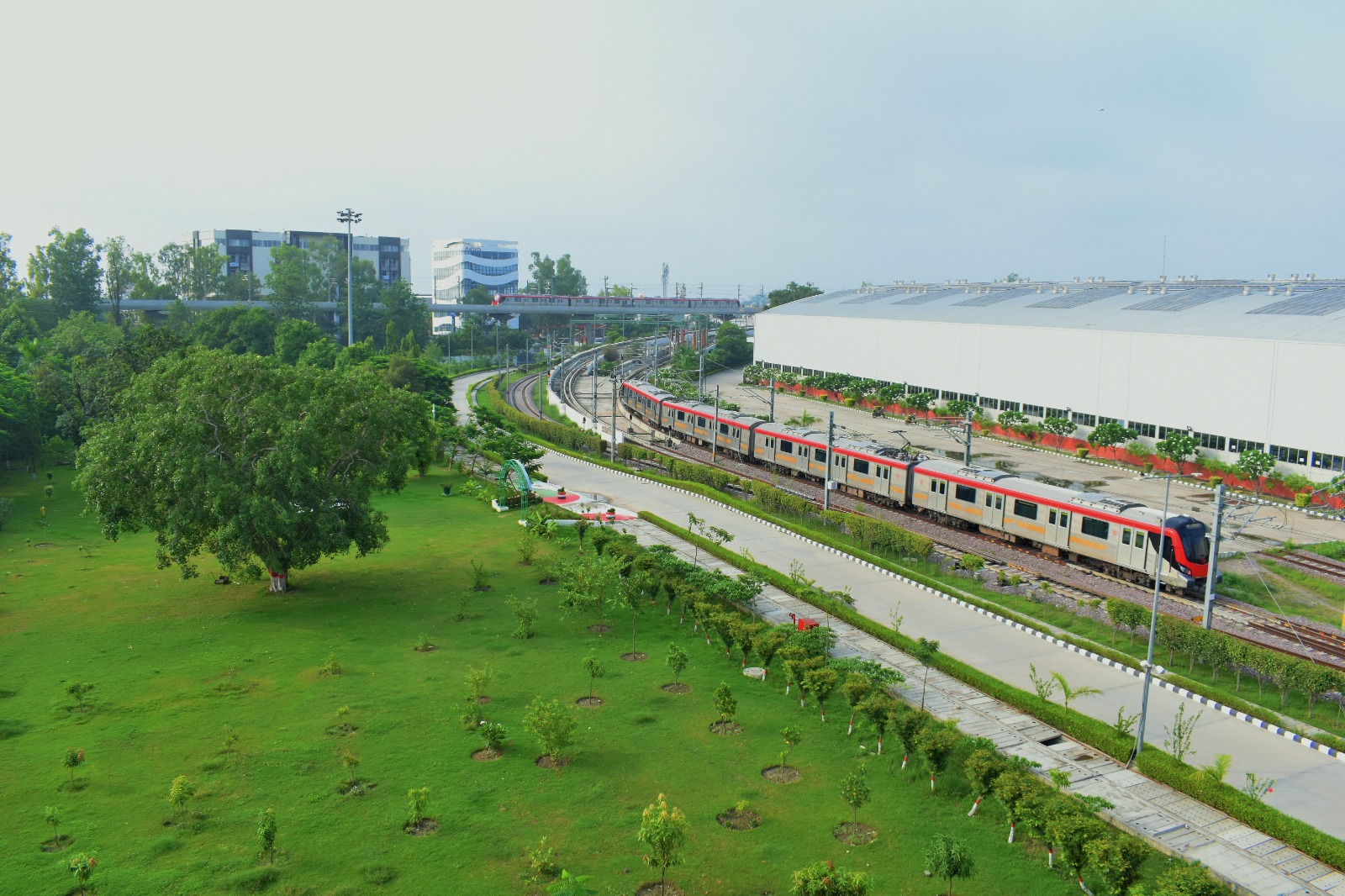
Lucknow Metro has become an important pillar of sustainable urban mobility. With more than 90,000 passengers travelling daily, Lucknow Metro has helped reduce dependence on private vehicles, easing traffic congestion and lowering carbon emissions across the city. By offering a safe, efficient, and affordable public transport system, Lucknow Metro continues to encourage citizens to choose greener modes of travel. UPMRC has also promoted sustainable practices within its own operations. Bicycles are used for internal commuting at the Metro Depot, further reinforcing its commitment to environmentally responsible mobility.
Leading India in Energy Efficiency
UPMRC has introduced several pioneering initiatives that have positioned it as a national leader in energy conservation.
UPMRC became the first organization in Uttar Pradesh to procure electricity through the Indian Energy Exchange (IEX) under the Open Access Model. This innovative approach has resulted in monthly savings of approximately ₹45 lakh and annual savings exceeding ₹5 crore.
Lucknow Metro is also the first metro system in India to implement 100 percent LED lighting across stations, trains, and advertisement panels. This has significantly reduced power consumption while improving operational efficiency.
Another first-of-its-kind initiative is the use of CO₂ sensor-based monitoring and control of train air-conditioning systems. This advanced technology has reduced overall energy consumption by nearly 12 percent by regulating cooling requirements based on passenger occupancy and air quality levels.
Further enhancing energy efficiency, Metro trains and lifts are equipped with regenerative braking technology, enabling the recovery and reuse of energy that would otherwise be wasted. This system delivers energy savings of nearly 35-40% percent, making Metro operations considerably more sustainable.
Harnessing Renewable Energy
Solar power continues to play a crucial role in Lucknow Metro’s sustainability strategy. Across stations, depots, and administrative buildings, Lucknow Metro has installed a solar power capacity of 3.312 MW.
These installations have generated more than 30 lakh units of clean energy, reducing dependence on conventional power sources and contributing to a reduction in greenhouse gas emissions.
Conserving Every Drop of Water
Water conservation remains another key focus area for UPMRC. Along the 23-kilometre Lucknow Metro corridor, more than 300 rainwater harvesting structures have been installed. Together, these systems have the capacity to harvest nearly 20 lakh litres of rainwater annually.
Metro stations are equipped with water-efficient fixtures that consume 30 to 40 percent less water than conventional systems. At the Transport Nagar Metro Depot, treated wastewater from sewage treatment plants is reused for horticulture and train washing activities, ensuring optimal utilization of water resources.
All metro depots under UPMRC operate as zero-discharge facilities, ensuring that no untreated wastewater is released into the environment.
Green Construction

UPMRC’s commitment to sustainability extends beyond operations to infrastructure development and environmental preservation.
During the construction of the Metro network, UPMRC undertook extensive efforts to protect existing greenery. A total of 410 trees were carefully transplanted instead of being cut down, achieving a survival rate of more than 95 percent. In addition, innovative design modifications helped save another 537 trees from being removed.
To further strengthen urban green cover, UPMRC has developed more than 1.1 lakh square metres of landscaped green belt area across its metro projects. Lucknow Metro accounts for nearly 65,000 square metres of this green area, including plantations at Polytechnic Chauraha, KD Singh Stadium, Metro Depot, Metro Officers’ Colony, and along corridor medians.
These green spaces not only improve the city’s aesthetics but also contribute to better air quality and ecological balance.
Green Buildings with Global Standards
Lucknow Metro has achieved another remarkable milestone by becoming the first metro system in India where all stations have received the highest “Platinum” rating from the Indian Green Building Council (IGBC).
The stations incorporate energy-efficient design features such as natural lighting through translucent roofing, passive ventilation systems, and environmentally responsible construction materials. These measures reduce dependence on artificial lighting and cooling systems while improving passenger comfort.
UPMRC’s commitment to environmental excellence is further reflected in its adherence to internationally recognised standards. Lucknow Metro received ISO 14001 certification for Environmental Management Systems during construction and later extended the certification to its operational phase.
National Recognition for Sustainability Efforts
UPMRC’s efforts have earned national recognition. UPMRC received the National Award for Energy Conservation (Kanpur Project) from Bureau of Energy Efficiency, Ministry of Power (GoI). The award highlights UPMRC’s leadership in adopting innovative and environmentally responsible practices across its metro networks.
Building a Greener Future
As the nation observes World Environment Day, Lucknow Metro stands as a powerful example of how modern urban infrastructure can contribute to environmental protection while enhancing the quality of life for citizens.
Through continuous innovation and responsible operations, UPMRC is not only transforming urban mobility but also helping build a cleaner, greener, and more sustainable future for generations to come.



 ---------------------------------------------------------------------------------------------------