New Delhi — From vibrant summer camps to innovative after-school programs, fashion-focused learning for children is gaining momentum across India and around the world. As young participants sketch outfits, experiment with fabrics, and showcase their creations in mini runway presentations, a broader question is taking center stage: Should fashion education be introduced at an early age?
Beyond Clothes: Building Life Skills
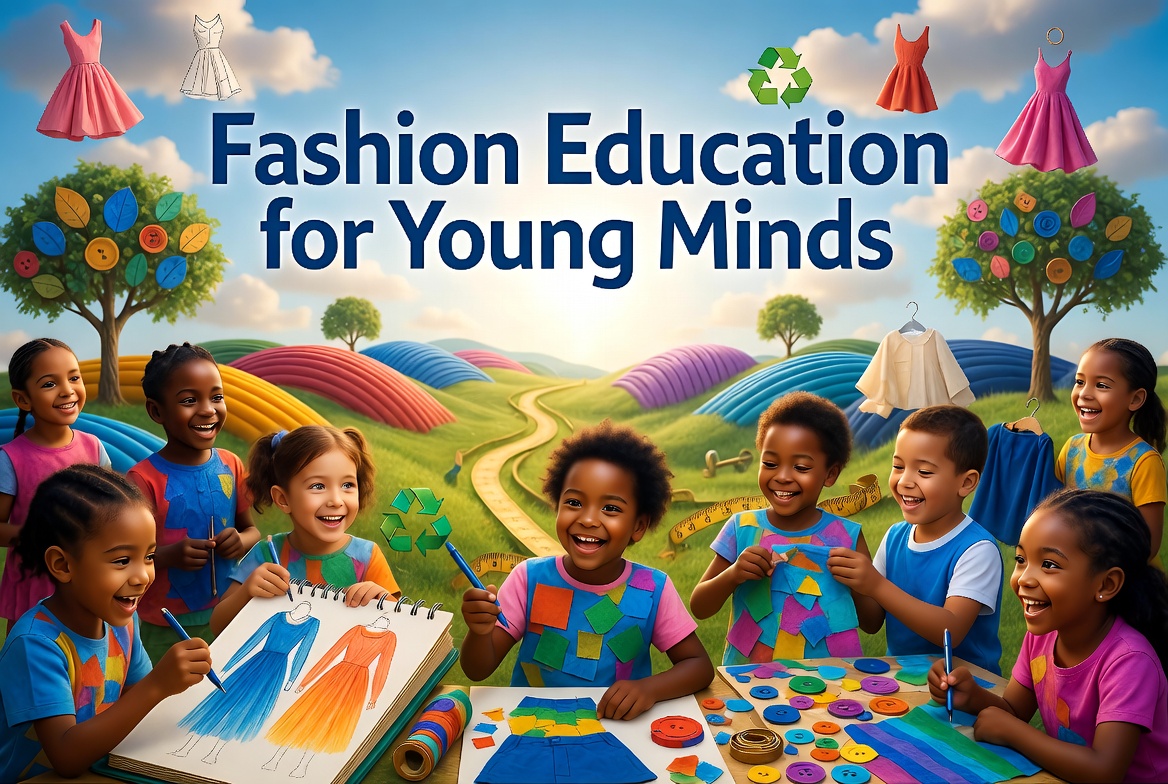
Supporters of early fashion education argue that it offers far more than an introduction to style. Activities such as designing garments, creating fabric collages, upcycling old clothes, and learning basic stitching techniques can play a significant role in a child’s overall development.
These hands-on experiences nurture creativity while strengthening problem-solving abilities. Measuring fabric introduces basic mathematical concepts, while sewing and crafting enhance fine motor skills and hand-eye coordination. More importantly, the process of turning an idea into a tangible creation instills patience, perseverance, and a sense of accomplishment.
Child development experts note that when children are encouraged to explore colors, textures, and personal style, it fosters independence and builds confidence—skills that extend well beyond the classroom.
The Confidence Factor
Structured programs—often designed for children aged 5 to 12—are increasingly emphasizing experiential learning. Whether it’s a simple DIY project or a small-scale fashion showcase, these initiatives allow children to see their ideas come to life.
The impact can be profound. Many educators report noticeable improvements in self-esteem and communication skills, as children present their creations and engage with peers. In a world where self-expression is key, fashion becomes a medium through which young minds can articulate identity and imagination.
Teaching Sustainability Early
A defining feature of modern fashion education is its focus on sustainability. With growing awareness about the environmental impact of fast fashion, many programs incorporate lessons on mindful consumption.
Children are encouraged to reuse materials, redesign old garments, and understand the lifecycle of clothing. This not only sparks creativity but also instills values of responsibility and conscious decision-making. By learning to create rather than consume, children develop a deeper appreciation for resources and craftsmanship.
The Role of Play and Imagination
Even before formal learning begins, dress-up play acts as a natural gateway into fashion exploration. From toddlers experimenting with costumes to older children mixing and matching outfits, this form of imaginative play supports language development, social interaction, and emotional expression.
Fashion, in this sense, becomes less about appearance and more about storytelling—an extension of a child’s inner world.

Proceeding with Care
Despite its benefits, experts urge caution. Introducing fashion too early without thoughtful guidance can inadvertently expose children to unrealistic beauty standards and societal pressures. Research indicates that concerns around body image can emerge as early as ages three to seven, often influenced by media and digital platforms.
Without a balanced approach, fashion education risks reinforcing stereotypes or promoting materialism instead of creativity and self-worth.
A Balanced Approach
Educators and parents are increasingly advocating for a mindful framework. The emphasis, they suggest, should be on creativity, cultural appreciation, functionality, and body positivity—rather than trends or perfection.
At younger ages, informal and playful exploration at home or through extracurricular activities may be more appropriate. As children grow, structured programs can build on this curiosity, offering skill development without academic pressure.
A Growing Movement
The rise of specialized kids’ fashion camps and design workshops signals a broader shift in how creativity is being integrated into early education. These programs are not solely about grooming future designers but about equipping children with adaptable skills—innovation, resilience, and thoughtful consumption.
Fashion, when approached with intention, becomes a powerful educational tool—transforming everyday clothing into a canvas for expression and a lesson in sustainability.
The Question Ahead
As this trend continues to evolve, the conversation remains open: Should fashion education find a place within formal schooling, or is it best nurtured through informal, playful environments?
What is clear, however, is that when guided thoughtfully, fashion can move beyond aesthetics—shaping confident, creative, and conscious individuals for the future.