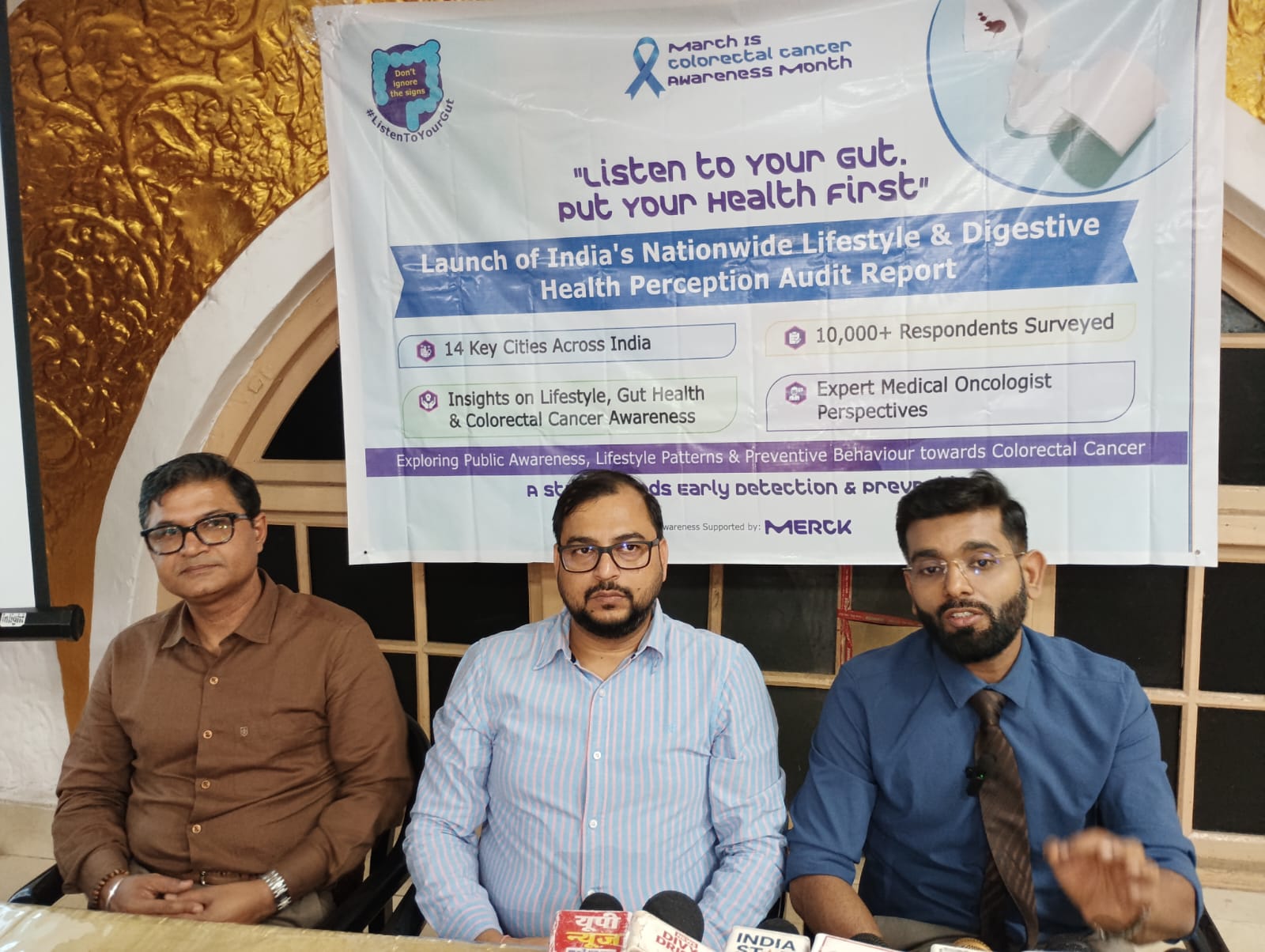
~A nationwide Lifestyle & Digestive Health Awareness Survey across 14 Indian cities sheds light on major gaps in colorectal cancer awareness~
~The survey revealed concerning trends in Lucknow, where nearly 90% depend on self-medication for gastric concerns, 85.6% rely on over-the-counter solutions or lifestyle changes when bowel habits change, and 61.2% report experiencing irregular bowel movements, highlighting significant digestive health risks in the city~
Lucknow: Digestive health concerns are rising across India, driven by fast-paced lifestyles, unhealthy dietary habits, and sedentary work routines. Despite the growing prevalence of digestive problems, awareness about serious gastrointestinal diseases such as colorectal cancer remains low.
To better understand how people interpret digestive symptoms and when they seek medical help, Merck Specialities Pvt. Ltd. supported a nationwide perception audit through the Lifestyle & Digestive Health Awareness Survey. The survey assessed how individuals respond to symptoms such as irregular bowel movements, acidity, and blood in stool, while also identifying awareness gaps and behavioural patterns that may delay timely medical consultation and diagnosis.
The findings were shared at a press conference addressed by Dr. Abhishek Pathak, Senior Consultant- Medical Oncology, Apollomedics Hospital, Lucknow;Dr. Abhishek Kumar Singh, Director-Medical Oncology; Medanta Hospital, Lucknow; and Dr. Saurabh Mishra, Director-Synergy Cancer Institute and Superspeciality Hospital, Lucknow/Gorakhpur,who emphasised the urgent need for greater awareness and timely medical consultation for digestive health symptoms.
Colorectal cancer is emerging as a growing health concern in India, driven by unhealthy diets, obesity, and low awareness about gut health. Although largely preventable and treatable when detected early, many cases are diagnosed late due to delayed screening and poor awareness of symptoms. Against this backdrop, the nationwide survey uncovered worrying trends in digestive health awareness and lifestyle habits.
The nationwide survey collected responses from 10,198 individuals aged between 25 and 65 years across 14 major Indian cities, including Kolkata, Ahmedabad, Bangalore, Calicut, Chandigarh, Chennai, Delhi, Hyderabad, Indore, Jaipur, Kochi, Lucknow, Mumbai, and Pune. The findings reveal several concerning patterns in digestive health behaviour and awareness. Over 80% of respondents self-medicate for digestive issues such as acidity, indigestion, or constipation instead of consulting a doctor. More than 65% of respondents reported experiencing irregular bowel movements. Over 50% consume outside or packaged food at least three times a week, with 28.1% eating outside almost daily. Only 45.2% reported exercising regularly, while 54.8% said they do not exercise at least three times a week. 39.9% reported tobacco consumption, which is a known risk factor for gastrointestinal diseases.40% of young respondents ignored symptoms and reported digestive irregularities but did not consult a doctor, assuming it was due to lifestyle habits. Most importantly, over 80% of respondents were unaware that blood in stool can be an early warning sign of colorectal cancer.
As the campaign gathered momentum across Lucknow, the city-specific survey findings exposed a worrying lack of awareness around digestive health and colorectal cancer.

The city-specific analysis for Lucknow included 557 participants, comprising 258 male and 299 female respondents, across age groups 25–35 (141), 36–45 (227), 46–55 (141), and 55 years and above (48). The findings revealed that over82% of respondents fail to recognise blood in stool as a warning sign of colorectal cancer, indicating low awareness. Equally concerning is the delay in seeking medical help, with 85.6% of respondents opting for over-the-counter solutions or lifestyle changes if their bowel habits changed for a few weeks (constipation or loose motions), while only 14.4% would consult a doctor. Digestive symptoms were widely reported in the city, with 61.2% of respondents experiencing irregular bowel movements and over 81% reporting a sensation of incomplete bowel evacuation at times, which often remains unaddressed.
Lifestyle risks were also evident, with around 77.1% frequently consuming outside or packaged food, while only about 41.8% reported exercising regularly, indicating that an active lifestyle is still missing for a majority of the population. Tobacco consumption continues to be a concern, with 39.1% of respondents reporting tobacco use, indicating a significant at-risk population. Another major issue is self-management of symptoms, with nearly 90% managing gastric issues such as acidity, gas, or indigestion through self-medication or home remedies, while only 10.1% seek medical advice.When it comes to more serious symptoms, nearly 40% admitted they would consider self-medication even in cases of blood in stool, reflecting a concerning gap in urgency despite a potentially serious warning sign.
Barriers to seeking medical care were also highlighted, with lack of time being the primary reason for 32.4%, while fear (26.9%) and embarrassment (23.2%) also contributed significantly, and 17.5% of respondents did not consider their symptoms serious, further delaying medical consultation. Awareness levels remain low, with 80.1% unaware that serious digestive diseases can exist without pain, increasing the risk of delayed diagnosis. Family history was reported by22.5% of respondents, including conditions such as bowel cancer, polyps, or inflammatory diseases like Crohn’s disease, ulcerative colitis, and celiac disease. Despite this, hereditary risk continues to remain under-recognised and under-discussed.
Dr. Abhishek Pathak, Senior Consultant- Medical Oncology, Apollomedics Hospital, Lucknow, said, “Colorectal cancer develops in the colon or rectum and often begins as small growths called polyps that can gradually become cancerous if untreated. Risk factors include unhealthy diets low in fibre, obesity, sedentary lifestyles, tobacco use, and age. Don’t miss symptoms such as persistent bowel habit changes, blood in stool, abdominal discomfort, fatigue, or unexplained weight loss. Colorectal cancer is highly treatable when detected early through screening methods such as colonoscopy.”
Dr. Abhishek Kumar Singh, Director-Medical Oncology, Medanta Hospital, Lucknow,explained,“The survey findings from Lucknow point to a growing concern around self-medication and poor awareness of colorectal cancer, with most individuals relying on home remedies or over-the-counter medicines instead of seeking medical advice, often masking underlying conditions and delaying diagnosis. Equally concerning is that many people fail to recognise blood in stool as a key warning sign of colorectal cancer, which means cases may go unnoticed until they reach an advanced stage. Persistent digestive issues like irregular bowel movements should not be ignored, as early medical consultation and timely screening can help detect problems early, improve survival rates, and ensure better overall outcomes.”
Dr. Saurabh Mishra, Director-Synergy Cancer Institute and Superspeciality Hospital, Lucknow/Gorakhpur, highlighted that lifestyle habits play a major role in the rising incidence of colorectal cancer. He said, “Frequent consumption of processed or outside food, lack of physical activity, tobacco use, and obesity can increase the risk. Adopting healthier habits such as a fibre-rich diet, regular exercise, avoiding tobacco, and undergoing routine screening can reduce the risk of colorectal cancer and improve overall digestive health.”