Lucknow: Lucknow, often celebrated as the City of Nawabs, has always been synonymous with refined culture, poetic etiquette, and intricate craftsmanship. From its legendary Awadhi cuisine to the delicate artistry of chikankari embroidery, the city carries a legacy that continues to shape its identity. In recent years, however, another vibrant dimension of Lucknow has captured attention—its buzzing fashion streets and bazaars that are redefining how locals and visitors shop, dress, and express themselves.
These lively markets blend Nawabi elegance with contemporary fashion trends, turning everyday street shopping into an experience rich with color, craftsmanship, and culture. Here, one can find everything from handcrafted chikankari kurtas and sarees to oxidized jewelry, fusion wear, and modern street-style outfits. For many shoppers, these streets offer far more than retail therapy—they provide a sensory journey filled with the aromas of street food, the rhythm of bargaining, and the warm chaos that defines Lucknow’s social life.

Hazratganj: The Stylish Heartbeat of the City
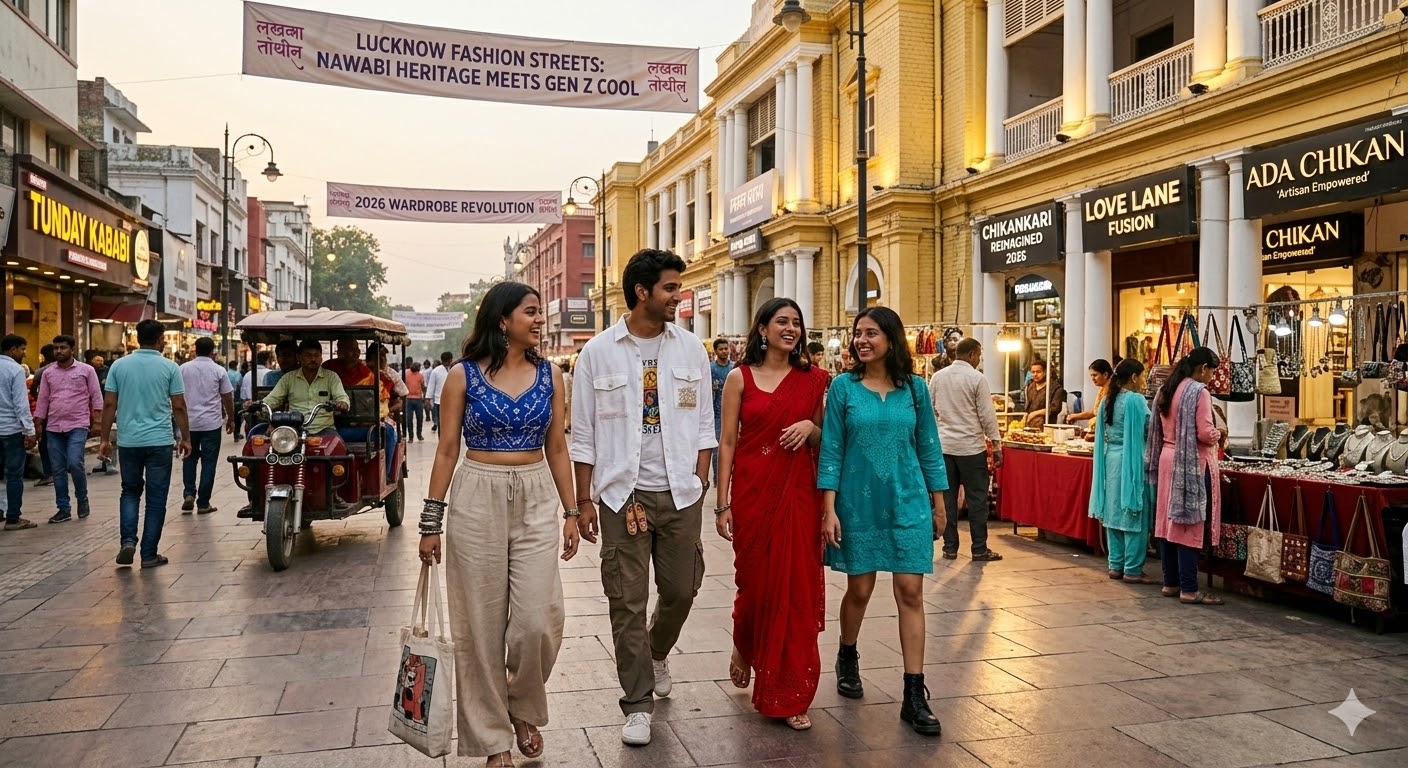
At the center of Lucknow’s fashion scene stands Hazratganj, the city’s most iconic shopping boulevard. Often referred to simply as “Ganj,” this historic colonial-era street has evolved into a modern fashion hub while preserving its old-world charm. Tree-lined avenues, elegant buildings, and a mix of global brands and local boutiques make it one of the most beloved hangout spots in the city.
One of the most popular stretches within Hazratganj is Lover’s Lane, known for its vibrant collection of trendy street stalls and compact fashion outlets. Shoppers browse racks of casual dresses, cotton sleepwear, crop tops, and co-ord sets, while accessories like oxidized earrings, sling bags, and statement necklaces attract younger buyers seeking affordable yet stylish options.
What makes Hazratganj unique is its seamless mix of premium brands and local craftsmanship. Well-known names such as Fabindia, Manyavar, Mohey, and Tanishq stand alongside boutiques offering Lucknow’s signature chikankari stoles, kurtis, and dupattas. By evening, the street transforms into a social hub where students, professionals, and tourists gather to shop, take photographs, and enjoy café culture.
A visitor reviewing the area captured the atmosphere perfectly: “Hazratganj feels like stepping into another era. It’s a beautiful mix of history and modern fashion.”
Aminabad Market: The Soul of Traditional Shopping
While Hazratganj represents elegance and modern flair, Aminabad Market reflects the city’s historic shopping culture in its most authentic form. One of the oldest bazaars in Lucknow, Aminabad dates back to the Nawabi era and continues to thrive as a bustling destination for traditional fashion.
The narrow, energetic lanes are lined with shops selling exquisite chikankari garments—kurtas, sarees, dupattas, and even bridal outfits. Renowned stores such as Chikan House, Chikan Palace, and Chikan Emporium showcase intricate hand embroidery crafted on fabrics like cotton, chiffon, georgette, and muslin.
But Aminabad is far more than a chikankari market. Visitors can also find bangles, imitation jewelry, footwear, fragrances, and casual fashion pieces. During festive seasons, the bazaar bursts with vibrant colors and decorated stalls, creating an atmosphere that feels almost celebratory.
Bargaining is an essential part of the experience. Skilled shoppers can often secure stunning embroidered pieces at prices far below those in upscale boutiques. A frequent visitor described Aminabad as “the great old market of Lucknow—if you want traditional clothing and bangles, this is the place.”
Adding to its charm are the nearby food stalls serving kebabs, chaat, and sweets, making shopping here both a culinary and cultural adventure.
Chowk: A Walk Through Nawabi History
For those seeking authenticity and heritage craftsmanship, the historic neighborhood of Chowk offers an unforgettable shopping experience. Located near the famous Bara Imambara, this centuries-old market is widely considered the cultural core of old Lucknow.
Chowk’s narrow lanes are lined with shops specializing in chikankari, zardozi embroidery, and traditional perfumes known as ittar. Unlike modern retail outlets, many of these stores source directly from artisans, ensuring that buyers receive genuinely handcrafted pieces.
Fashion enthusiasts often visit Chowk to find unique chikankari garments on unconventional fabrics, embroidered sarees, and ethnic wear for men. The craftsmanship here reflects techniques passed down through generations.
Yet the appeal of Chowk goes beyond shopping. The market is also famous for its street food scene, with legendary eateries offering kebabs, sweets, and traditional Awadhi delicacies. A shopping trip here frequently turns into an evening of culinary exploration.

Travel guides often describe Chowk as “a living museum of Lucknow’s culture,” where centuries-old traditions continue to shape everyday life.
Janpath Market: The Youthful Fashion Playground
Just a short walk from Hazratganj lies Janpath Market, one of the most popular destinations for young shoppers. Known for its energetic vibe and budget-friendly fashion, this market has become a favorite among college students and Gen Z shoppers.
Janpath’s stalls display a wide variety of contemporary styles—chikankari kurtas with modern cuts, colorful co-ord sets, sling bags, oxidized jewelry, watches, and trendy footwear. The affordability and diversity of options make it ideal for experimenting with fashion.
The market is often compared to Delhi’s Sarojini Nagar because of its trendy yet inexpensive finds. Shoppers enjoy mixing traditional Lucknowi embroidery with modern silhouettes, creating fusion looks that reflect the evolving identity of the city’s youth.
Visitors frequently praise Janpath for its lively atmosphere. As one online review noted, “Janpath Market is the perfect place to explore chikankari kurtas and street-style fashion without spending a fortune.”
Emerging Fashion Hotspots
Beyond these well-known markets, several other areas are gaining popularity among fashion enthusiasts. Nakhas Market, a historic trading hub more than two centuries old, attracts shoppers seeking wholesale deals on clothes, jewelry, and accessories.
Areas such as Alambagh Marg and Yahiyaganj are also emerging as vibrant retail zones where casual wear, imitation jewelry, and affordable fashion pieces are easily available.
Meanwhile, luxury chikankari boutiques are elevating the traditional craft to new heights. Labels such as ADA Chikan in Hazratganj and Saman Emporio in Mahanagar showcase premium chikankari on fabrics including velvet, organza, and tissue silk.
Vartika Punjabi, Chief Operating Officer of ADA Chikan, highlights the deeper purpose behind the brand’s work. “Our mission is to ensure that artisans receive their rightful recognition and livelihood,” she says. “Through our work, we support more than 30,000 women artisans across the region.”
Where Tradition Meets Trend
Lucknow’s fashion streets reflect a city that has gracefully embraced change without abandoning its roots. In these bustling markets, centuries-old embroidery traditions coexist with global fashion influences. Young shoppers pair chikankari kurtas with denim, while artisans continue to produce handcrafted pieces using techniques perfected over generations.
The result is a fashion culture that feels both timeless and contemporary. Shopping in Lucknow is not merely about acquiring clothes—it is about participating in a living tradition where craftsmanship, culture, and creativity intersect.
As one local fashion enthusiast summarized while strolling through Hazratganj, “In Lucknow, every street has a story, and every outfit carries a piece of the city’s heritage.”
In 2026, these vibrant markets have firmly established themselves as the new cool of Lucknow—places where style, history, and everyday life come together in the most colorful and captivating way.