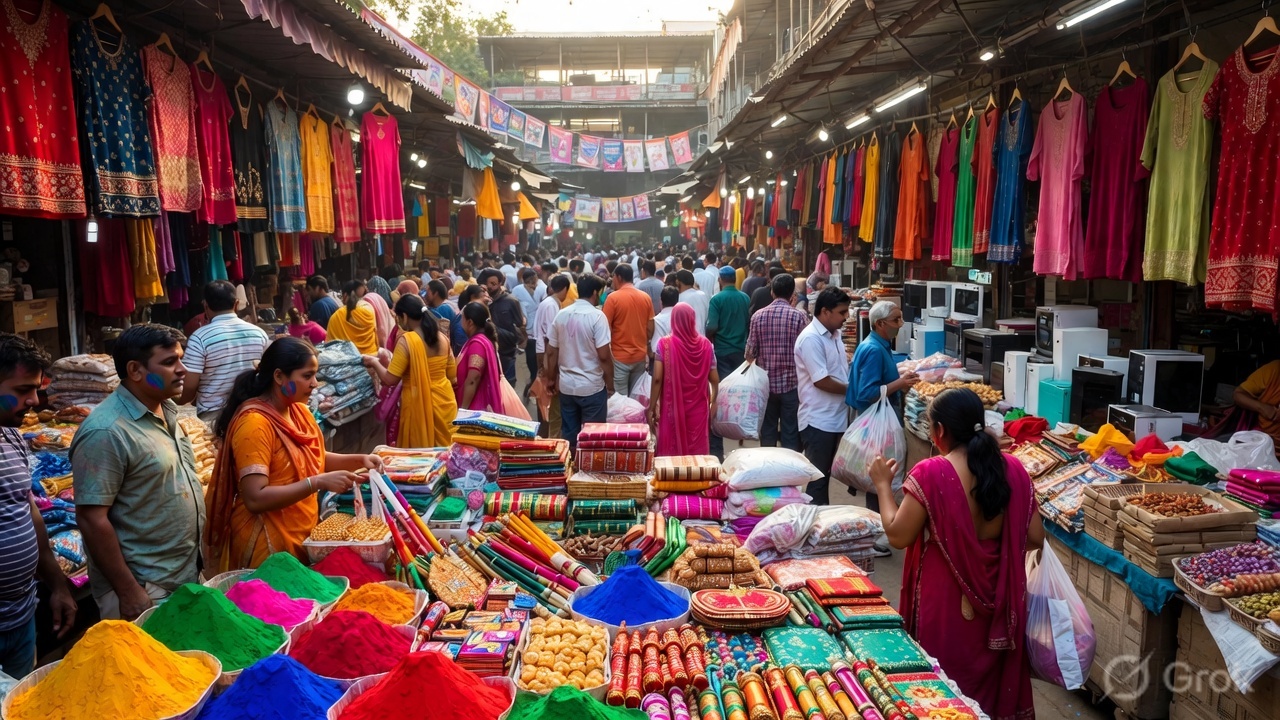
Luknow: As the vibrant festival of Holi approaches in early March 2026 — with Rangwali Holi falling on March 3 or 4 depending on regional calendars and lunar calculations — markets across India have transformed into dazzling hubs of colour, commerce and celebration. From traditional bazaars overflowing with gulal to sprawling hypermarkets rolling out “Holi Dhamaka” sales, the festive economy is in full swing.
This year, festive trade is projected to cross an impressive ₹80,000 crore nationwide, marking an estimated 25% jump from last year’s ₹60,000 crore, according to the Confederation of All India Traders (CAIT). In Delhi alone, sales are expected to exceed ₹15,000 crore, reflecting a powerful combination of rising consumer confidence, growing demand for Made-in-India products, and a significant shift toward eco-friendly alternatives.
The air in marketplaces carries the sweet aroma of freshly prepared gujiyas, the sharp, earthy scent of coloured powders, and the unmistakable buzz of bargain hunters hunting for festive deals. Holi, after all, is not just a celebration of colours — it is also a celebration of commerce.
Traditional Markets: Where Holi Truly Comes Alive
Weeks before the festival, street markets in cities such as Delhi, Mumbai, Bengaluru and Hubballi begin their transformation. Pavements are lined with temporary stalls bursting with mounds of vibrant gulal — classic reds, yellows and greens alongside trendy pastel blends and shimmering metallic shades.
In Hubballi, neighbourhood streets and commercial zones are dotted with seasonal outlets selling coloured powders at competitive prices. Traders report that wholesale rates for traditional gulal have eased this year, hovering around ₹3,200 per quintal, while retail prices average near ₹6,000. The moderation has made colours more accessible to consumers planning large community celebrations.
Meanwhile, herbal and organic variants are seeing strong demand despite higher price tags — typically around ₹30 for an 80-gram pack. Parents, schools and housing societies increasingly prefer skin-friendly, chemical-free options, reflecting a growing awareness of health and sustainability.
Pichkaris — water guns ranging from simple plastic models to elaborate battery-operated designs — are flying off shelves. Themed variants inspired by cartoon characters and pop culture icons are particularly popular among children. Vendors also stock water balloons, face paints, colourful wigs and quirky sunglasses.
In Ludhiana, retailers are witnessing a surge in customized Holi merchandise — slogan T-shirts, coordinated group outfits and matching headgear. Fashion has become deeply integrated into the festival, with youngsters curating playful, Instagram-worthy ensembles for the big day.
Delhi’s iconic Sadar Bazaar is, as always, a hotspot. Buyers throng narrow lanes to purchase bulk gulal, pooja items, decorative garlands, dry fruits and festive gift packs. Haggling remains an art form here, adding to the thrill of the experience. In Mumbai, flea markets such as Chor Bazaar offer unique decorative pieces and antique-style festive props, blending tradition with eclectic flair.
Hypermarkets and Modern Retail Step In
While traditional bazaars form the heart of Holi shopping, modern retail formats are capitalizing on the festive mood with aggressive promotions. Hypermarkets and supermarket chains have launched themed sales spanning groceries, sweets, home essentials and gifting hampers.
Large chains are offering “Holi Dhamaka” discounts on fresh produce, pantry staples, edible oils and dairy products. Paneer priced at ₹99 per pack, detergent deals at ₹199, and combo offers on snacks and beverages are drawing families looking to host gatherings.
Sweets counters are particularly crowded. Gujiya, laddoos, mathri and namkeen gift boxes are available in festive packaging, with early-bird discounts encouraging advance purchases. Retailers report a noticeable uptick in bulk buying from housing societies organizing community celebrations.
Fashion and Festive Wear: Colour Meets Couture
Holi fashion has evolved beyond old white kurtas meant to be splashed with colour. Retailers are offering a minimum of 50% discounts on ethnic wear, including lightweight sarees, cotton kurtas and spring-ready ensembles. Brands are promoting breathable fabrics ideal for daytime celebrations.
Online platforms are matching offline enthusiasm. Festive collections come with additional coupon codes and sitewide savings, making it easier for consumers to upgrade wardrobes ahead of the festivities. Matching family sets and coordinated outfits for social media reels are trending strongly this year.
Electronics, Appliances and Big-Ticket Buys
Interestingly, Holi has also emerged as a key season for big-ticket purchases. Electronics retailers are reporting robust footfall and online traffic, driven by attractive financing schemes.
Companies such as Bajaj Finserv are enabling zero down payment options, easy EMIs and cashback offers across mobiles, air conditioners, refrigerators and televisions in more than 4,000 cities. Exchange schemes and bank partnerships are amplifying savings.
E-commerce giants are equally aggressive. Amazon has launched a dedicated Holi Store offering up to 40–50% off on smartphones and summer appliances, with select pooja essentials discounted by as much as 80%. Meanwhile, Flipkart is expected to roll out its “Colours of Joy” campaign featuring high cashback offers, bundled deals and festive combos.

Retail chain Vijay Sales reports a sharp uptick in sales across air conditioners and refrigerators, as consumers prepare for the approaching summer season alongside Holi celebrations.
Why the 2026 Surge?
Several factors are driving this year’s remarkable surge in festive spending.
First, the growing emphasis on swadeshi products has significantly influenced purchasing patterns. Consumers are consciously opting for Indian-made herbal colours, apparel and homegrown brands, reducing dependence on imported goods.
Second, economic optimism and rising disposable incomes have boosted consumer sentiment. Holi marks the transition from winter to spring — a psychological reset that encourages fresh purchases, home upgrades and wardrobe refreshes.
Third, the seamless blend of online and offline retail offers unprecedented convenience. Shoppers can browse digitally, compare prices and avoid peak-hour crowds, while still enjoying the vibrant atmosphere of physical markets.
UPI transactions and digital payments have further simplified shopping. Many stores are offering additional 5–10% cashback for payments made through select banks or digital wallets, incentivizing cashless transactions.
Beyond Shopping: A Cultural Spectacle
Holi markets are not merely commercial spaces; they are cultural theatres. The chaos of colour, the rhythmic beats of dhol, the laughter of families negotiating prices — all reflect the festival’s spirit of renewal and collective joy.
In the evenings, markets glow under decorative lights as music blares from storefront speakers. Children tug at parents for larger pichkaris, while elders debate the best quality dry fruits for gifting. Community groups bulk-buy colours and sweets, planning housing society events that will bring neighbours together.
Retailers, too, embrace the festive mood. Many decorate shops with rangoli patterns and colourful streamers, creating immersive shopping experiences that mirror the vibrancy of the festival itself.
Sustainability Takes Centre Stage
A notable shift this year is the growing popularity of eco-friendly products. Herbal gulal made from flowers and natural ingredients is gaining traction. Vendors report increased inquiries about skin-safe options, reflecting heightened awareness about chemical exposure.
Reusable water guns, biodegradable packaging and water-conservation campaigns are also part of the narrative. Consumers are increasingly conscious of celebrating responsibly while preserving the environment.
The Colourful Road Ahead
As Holi 2026 draws closer, the message from India’s markets is unmistakable: celebration and commerce are intertwined. The projected ₹80,000 crore festive turnover is not just a statistic — it is a reflection of collective optimism, cultural continuity and economic momentum.
Whether one is stocking up on gulal in a bustling bazaar, ordering sweets online with cashback offers, or purchasing a new appliance on EMI, the spirit of Holi infuses every transaction with excitement.
Under strings of glowing lights and amid mountains of bright powders, India’s markets are painting a vivid picture of prosperity and joy. This Holi, consumers are not just buying products — they are investing in shared moments, laughter and colour-filled memories.
As the festival approaches, one thing is certain: the colours will fly, the deals will dazzle, and the celebrations will be brighter — and smarter — than ever before.






 ---------------------------------------------------------------------------------------------------