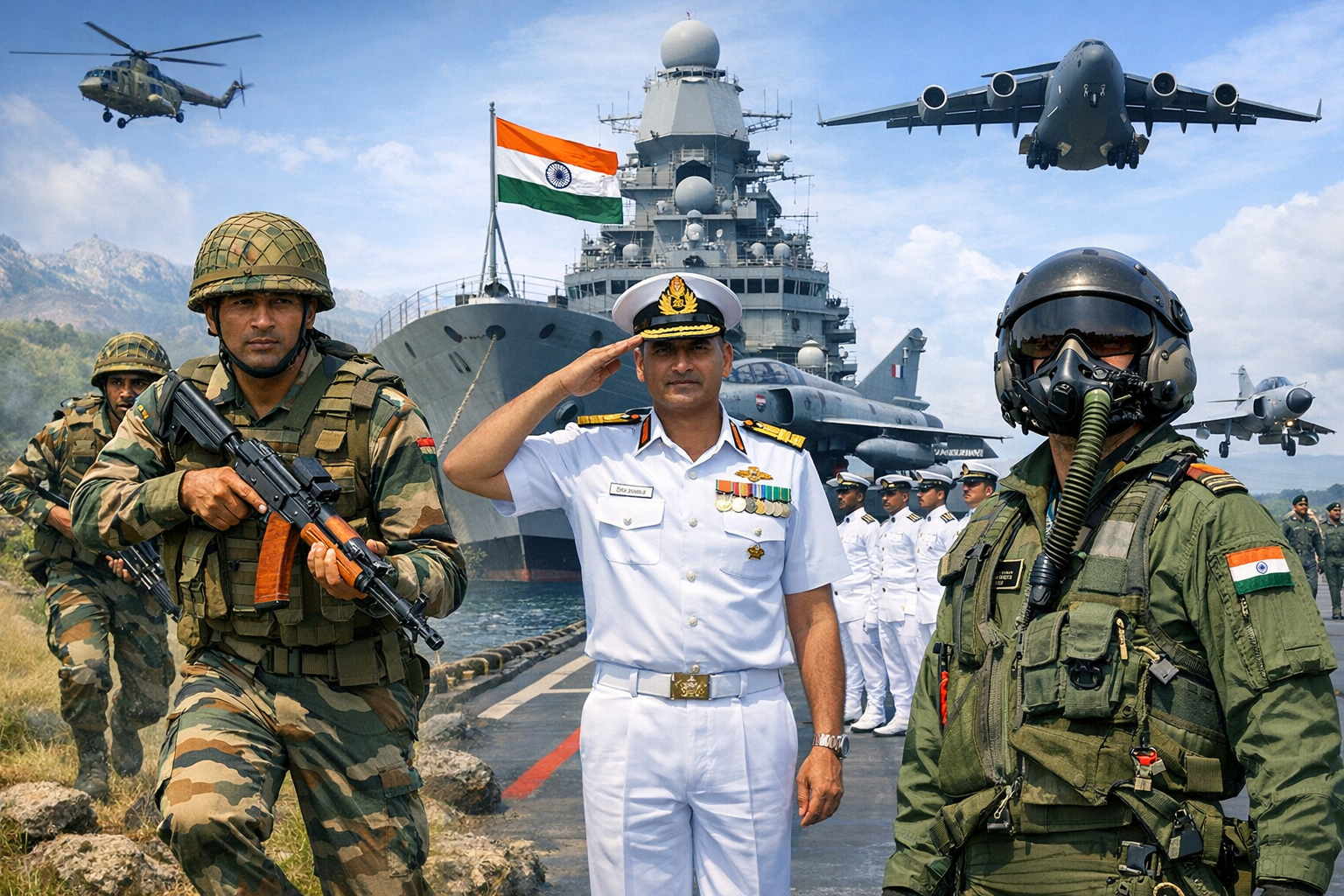
New Delhi: India’s defence forces operate across some of the most extreme and diverse terrains in the world. From freezing Himalayan heights to scorching deserts, dense tropical jungles, and vast maritime frontiers, each environment demands unique survival skills, specialised equipment, and extraordinary physical and mental resilience. Decoding these terrains reveals not only geography but also the strategic complexity behind India’s national security architecture.
1. The Himalayan Heights: The Roof of Tactical Warfare
The Himalayan frontier, stretching across Ladakh and the broader arc of Himalayas, represents one of the most punishing military environments on Earth. Here, altitudes often exceed 15,000–20,000 feet, where oxygen levels drop to nearly half of sea level conditions.

The most iconic and extreme post is the Siachen Glacier, often referred to as the world’s highest battlefield. Temperatures can plunge below -40°C, and blizzards can isolate entire posts for days.
Key Challenges:
- Extreme cold injuries like frostbite and hypothermia
- Low oxygen causing altitude sickness and reduced stamina
- Avalanche-prone slopes and unstable ice formations
- Difficulty in transporting supplies due to thin air and terrain
Defence Adaptation:
Indian troops use specialized cold-weather gear, insulated shelters, and pre-acclimatization training. Logistics rely heavily on air drops and helicopter support when weather permits. Even weapons and batteries are modified to function in sub-zero temperatures.
2. The Thar Desert: Heat, Sand, and Visibility Warfare
In contrast to icy heights, the western frontier in the desert region of Thar Desert presents scorching temperatures exceeding 50°C in summer and vast open landscapes with minimal cover.
Key Challenges:
- Extreme heat causing dehydration and heatstroke
- Sandstorms reducing visibility to near zero
- Rapid vehicle wear due to abrasive sand
- Limited water sources and logistics difficulty
Defence Adaptation:
Desert warfare training emphasizes mobility, camouflage against sand tones, and rapid mechanised operations. Armoured vehicles are fitted with sand filters, and troops are trained to conserve water and operate in high-temperature combat conditions. Night operations are often preferred due to reduced heat stress and better concealment.
3. Northeast India: Dense Jungles and Vertical Warfare
The northeastern frontier, especially in states like Arunachal Pradesh and adjoining regions, is defined by thick forests, steep hills, and heavy rainfall. This terrain creates a complex blend of jungle and mountain warfare conditions.
Key Challenges:
- Dense vegetation limiting visibility and movement
- Monsoon rains causing landslides and washed-out routes
- High humidity leading to equipment degradation
- Difficulty in aerial surveillance due to canopy cover
Defence Adaptation:
Troops undergo jungle warfare training that includes silent movement, survival in isolation, and navigation without electronic support. Lightweight gear, machetes, and specialized communication systems are used. Camouflage patterns are designed to blend with dense green environments.
4. Maritime Frontiers: Islands, Coasts, and Strategic Depth
India’s long coastline and island territories make maritime defence a crucial domain. The strategic chain of the Andaman and Nicobar Islands extends India’s reach deep into the Indian Ocean.
Key Challenges:
- Tropical storms and cyclones affecting operations
- Humid climate leading to corrosion of equipment
- Vast maritime surveillance area requiring constant monitoring
- Island isolation complicating logistics and reinforcement
Defence Adaptation:
Naval and amphibious forces rely on integrated surveillance systems, fast interceptor boats, and long-range patrol aircraft. Coastal radar chains and satellite monitoring help secure sea lanes. Training includes amphibious landings and island warfare readiness.

5. Riverine Plains and Marshlands: The Hidden Battlefields
The Indo-Gangetic plains and riverine belts may appear less hostile, but they present their own tactical complexities. Flood-prone zones, marshy terrain, and shifting river courses create unpredictable operational environments.
Key Challenges:
- Seasonal flooding disrupting movement and supply chains
- Soft soil limiting heavy vehicle deployment
- High population density complicating manoeuvres
- Poor visibility in fog-heavy winter months
Defence Adaptation:
Engineers play a critical role here, constructing temporary bridges and flood-resistant infrastructure. Troops often rely on amphibious vehicles and inflatable boats for mobility. Surveillance is enhanced through drones to compensate for limited ground visibility.
6. High-Altitude Desert of Ladakh: The Hybrid Challenge
Beyond conventional Himalayan warfare lies the cold desert of Ladakh—a unique mix of extreme altitude and arid conditions. This terrain combines freezing nights with dry air and rugged rock formations.
It demands both desert and mountain warfare capabilities simultaneously, making it one of the most strategically sensitive regions for India.
7. Training, Technology, and Human Endurance
Across all terrains, the backbone of operational success is training and adaptability. India’s defence personnel undergo rigorous conditioning in specialised centres such as high-altitude schools, jungle warfare schools, and desert warfare academies.
Technological integration is also reshaping battlefield endurance:
- Satellite-based navigation for remote terrain
- AI-assisted surveillance drones
- All-weather clothing materials
- Portable oxygen systems for extreme altitudes
Yet, despite technological advancement, human resilience remains the decisive factor. Soldiers are trained not just to fight, but to survive where nature itself becomes the adversary.
Geography as a Strategic Battlefield
India’s defence landscape is defined by its geography as much as by its strategy. From the icy sentinels of the Siachen Glacier to the shifting sands of the Thar Desert and the dense forests of Arunachal Pradesh, each terrain shapes a different form of warfare.
What makes India’s military posture unique is not just its scale, but its ability to operate seamlessly across these extremes. In essence, India’s toughest terrains are not just geographic challenges—they are continuous tests of endurance, innovation, and strategic adaptation.