New Delhi: As the Narendra Modi government completes 12 years in office, one name consistently stands out in the Bharatiya Janata Party’s remarkable political rise across India—Union Home Minister and former BJP National President Amit Shah. Often described as the BJP’s master strategist and political tactician, Shah has played a pivotal role in transforming the party from a force primarily concentrated in the Hindi-speaking heartland into a formidable pan-India political organization.
Over the past decade, Shah’s organizational vision, electoral management skills, and relentless focus on grassroots expansion have helped the BJP and the National Democratic Alliance (NDA) dramatically increase their political footprint. By mid-2026, the NDA governs or shares power in approximately 22 states and Union Territories, with the BJP directly leading governments in 14 of them. This expansion has significantly altered India’s political landscape and cemented the BJP’s position as the country’s dominant political force.

The Uttar Pradesh Turning Point
Amit Shah’s national prominence emerged during the 2014 Lok Sabha elections when he was entrusted with managing the BJP’s campaign in Uttar Pradesh, India’s most politically significant state. His meticulous planning, booth-level mobilization, social coalition building, and emphasis on Narendra Modi’s development-focused message produced a historic outcome.
The NDA secured 73 of the state’s 80 parliamentary seats, delivering a decisive boost to the BJP’s national tally of 282 seats and enabling the party to form a majority government on its own for the first time in three decades.
Recognizing his organizational abilities, the BJP appointed Shah as National President in July 2014. What followed was one of the most ambitious party-building exercises in modern Indian politics.
Building the World’s Largest Political Party
As BJP president, Shah launched extensive membership drives, cadre-training initiatives, and grassroots outreach programs aimed at strengthening the party’s presence in every district and village.
The BJP’s membership reportedly crossed 100 million during this period, making it one of the largest political organizations in the world. Shah consistently emphasized the importance of booth-level management, arguing that elections are ultimately won through strong local structures rather than campaign rallies alone.
His strategy revolved around identifying local leadership, empowering grassroots workers, and ensuring that the party remained connected with voters throughout the year rather than only during election campaigns.
Early State-Level Successes
Between 2014 and 2016, the BJP registered significant gains across multiple states.
The party formed governments in Maharashtra, Haryana, and Jharkhand, while also becoming part of a coalition government in Jammu and Kashmir. These victories expanded the BJP’s reach beyond its traditional strongholds.
Although defeats in Bihar and Delhi served as reminders of the challenges that remained, the overall trend pointed toward rapid organizational growth.
A landmark achievement came in 2016 when the BJP formed its first government in Assam, ending years of Congress dominance and opening a new chapter in the party’s northeastern journey.
The Landmark Year of 2017
Political observers often describe 2017 as one of the defining years of Amit Shah’s tenure as BJP president.
In Uttar Pradesh, the BJP won an overwhelming 312 out of 403 assembly seats, one of the largest electoral victories in the state’s history. The triumph not only reaffirmed the party’s dominance in northern India but also paved the way for the appointment of Yogi Adityanath as Chief Minister.
The BJP also secured major victories in Uttarakhand and retained power in Gujarat despite a fiercely contested election. In Manipur, the party successfully formed a government through strategic alliance-building despite not emerging as the single largest party.
These results highlighted Shah’s ability to combine electoral strategy, coalition management, and organizational discipline.
The Northeast Transformation
Among Shah’s most celebrated political achievements is the BJP’s expansion into India’s Northeast.
Before 2014, the BJP had limited influence in the region. However, through sustained outreach, strategic partnerships, and development-focused messaging, the party steadily increased its presence.
The formation of the North East Democratic Alliance (NEDA) became a crucial instrument in this effort. Following Assam’s victory in 2016, the BJP achieved a historic breakthrough in Tripura in 2018, ending more than two decades of Left Front rule.
The party also expanded its influence in Arunachal Pradesh, Nagaland, Meghalaya, and Manipur through a combination of electoral success and alliances.
This northeastern expansion helped reshape perceptions of the BJP as a party confined largely to northern and western India.
Challenges and National Consolidation
The BJP’s journey under Shah was not without setbacks. Assembly election defeats in Rajasthan, Madhya Pradesh, and Chhattisgarh in 2018 demonstrated the impact of anti-incumbency and local political factors.

Yet the party quickly recovered.
In the 2019 Lok Sabha elections, the BJP secured an even larger mandate, winning 303 seats and reaffirming its national dominance. The party also made notable gains in states such as West Bengal, Odisha, and Telangana, positioning itself as a serious challenger in regions where it had historically struggled.
Following the 2019 elections, Shah assumed office as Union Home Minister, giving him an influential role in both governance and political strategy.
Expansion Beyond the Presidency
Although Shah stepped down as BJP president in 2020, the organizational structures he built continued to drive the party’s growth.
Over the next several years, the BJP focused on consolidating existing strongholds while pursuing new opportunities in eastern and southern India. The party retained influence in key states and strengthened alliances where necessary.
The period from 2024 to 2026 witnessed several major political breakthroughs. The NDA expanded its presence in Odisha, strengthened its position in Bihar, and deepened its alliance with regional partners in Andhra Pradesh.
The BJP also returned to power in Delhi after a long gap and significantly expanded its influence across eastern India.
The Bengal Milestone
One of the most significant developments in recent years has been the BJP’s sustained growth in West Bengal.
From being a marginal force in the state a decade earlier, the party steadily built a strong organizational network and emerged as the principal challenger to the ruling establishment. Years of grassroots work, cadre expansion, and focused campaigning transformed Bengal into one of the BJP’s key battlegrounds.
Political analysts note that Shah invested considerable time and effort in the state, overseeing organizational development and election planning. The eastern expansion into Bengal, Odisha, and Bihar has often been described as the completion of a long-term strategic objective for the BJP.
The Shah Formula
Amit Shah’s political success has largely been attributed to a combination of factors:
Organizational Expansion: Building a vast cadre network and strengthening local party structures.
Booth-Level Management: Treating every polling station as a critical battleground and ensuring worker engagement at the grassroots level.
Alliance Strategy: Collaborating with regional parties where beneficial while simultaneously expanding the BJP’s independent presence.
Data-Driven Campaigning: Using voter outreach, targeted messaging, and demographic analysis to maximize electoral performance.
Governance Integration: Aligning political messaging with governance initiatives and welfare delivery mechanisms.
Supporters view these methods as examples of effective political management and organizational excellence, while critics have raised concerns about polarization and the increasing centralization of political influence. Nevertheless, few dispute the electoral effectiveness of Shah’s approach.
A Lasting Political Legacy
As the Modi government marks twelve years in office, Amit Shah’s role in shaping the BJP’s rise remains one of the defining stories of contemporary Indian politics.
From orchestrating landmark victories in Uttar Pradesh to expanding the party’s reach across the Northeast, eastern India, and beyond, Shah has helped create a political organization capable of competing effectively in nearly every region of the country.
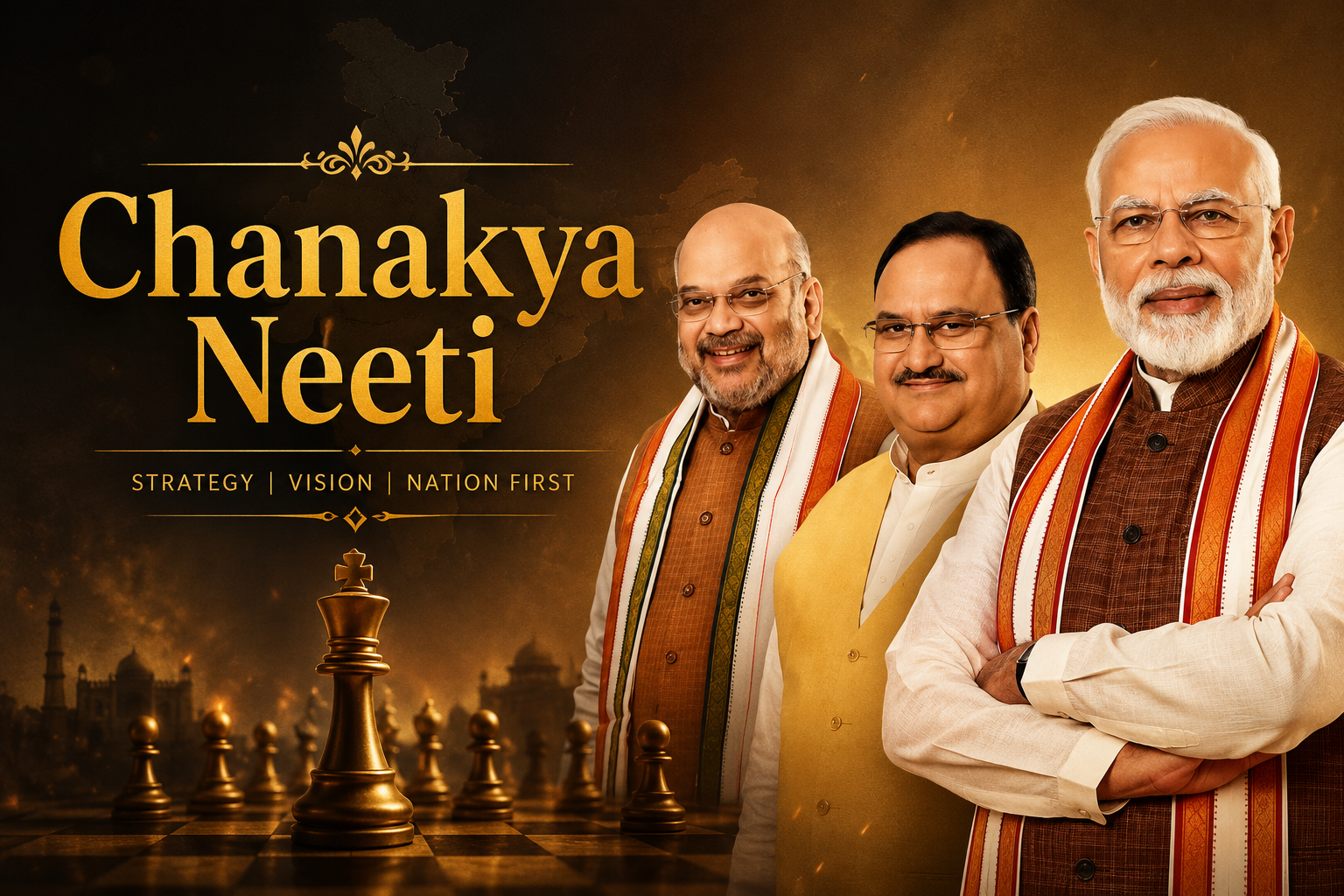
His reputation as the BJP’s “Chanakya” stems not only from election victories but also from his long-term focus on institution-building, cadre development, and strategic planning. Whether viewed as a master organizer, a skilled election strategist, or one of the most influential political figures of his generation, Amit Shah’s contribution to the BJP’s transformation over the past 12 years is widely regarded as a central chapter in the story of modern Indian politics.