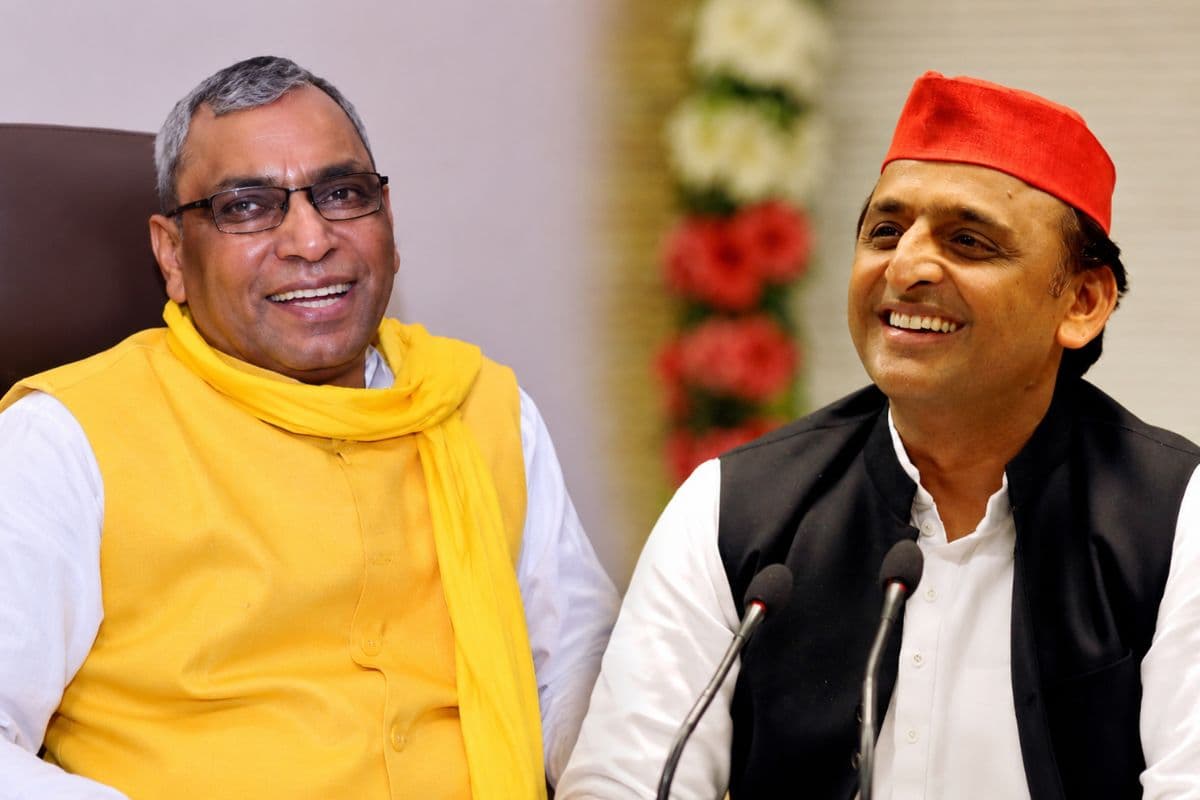
Lucknow: Although the 2027 Uttar Pradesh Assembly elections are still some time away, political parties have begun sharpening their campaign strategies. While the Bharatiya Janata Party (BJP) is expected to focus on its governance record and welfare initiatives, the Samajwadi Party (SP) is strengthening its outreach through its PDA (Backward Classes, Dalits and Minorities) social coalition. Amid this evolving political landscape, Suheldev Bharatiya Samaj Party (SBSP) chief and Uttar Pradesh Cabinet Minister Om Prakash Rajbhar has launched a campaign highlighting controversial incidents from the Akhilesh Yadav-led government (2012–2017).
Over the past several days, Rajbhar has been posting on social media about incidents that occurred during the Samajwadi Party’s tenure, arguing that they reflected failures in law and order. His campaign appears aimed not only at revisiting past events but also at questioning whether Uttar Pradesh could witness a return to that period if the SP regains power.

On Wednesday, Rajbhar released the second part of his social media series titled “SP’s Caste Violence”, claiming that within 36 hours of the Samajwadi Party assuming office in March 2012, several districts witnessed incidents of violence, arson and attacks on Dalits and members of the extremely backward communities. He also referred to the alleged burning of a rice mill owned by a former BSP minister in Ambedkar Nagar. Earlier posts in the series highlighted incidents in Sitapur, the 2016 Bulandshahr highway gang rape case and the 2014 Badaun case.
Political observers believe the campaign is an attempt to make law and order a central electoral issue well before the 2027 polls.
The timing is significant. The Samajwadi Party has been expanding its PDA strategy after performing strongly among backward classes, Dalits and Muslims in the 2024 Lok Sabha elections. The party also improved its performance in eastern Uttar Pradesh, including regions such as Azamgarh, Ghosi, Lalganj, Ghazipur and Jaunpur, where Rajbhar has traditionally claimed influence among non-Yadav Other Backward Classes (OBCs).
Analysts say Rajbhar’s renewed attacks are driven by both political strategy and electoral realities. His son, Arun Rajbhar, was unsuccessful in the 2024 Lok Sabha elections, and the NDA did not secure the expected gains in several areas considered strongholds of the SBSP. With discussions on seat-sharing for the 2027 Assembly elections expected to intensify, Rajbhar appears keen to reinforce his political relevance within the NDA while consolidating support among non-Yadav OBCs and Dalits.
Observers also point to developments within the SBSP. Reports in recent months have suggested that some party legislators are in contact with the Samajwadi Party, a possibility that Arun Rajbhar has publicly acknowledged. Political analysts view Rajbhar’s aggressive stance against the SP as an effort to strengthen party unity and reassure supporters of the SBSP’s independent political identity.
Among the incidents Rajbhar has repeatedly cited is the 2016 Bulandshahr highway gang rape case, in which a family travelling on National Highway 91 was attacked, robbed and two members were sexually assaulted. The case shocked the nation, and a special POCSO court later sentenced five convicts to life imprisonment. Rajbhar has referred to the court’s verdict to underline what he describes as shortcomings in law and order during the previous SP government.


He has also mentioned the 2014 Badaun case, where the bodies of two teenage girls were found hanging from a tree. While the case initially generated allegations of gang rape and murder, subsequent investigations by the Central Bureau of Investigation (CBI) and later court proceedings did not substantiate those allegations. The court accepted the CBI’s conclusions while directing that charges related to kidnapping and provisions of the Protection of Children from Sexual Offences (POCSO) Act against one accused continue to be tried. The case remains politically sensitive, although its legal findings differ from the initial allegations.
Rajbhar has further referred to incidents of arson in Dalit settlements in Sitapur during 2015 and 2016, which the opposition at the time described as evidence of deteriorating law and order. The Samajwadi Party had maintained that action was taken against those responsible.
The Samajwadi Party has dismissed Rajbhar’s campaign, arguing that the BJP and its allies are reviving old incidents to divert attention from current issues. The opposition continues to focus on unemployment, inflation, alleged examination paper leaks, farmers’ incomes, job creation and local development. SP chief Akhilesh Yadav has consistently questioned the government on these issues during public meetings.
Political analysts believe the 2027 Assembly election is unlikely to revolve around a single issue. Instead, governance, law and order, social justice, caste equations, Dalit and backward class politics, youth employment and economic concerns are all expected to shape the electoral contest.
Rajbhar’s campaign, therefore, is being viewed as part of a broader political effort to consolidate support among non-Yadav OBC and Dalit voters while reinforcing his position within the NDA. At the same time, the Samajwadi Party is working to retain and expand its PDA coalition by emphasising contemporary governance and economic issues.
As the countdown to the 2027 Assembly elections begins, Uttar Pradesh’s political discourse is increasingly taking the form of a contest between competing narratives—one centred on the record of past governments and the other focused on the performance of the present administration.












 https://www.youtube.com/watch?si=RtToJsBhYBatUrym&v=mOuYNSdhjHA&feature=youtu.be