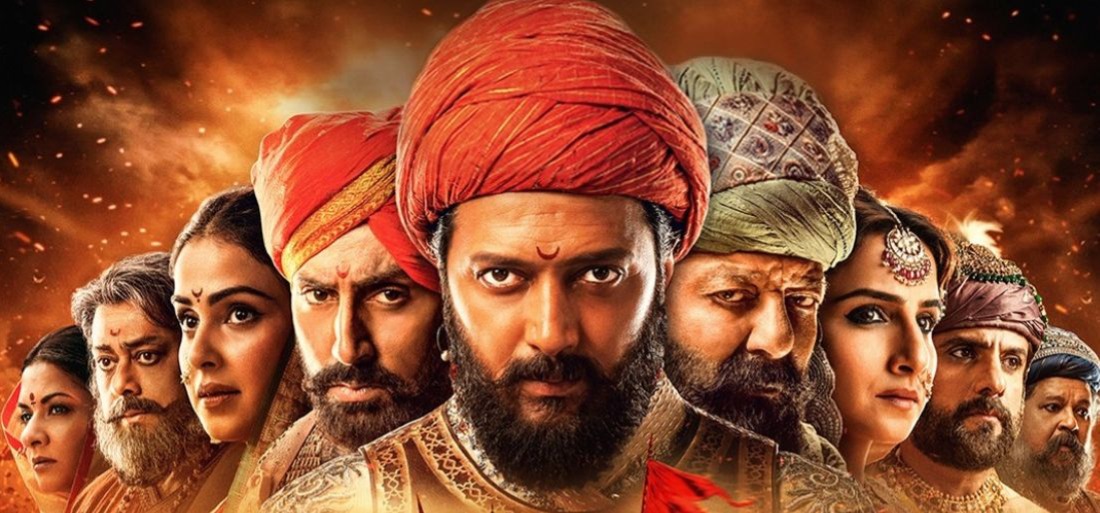
Mumbai: In an era where historical spectacles often lean heavily on style over soul, Raja Shivaji arrives with genuine conviction. Directed by Riteish Deshmukh in his ambitious directorial debut, the film attempts to capture the rise, resilience, and revolutionary spirit of Chhatrapati Shivaji Maharaj with reverence and cinematic grandeur. The result is an emotionally charged, visually lavish historical drama that succeeds more through passion and scale than narrative perfection.
Spanning over three hours, the film traces Shivaji Maharaj’s transformation from a fearless young warrior into the founder of the Maratha Empire and the torchbearer of Hindavi Swarajya. Rather than reducing him to mythology, the screenplay tries to present him as a strategic leader driven by vision, courage, and unwavering devotion to his people. The storytelling occasionally resembles an illustrated historical chronicle, but its sincerity remains undeniable throughout.

The film’s greatest triumph lies in its presentation. Veteran cinematographer Santosh Sivan crafts frames that feel majestic without becoming artificial. Towering forts, mist-covered valleys, torch-lit war rooms, and expansive battlefields are captured with striking visual texture. The action sequences—particularly the guerrilla warfare segments and the tense confrontation involving the iconic wagh nakh—deliver both scale and intensity. The visual effects, while not flawless, largely complement the film’s epic ambition.
Musically, the film is elevated tremendously by the powerhouse duo Ajay-Atul. Their score injects emotional weight into nearly every major moment, balancing patriotic fervor with spiritual resonance. Several sequences gain their impact largely because of the stirring background music, which amplifies the emotional pulse of the narrative.
As an actor, Riteish Deshmukh delivers one of the strongest performances of his career. His portrayal avoids excessive theatrics and instead focuses on quiet authority, strategic intelligence, and emotional restraint. He brings dignity to the role while convincingly handling the physical demands of the action-heavy narrative. Genelia Deshmukh adds warmth and emotional grounding, while Sanjay Dutt embraces full dramatic intensity as Afzal Khan, creating some of the film’s most explosive moments. Abhishek Bachchan leaves a solid impression in a commanding supporting role, and Salman Khan makes a brief but highly crowd-pleasing appearance that instantly energizes the screen.

Where Raja Shivaji struggles is pacing. The middle portions occasionally become repetitive, with extended dramatic stretches slowing the momentum built by the action and political intrigue. Some emotional scenes linger longer than necessary, and the screenplay doesn’t always explore the deeper psychological layers of its characters. The film is at its best during moments of conflict, strategy, and inspiration; quieter sections sometimes lack the same sharpness.
Yet despite its flaws, the film leaves a strong emotional impact. It clearly comes from a place of admiration and cultural pride, and audiences are likely to connect with its celebration of valor, self-rule, and sacrifice. Watching it in a packed theatre—with chants of “Jai Bhavani, Jai Shivaji” echoing during key scenes—adds to the immersive experience.
For viewers who enjoyed Tanhaji or Chhaava, Raja Shivaji offers a similarly grand blend of history, action, and patriotic emotion. It may not achieve the layered brilliance of the finest historical epics, but it remains a respectful, entertaining, and visually commanding tribute to one of India’s most iconic leaders.
Rating: 3.5/5
A heartfelt and ambitious historical spectacle that shines through its scale, music, and patriotic spirit, even if its storytelling occasionally loses momentum.