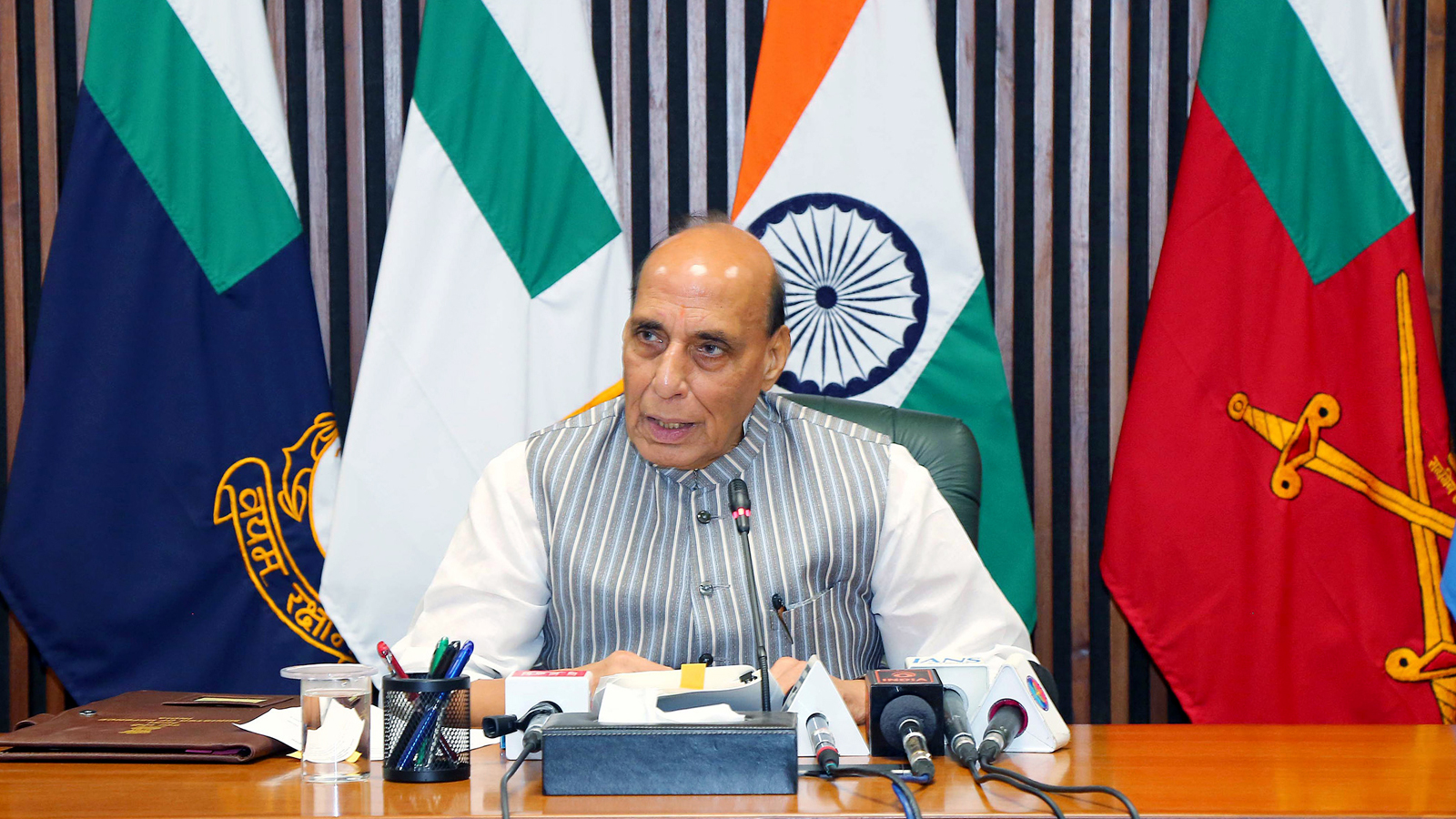
Jaisalmer: India’s defence budget has increased to Rs 7.85 lakh crore for the financial year 2026-27, with Rs 2.19 lakh crore allocated for modernisation and capital procurement, Defence Minister Rajnath Singh said while addressing a meeting of the Parliamentary Consultative Committee in Jaisalmer.
Emphasising the government’s commitment to strengthening the armed forces, Singh said adequate financial resources were essential for modernisation and that budgetary allocations had been increased consistently to meet the military’s operational requirements.
He highlighted the changing nature of warfare, pointing to the growing importance of drones, missiles, air defence systems and advanced technologies. The Russia-Ukraine conflict and the Israel-Iran hostilities, he said, had underlined the need for India’s armed forces to prepare for emerging security challenges.
The minister identified three major pillars of defence modernisation: increased financial allocation and capital acquisition, technological advancement, and human resource development. He stressed that modernisation involved not merely acquiring sophisticated weapons but also improving operational preparedness, organisational structures and specialised skills.
Highlighting India’s progress in defence manufacturing, Singh said domestic defence production had increased from approximately Rs 46,429 crore in 2014-15 to Rs 1.78 lakh crore in 2025-26. Defence exports had also grown from less than Rs 2,000 crore in 2014 to around Rs 40,000 crore.
The government has set targets of achieving Rs 3 lakh crore in defence production and Rs 50,000 crore in defence exports by 2029. The minister expressed confidence that exports could surpass the targeted level.


He also highlighted the contribution of the Defence Research and Development Organisation (DRDO) in developing indigenous weapons, missiles and advanced defence systems. The government, he said, was encouraging greater private-sector participation by providing opportunities to industries ranging from micro, small and medium enterprises (MSMEs) to large manufacturers.
Referring to organisational reforms within the armed forces, Singh cited new Army formations and platforms, including Ashni, Bhairon and Shaktibaan, as examples of efforts to address emerging operational requirements.
He said India’s long-term objective was to establish a strong indigenous defence ecosystem, reduce dependence on foreign suppliers and strengthen strategic autonomy.
The Jaisalmer meeting also provided members of the Parliamentary Consultative Committee an opportunity to discuss defence preparedness and understand ground realities, particularly in border and agricultural regions. Singh said suggestions received from committee members would be given due consideration.
The meeting concluded with a detailed presentation on the modernisation of the Indian armed forces.








 https://www.youtube.com/watch?si=RtToJsBhYBatUrym&v=mOuYNSdhjHA&feature=youtu.be