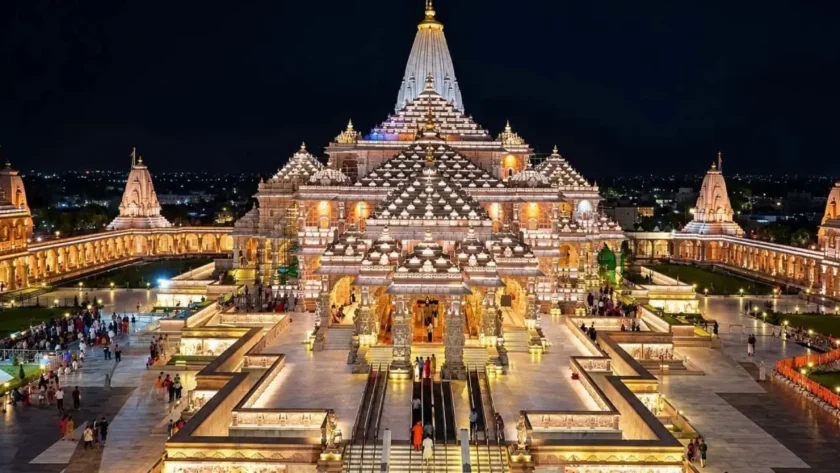
Pilibhit: Uttar Pradesh Chief Minister Yogi Adityanath on Tuesday highlighted the transformation of Ayodhya, contrasting the firing on Ram devotees in 1990 with the flower showers that now welcome pilgrims visiting the holy city. He said the grand Deepotsav celebrations in Ayodhya symbolise not only the return of Lord Ram but also Uttar Pradesh’s development, prosperity and bright future.
Addressing the Shri Ram Katha Mahotsav organised at Niranpur village in Pilibhit in memory of late Mahant Yogi Shantinath, the Chief Minister described faith as India’s greatest strength, saying it has united the country despite its vast diversity of languages, cultures and traditions.
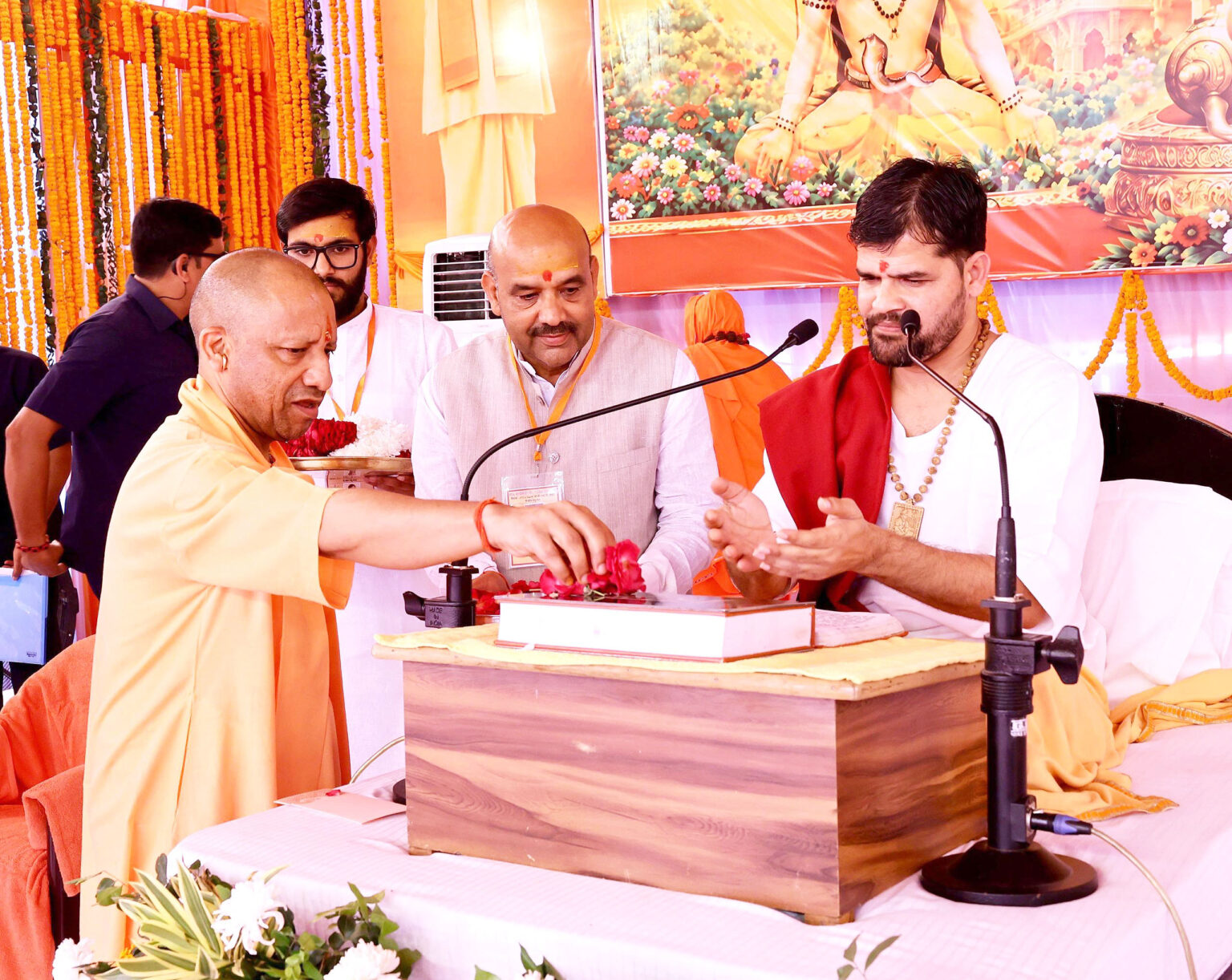
Before addressing the gathering, Adityanath offered prayers at the Shiva temple on the premises, inaugurated several development projects and honoured Shri Ram Katha narrator Sant Anjani Sharan by presenting him with clothes and fruits. He also listened to the religious discourse.
Recalling the 500-year struggle for the liberation of Ram Janmabhoomi, the Chief Minister said the construction of the Ram Temple became possible when the entire country united in support of the cause. Referring to the November 2, 1990 incident, he said Ram devotees were subjected to police firing, leaving hundreds injured. At that time, even chanting ‘Jai Shri Ram’ and visiting Ayodhya had faced restrictions, while the city suffered from poor roads, narrow lanes, inadequate sanitation and limited transport infrastructure.
Contrasting that period with the present, Adityanath said Ayodhya has undergone a remarkable transformation. More than one lakh devotees now visit Ram Lalla every day, while the number rises to between five lakh and 50 lakh during major festivals. The city has four-lane roads connecting it from different directions, improved railway facilities and air connectivity. The international airport has been named after Maharishi Valmiki.
“Earlier, Ram devotees faced batons and bullets; today, they are welcomed with showers of flowers,” he said, adding that the question of when Ram Lalla would leave the tent had now given way to millions of devotees having the opportunity to worship at the magnificent temple.
The Chief Minister said the purpose of listening to the Ram Katha was not merely religious participation but also the adoption of Lord Ram’s ideals in everyday life. Faith and positivity, he observed, help eliminate negativity and create an environment conducive to peace, development and prosperity.
Explaining the concept of Ram Rajya, Adityanath said government welfare schemes must reach every section of society without discrimination. He cited free ration distribution, health insurance coverage of up to Rs 5 lakh under Ayushman Bharat, employment opportunities for youth, financial assistance to farmers through the PM-Kisan scheme and improved security for women and traders as examples of inclusive governance.

He said that before 2017, people often struggled to access basic facilities such as ration, electricity, good roads and security, while festivals were frequently accompanied by disturbances and riots. Today, the state has moved towards peace, stability and development, he added.
The Chief Minister also criticised appeasement politics, saying it encouraged terrorism, extremism and Naxalism. In contrast, he said, the principle of ensuring that government benefits reach every citizen without discrimination had strengthened the vision of ‘Ek Bharat, Shreshtha Bharat’.
Highlighting the development of religious centres across Uttar Pradesh, Adityanath referred to the transformation of Kashi Vishwanath Dham, where facilities now allow 50,000 devotees to have darshan simultaneously. He also mentioned the development of Mathura-Vrindavan, the expansion of facilities at Maa Vindhyavasini Dham, the ongoing corridor project at Gola Gokarnath in Lakhimpur Kheri and Bareilly’s renewed identity as Nath Nagri.
Paying tribute to Maharishi Valmiki, the Chief Minister said his composition of the Adi Ramayana introduced the world to the ideals and character of Lord Ram. Referring to the Sanskrit expression ‘Ramo Vigrahavan Dharma’, he described Lord Ram as the embodiment of righteousness and an enduring source of inspiration for future generations.
He also remembered late Mahant Yogi Shantinath as an unconventional and humble saint who readily supported good causes and lived a simple life.
Among those present were Mahant Mithilesh Maharaj of Shaktipeeth Devipatan, Mahant Rajudas of Hanuman Garhi Temple in Ayodhya, Uttar Pradesh Minister and Pilibhit in-charge Sardar Baldev Singh Aulakh, Minister Sanjay Gangwar, event organising committee chairman and Legislative Council member Dr Sudhir Gupta, co-convenor Sanjeev Pratap Singh, BJP district president Gokul Prasad Maurya, Bisalpur MLA Vivek Verma, Puranpur MLA Baburam Paswan, Barkhera MLA Swami Pravaktanand and Pilibhit District Panchayat Administrator Daljeet Kaur, along with several saints and devotees.







 https://www.youtube.com/watch?si=RtToJsBhYBatUrym&v=mOuYNSdhjHA&feature=youtu.be