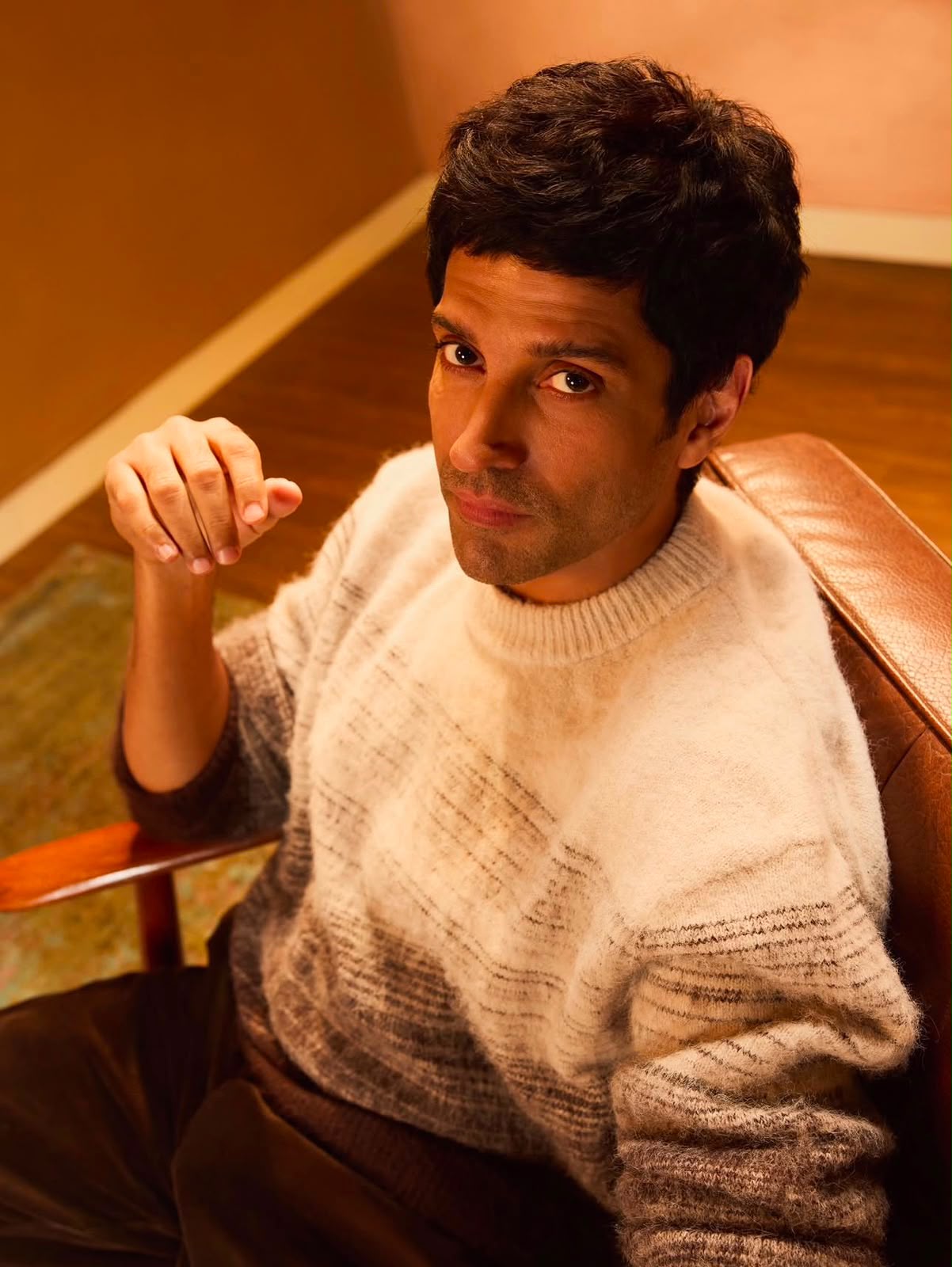
Long before Dil Chahta Hai became the film that redefined coming-of-age cinema in India, Farhan Akhtar had a formidable screenwriter he could turn to right at home. His mother, Honey Irani, had already spent decades writing for Hindi films by the time Farhan finished the early draft of his directorial debut — and when it came time to find readers he actually trusted, she was one of the first people he handed the script to.
Twenty-five years on, Akhtar has opened up about just how much her instincts shaped the film, particularly her ability to read a script the way an ordinary audience member would, rather than as a writer looking to prove something.

Speaking to The Juggernaut, Akhtar described a quality in his mother that he says he’s valued for years: her instinct for knowing exactly when a scene needed to be felt, not explained. “She’s got a great sense of humour. You know, that’s one. And the other thing that she has is, she has this amazing ability to read the script from a very genuine audience point of view,” he said. “So she doesn’t get into a place of wanting to over-intellectualise stuff. Or wanting to unnecessarily be deep when something can be made to be felt without trying to be too artistic about it. You know, or the pseudo art, if you want to call it that.”
That instinct, he explained, is exactly where her contribution mattered most. She wasn’t nudging him to make the film heavier or more meaningful — if anything, she was doing the opposite, pulling him back from taking himself too seriously in places that didn’t need it. “That’s really where she really helped me with — was just lightening up a few moments,” he said.
One of those moments went on to become one of the most beloved comic beats in the entire film. Akhtar recalled the now-iconic sequence where Akash comes across a man who appears to be threatening Shalini. In his original draft, the scene played out simply enough — Akash watches the man, who eventually walks away, and that’s that. Irani had a different idea entirely. “The thing that she, when she read the script, this beat came from her, which is when Aamir comes running back and hugs the hobo,” Akhtar said.

It’s a small tweak on paper, but anyone who’s seen the film knows exactly the moment he’s talking about — the beat lands because it’s so gloriously unexpected. Akhtar explained that in his version, Akash simply turned and walked away after the confrontation defused itself. His mother suggested he run back instead and hug the man, an odd, disarming gesture that instantly undercuts the tension and turns the whole scene into a punchline. It’s the kind of instinct Akhtar says he’s always admired in her — not overthinking a moment, but finding the one small, human, slightly absurd beat that makes it actually work.
Her influence on the film, though, wasn’t limited to comic timing. Akhtar also drew on his own family life while writing the film’s parent characters, particularly the relationship between Sid and his mother, which he has said was the parental bond he focused on most closely while writing. He’s been candid about why that relationship, in particular, carried such weight for him. “To me, that was the one that I think… I wanted to focus on that and I feel somewhere, I think a little homage, you know, or a little tipping my hand to my own mom, who brought Zoya and me up as a single mom for most of it,” he said. “And was really our strength.”
Honey Irani’s presence in Dil Chahta Hai was never simply that of a well-known screenwriter offering her son a few notes out of courtesy. Her fingerprints are on the way the film handles emotion, humour, and character — she pushed him to trust his audience, to resist the urge to over-explain what a scene could simply let you feel, and, in at least one unforgettable moment, to make the strange, unexpected choice that ended up defining the film. For a first-time director, that might have been the most valuable lesson of all.
From her, it would seem, the brilliance descends.












 https://www.youtube.com/watch?si=RtToJsBhYBatUrym&v=mOuYNSdhjHA&feature=youtu.be