A leader who conquered the heights of power but never outgrew the village that gave him his identity
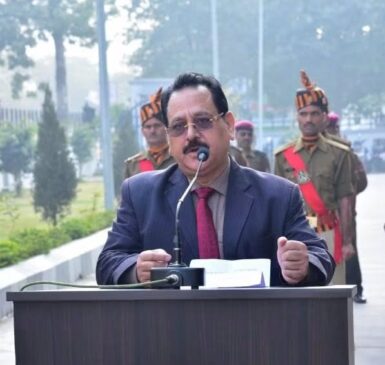
By Arvind Singh Bisht
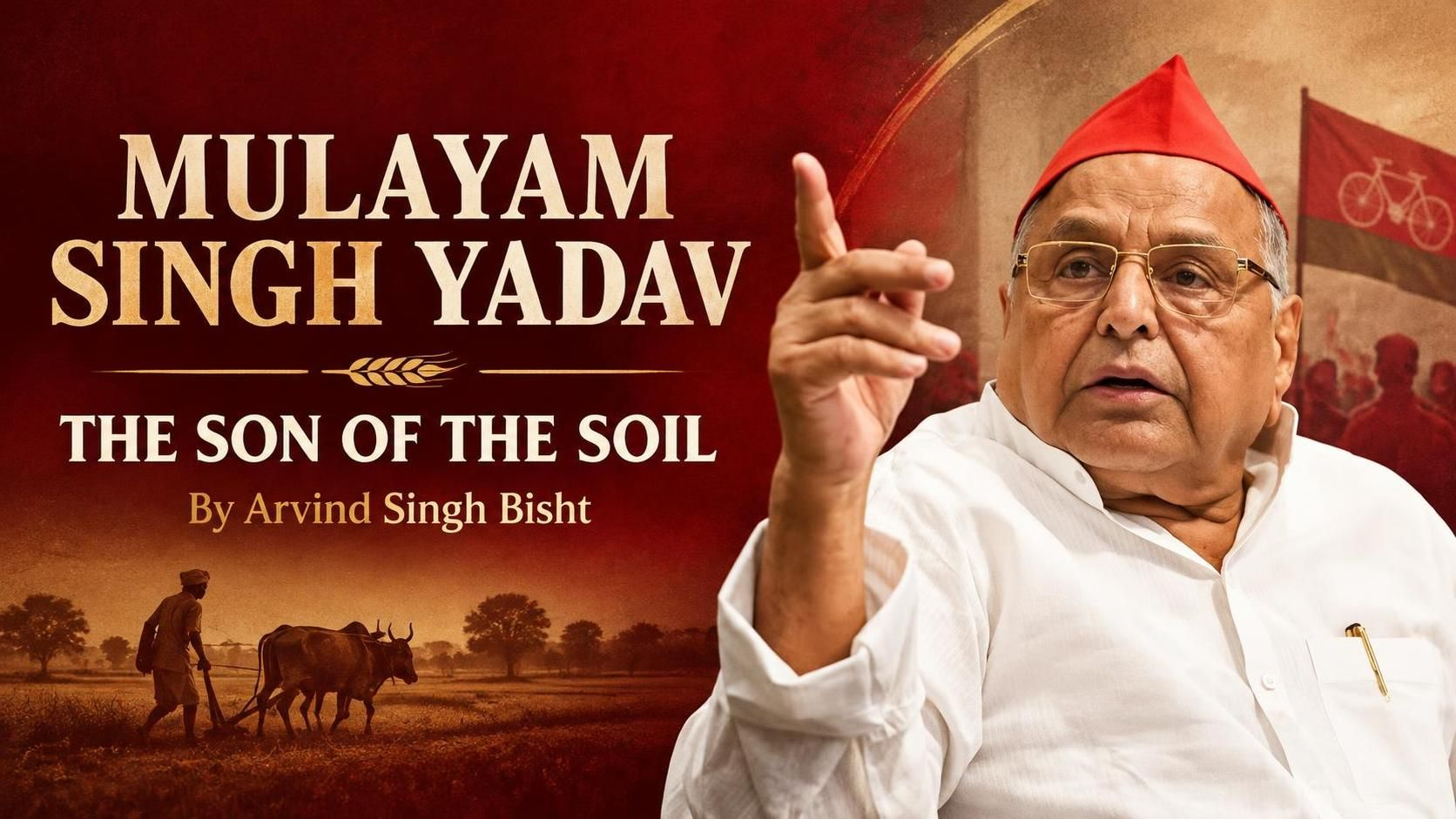
Mulayam Singh Yadav was a unique personality. He was one of those rare political leaders who remained an enigma to many of his contemporaries, yet retained an unmistakable connect with the ordinary people whose aspirations he represented. He rose from the dusty lanes of a small village in Uttar Pradesh to occupy some of the highest positions in Indian politics. He became Chief Minister of India’s most politically significant state three times, founded a formidable political organisation and went on to become the Defence Minister of the country. Yet, through all these transformations, one thing never changed: his attachment to his roots.
He was, in the truest sense, a Son of the Soil.
Born on November 22, 1939, in Saifai, a modest village in Etawah district, Mulayam Singh Yadav’s political journey was a remarkable story of perseverance, conviction and an instinctive understanding of India’s rural society. Coming from a farming family, he was shaped by the realities of village life. The struggles of farmers, the aspirations of backward communities and the concerns of ordinary rural households were not subjects he discovered through political speeches or electoral calculations. They were part of the world in which he had grown up.
His political evolution was deeply influenced by the socialist movement, particularly the ideas of Dr Ram Manohar Lohia. He believed that political power should not remain the preserve of a privileged few. It had to reach those who had historically remained on the margins of the country’s social and political order. This conviction became the foundation of his politics.
Challenging the Congress citadel
Mulayam Singh Yadav’s rise coincided with a period of profound political transformation in Uttar Pradesh. For decades, the Congress had dominated the state’s political landscape. Its organisational reach and leadership appeared almost unassailable. But beneath that apparent political stability, a new social consciousness was taking shape. Backward communities, farmers and other sections of society were increasingly demanding their rightful place in the political establishment.
Mulayam understood this emerging change earlier than many of his contemporaries. He recognised that the traditional political order was gradually losing its hold over an electorate that was becoming more conscious of its identity and aspirations.
After years of political struggle, he founded the Samajwadi Party in 1992. It was not merely the birth of another political party; it was an attempt to give a distinct political voice and organisational identity to a powerful social constituency.
Building the Samajwadi Party in the shadow of the Congress’s historical dominance was no ordinary achievement. He had to create an organisation almost from the ground up, nurture its cadres, establish its presence across the state and turn a social movement into an electoral force.
He succeeded remarkably.
His three tenures as Chief Minister, followed by his elevation to the office of Defence Minister in the United Front government, demonstrated the extraordinary distance he had travelled from his humble beginnings. He had become a national political figure, but his political instincts remained deeply rooted in the countryside.
Saifai: The village that never left his heart
What distinguished Mulayam Singh Yadav from many other political leaders was not simply his ability to reach the pinnacle of power. It was his extraordinary determination to remain connected with the place from which he had begun his journey.
For him, Saifai was never merely his native village or a place to return to during political breaks. It was an inseparable part of his identity.
As his political stature grew, so did his efforts to transform Saifai. He wanted the village to have the facilities and opportunities that were generally associated with developed urban centres. Roads, educational institutions, healthcare facilities, sports infrastructure and other modern amenities became part of his vision for the village.
The development of Saifai was not an incidental consequence of his political influence. It reflected a deeply personal commitment. He wanted the village that had given him his first identity to experience the fruits of development that he had witnessed and facilitated at the highest levels of government.
In a country where political leaders frequently abandon their humble beginnings once they acquire power, Mulayam Singh Yadav presented a striking contrast. He did not want to forget his village; he wanted to transform it.
There is an interesting parallel here with Prime Minister Narendra Modi’s recurring emphasis on remaining connected with one’s native place. In his interactions with senior government officials, Modi has spoken of the importance of returning to one’s villages and recognising how much they have changed through development since one left. The larger message is that progress acquires a deeper meaning when it reaches the place where one’s journey began.
Mulayam Singh Yadav seemed to have lived this philosophy much before it became a subject of such public emphasis. For him, the transformation of Saifai was not an administrative slogan or an abstract development objective. It was a personal mission.

Indeed, few Chief Ministers have displayed such a visible and enduring attachment to their native village. His relationship with Saifai went far beyond sentiment. He sought to translate that affection into institutions, infrastructure and opportunities for its people.
One could disagree with aspects of his politics, question some of his political decisions or debate the model of development he pursued. But it would be difficult to overlook the intensity of his attachment to his birthplace.
The politician and the person behind the public image
As a journalist, I followed the political evolution of Uttar Pradesh through some of its most turbulent decades. I witnessed the transition from Congress dominance to the emergence of powerful regional political formations. The Mandal–Kamandal period, the changing equations of caste and community, the rise of regional satraps and the increasing importance of coalition politics fundamentally altered the character of the state.
Mulayam Singh Yadav was among the principal architects of this transformation.
He was a politician of considerable political instinct, resilience and pragmatism. He could be combative, unpredictable and, at times, difficult to read. His political decisions often surprised even those who believed they understood him. Perhaps this was part of the reason he remained an enigma to many of his contemporaries.
But political leaders cannot always be understood through their public positions alone. Sometimes, their personal relationships and emotional attachments reveal dimensions that political analysis misses.
My association with the Yadav family gave me an opportunity to see another aspect of this towering personality. My daughter, Aparna Yadav, was married to his younger son, the late Prateek Yadav. Through this family relationship, my connection with Mulayam Singh Yadav was not confined to the professional curiosity of a journalist observing an important political figure. It acquired a personal dimension.
I could appreciate the significance of family, relationships and personal bonds in the life of a man whose public responsibilities were so immense.
The man who had negotiated the complexities of state politics, national coalitions and the corridors of power was also the head of a large family, with its relationships, emotions and expectations. There was a human side to him that could not always be captured in newspaper headlines or political commentaries.
It is this combination of the public and the personal that makes my remembrance of him particularly meaningful.
A legacy beyond electoral politics
Mulayam Singh Yadav’s contribution to Uttar Pradesh cannot be measured merely by the number of elections he won or the governments he formed. His larger achievement was to alter the state’s political vocabulary.
He helped bring historically under-represented communities into the centre of political discourse. He gave organisational shape to a socialist political tradition and created a party that became one of the most consequential regional forces in the country.
His legacy, like that of most major political personalities, is not without controversies and contradictions. But history must recognise both the achievements and the limitations of a leader without allowing one to erase the other.
His life also carries a lesson that transcends party politics. Development should not make people forget where they came from. Power should not create a distance between a leader and the society that produced him. The measure of success is not merely how far one travels, but whether one retains the sensitivity to look back.
Mulayam Singh Yadav travelled a very long distance from Saifai. He reached the corridors of power in Lucknow and New Delhi, occupied the Chief Minister’s office and the Defence Minister’s chair, and became one of the most influential regional leaders of his generation. Yet, in his own way, he kept returning to the village that had shaped his life.
Perhaps that is the most enduring image of Mulayam Singh Yadav: a man who rose to the heights of power but never allowed the soil beneath his feet to lose its importance.
On his birth anniversary, I remember him not merely as the founder of the Samajwadi Party, a three-time Chief Minister or a former Defence Minister, but as a man whose journey offers an important message to public life.
A leader may outgrow the boundaries of his village, but he should never outgrow his roots.
Mulayam Singh Yadav did not.
He remained, until the end, the son of Saifai.
That is his most enduring tribute.












 https://www.youtube.com/watch?si=RtToJsBhYBatUrym&v=mOuYNSdhjHA&feature=youtu.be