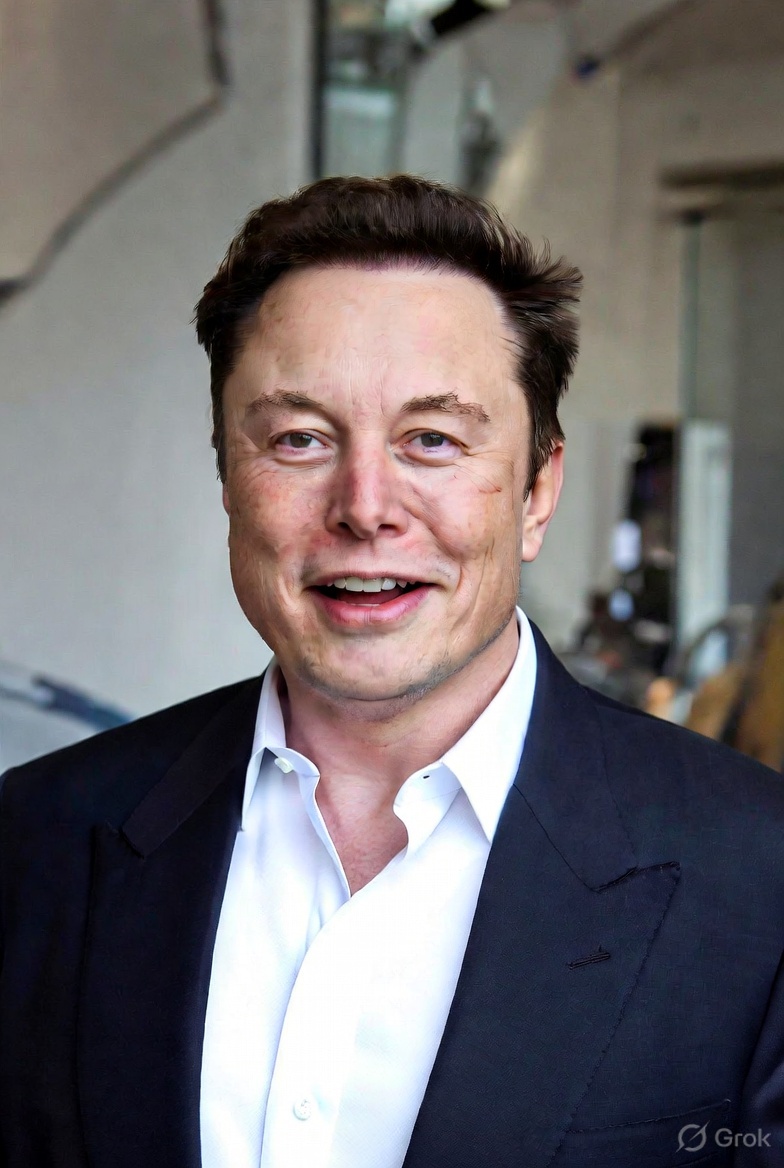
Washington: Tesla and SpaceX CEO Elon Musk has rejected allegations of racism, pointing to his family’s multicultural background and hiring practices as evidence that he does not discriminate on the basis of race. His remarks came during an interview in response to questions over controversial social media posts that have drawn criticism in recent months.
Responding to a question from The Economist Editor-in-Chief Zanny Minton Beddoes about whether he was racist, Musk said his personal and professional life reflected his commitment to diversity. He argued that the composition of his family and the people he employs demonstrates that race has never influenced his decisions.
Highlighting his connection to India, Musk said his partner, Shivon Zilis, is of half-Indian heritage. The couple share four children. Although they are not married, Zilis, who was raised in Canada, has an Indian-origin mother.
Musk also noted that one of their sons was named in honour of Nobel Prize-winning Indian-American astrophysicist Subrahmanyan Chandrasekhar. He explained that the child’s name, Strider Shekhar, combines “Strider”—inspired by the character Aragorn from J.R.R. Tolkien’s The Lord of the Rings—with “Shekhar” as a tribute to the renowned scientist.

The billionaire’s comments come after months of scrutiny over posts in which he discussed issues related to race, immigration and demographic trends. Critics have accused Musk of amplifying divisive narratives, allegations he has consistently denied.
During the interview, Musk also addressed the rapid advancement of artificial intelligence, acknowledging that AI presents genuine risks that cannot be ignored. However, he argued that technological progress is unlikely to slow and stressed that the focus should be on maximising AI’s benefits while preventing its misuse.
When asked about religion, Musk said he has no objection to any particular faith. Instead, he maintained that his concerns relate to individuals who engage in criminal activity, regardless of their religious background, and emphasised that public safety should not be linked to any specific community.












 https://www.youtube.com/watch?si=RtToJsBhYBatUrym&v=mOuYNSdhjHA&feature=youtu.be