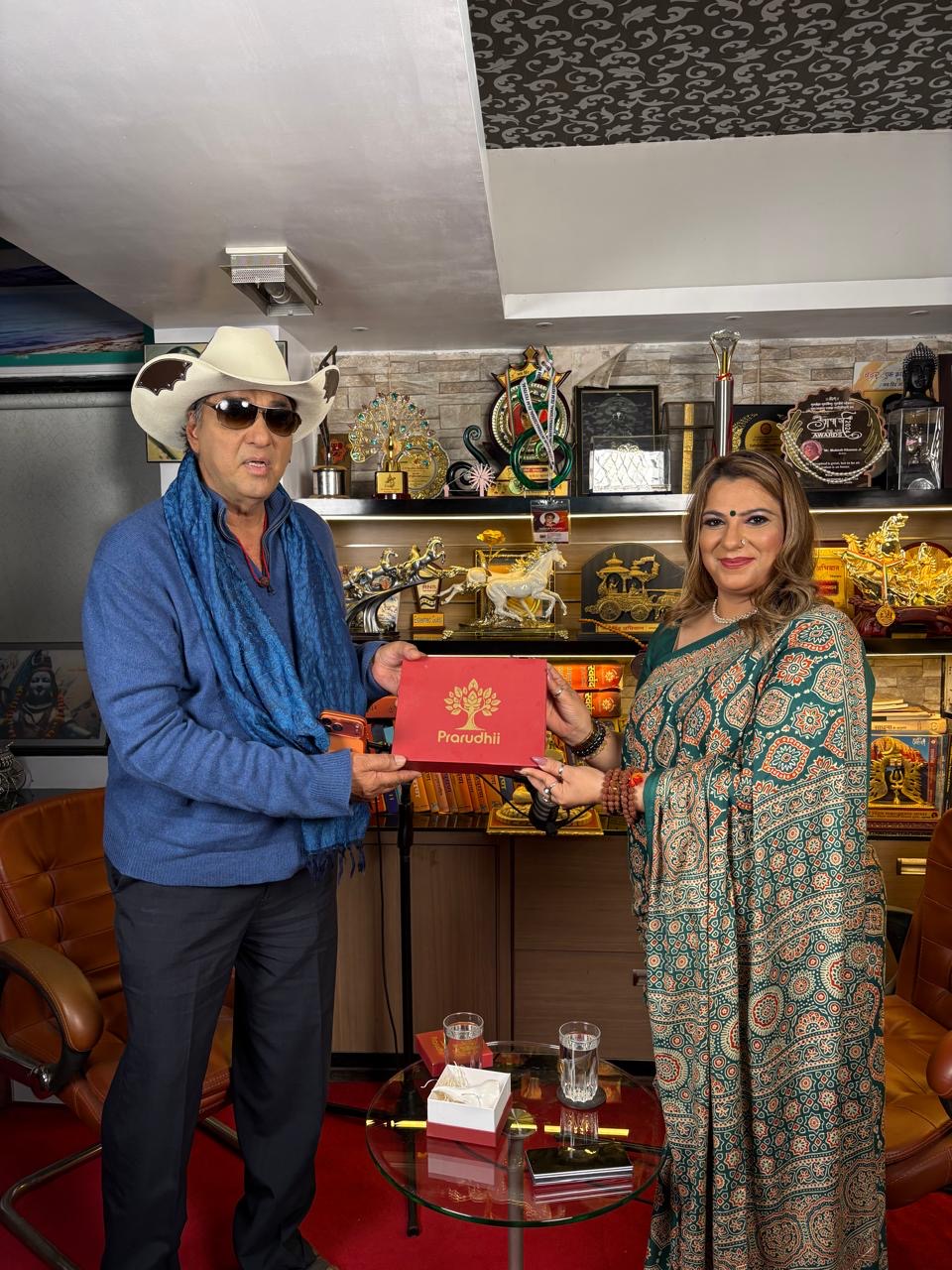
Mumbai: Mukesh Khanna, who is still popularly known as Shaktimaan, is not one to mince his words. In a recent podcast with astrologer and psychic Geetu Parmar, he spoke about a few actors from the industry and he kept it brief.
On Dharmendra, he said, “A good man. People call him He Man, but I would simply call him a good man.”

“A very hardworking actor,” he replied for Amitabh Bachchan, and called Dilip Kumar, “An institution in acting.”
For Vinod Khanna, he said, “I would actually give him the title of He Man, which is usually given to Dharmendra. He truly had that personality. He was an actor respected by everyone.”
Mukesh calls superstar Rajinikanth a man who has defied age and the norms of the industry. He added, “He doesn’t hide his baldness. And when he appears as Robo, everyone forgets what he looks like in real life. Rajinikanth is a bigger star than any Bollywood actor, even bigger than Amitabh Bachchan.”
When Geetu asked him to describe himself, he paused. Mukesh said, “I don’t know what I would call myself. Pitamah for the elders, Shaktimaan for the children. Whenever I work in a film or play a role, I become that character. I have never played a villain, and I have never worked just for money. I have always chosen to work for goodness and positive values. So I would simply say that I am whoever the character I am portraying is. That is who I become.”
When Geetu Parmar steered the conversation toward values and sacrifice, he went straight to the heart of Bhishma Pitamah’s story and why it resonates less today than it should.

Mukesh said, “When Devavrata brought Satyavati for his father’s happiness, and when his father realized what he had done, he said, what have you done, my son? For my happiness, you have pushed your own life towards death. Devavrata replied, Father, this vow is mine, and its consequences are mine as well.”
He posed a simple question. Mukesh said, “Does only a father always have to sacrifice for his son? Doesn’t a son have any duty? Which son today would ever say something like that? Today’s son would say, you did your duty for me, and I will do my duty for my own son.”
“The father holds his child’s finger and teaches him to walk, and then in old age the same child leaves him in an old age home,” he added.
When people ask how he played Bhishma so convincingly, the answer isn’t technique. Mukesh said, “It is because I believed in those values. I served my own father too. That belief reflected in my face and in my eyes. The moment genuine belief comes, it is reflected in your performance.”
“Progress without culture will lead to your downfall,” he concluded.