Republicans suffer major setbacks as voters reject Trump-backed candidates amid rising living costs, Iran war fallout and declining presidential approval
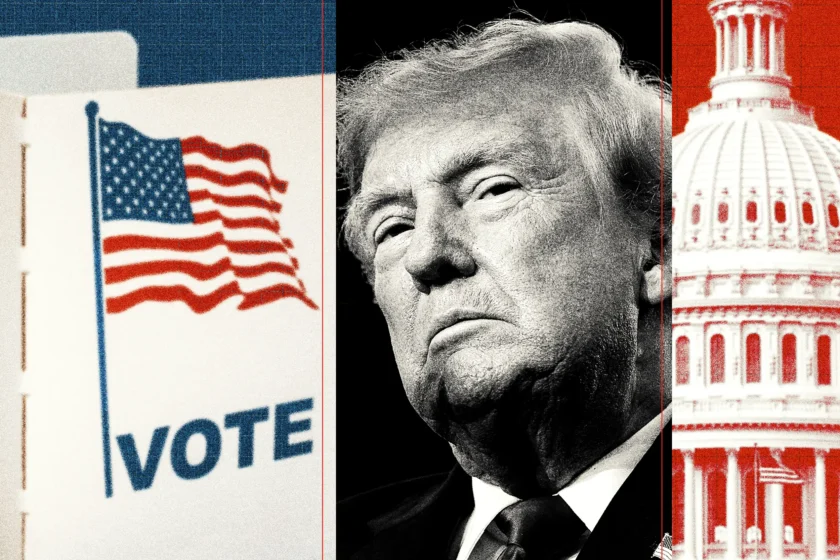
Washington: US President Donald Trump had urged his supporters to treat the 2026 midterm elections as a direct vote on his leadership. American voters appeared to accept that challenge, delivering a sweeping victory to the Democratic Party, which captured control of both the Senate and the House of Representatives, according to projections by the Associated Press.
The results represent a major political setback for Trump during the second half of his presidency. Democrats had flipped seven Republican-held Senate seats and more than two dozen House seats by Wednesday afternoon. Their victories in several states that Trump had carried by double-digit margins in the 2024 presidential election underscored the scale of the political shift.
The outcome also raised questions about Trump’s influence over Republican candidates, particularly those who received his personal endorsement. Several of his preferred candidates suffered defeats, strengthening concerns within the Republican Party about the president’s political judgment and the electoral consequences of his involvement in party nominations.
Trump-backed candidates face voter rejection
Texas emerged as one of the biggest setbacks for Republicans. Trump had endorsed state Attorney General Ken Paxton shortly before the Republican Senate runoff, helping him defeat longtime Senator John Cornyn. However, Republican leaders had previously warned that Paxton’s controversies could make him vulnerable in a general election.
Those concerns proved significant when Democrat James Talarico won the Senate contest, flipping a seat in a state where Democrats had not secured a Senate victory in nearly four decades.
South Carolina witnessed another unexpected political reversal. Following Senator Lindsey Graham’s death, his sister Darline Graham was appointed to the seat and subsequently secured Trump’s backing. Despite defeating Representative Ralph Norman in the Republican primary runoff, she lost the general election to Democratic candidate and paediatrician Annie Andrews.
Democrats also registered victories in Kansas and Iowa, where Josh Turek defeated Republican Representative Ashley Hinson. In Ohio, former Democratic Senator Sherrod Brown defeated incumbent Republican Senator Jon Husted.
The defeats highlighted the challenges faced by Republicans in retaining seats even in traditionally favourable political territory.
Economic concerns and Iran war influence voters
Economic dissatisfaction emerged as a major factor shaping the election results. According to Associated Press reporting, the cost of living, immigration enforcement and the US military conflict with Iran were among the leading concerns influencing voters.


The war had significant economic consequences, particularly through rising energy prices. Crude oil prices climbed above $100 per barrel amid concerns over disruptions in the strategically important Strait of Hormuz. Petrol prices increased by more than 50 cents per gallon following the outbreak of the conflict, while diesel prices rose by over $1.20 per gallon in a single month.
The increase in fuel costs intensified concerns about inflation and household affordability. With Republicans largely supporting Trump’s approach towards Iran, the administration’s foreign policy increasingly became an electoral liability.
For many voters, the rising cost of transportation, energy and everyday essentials became closely linked to their assessment of the president’s economic management.
Trump was already facing declining public approval before the elections. A Reuters/Ipsos survey conducted in late October placed his approval rating at 32 per cent, marginally above the record low recorded the previous week. Earlier polling had also indicated widespread dissatisfaction with his handling of the economy.
Divided government presents new challenges
Trump responded to the Democratic victory by acknowledging that the opposition had performed well, while directing criticism towards Republican candidates. However, the results are likely to trigger wider debate within his party over campaign strategy, candidate selection and the political risks of tying congressional contests too closely to the president.
Democratic control of both chambers will significantly change the political landscape in Washington. Republicans will face two years of divided government, while Democrats will gain greater authority to conduct congressional investigations, scrutinise administration policies and obstruct legislative proposals.
The election sends a clear message about the limits of presidential influence. Trump’s endorsements, political rallies and campaign interventions could not shield several Republican candidates from voter dissatisfaction.
For the Democrats, the victory provides an opportunity to challenge the administration’s agenda and strengthen their position ahead of the next presidential election. For Republicans, the result is a warning that economic pressures, unpopular foreign policy decisions and controversial candidate choices can combine to produce a significant electoral backlash.
The 2026 midterms have therefore become more than a routine congressional election. They represent a major test of Trump’s political standing and could reshape the balance of power in American politics for the remainder of his presidency.








 https://www.youtube.com/watch?si=RtToJsBhYBatUrym&v=mOuYNSdhjHA&feature=youtu.be