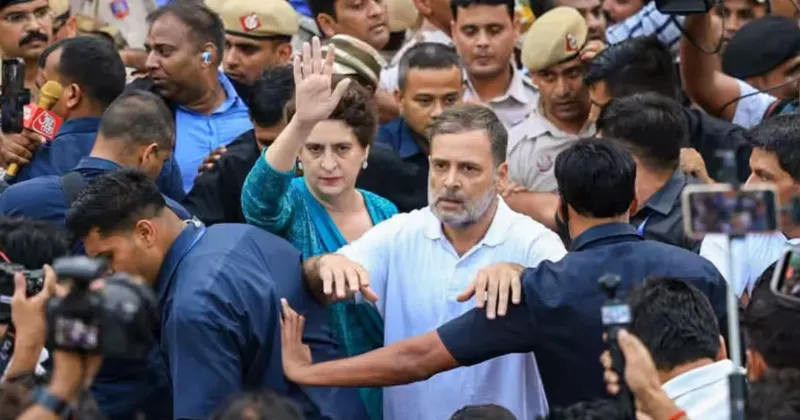
New Delhi: The INDIA bloc’s ‘Vote Bachao, Desh Bachao’ rally at Delhi’s historic Ramlila Maidan has triggered a debate over the opposition’s political strategy, organisational unity and its ability to present a credible alternative to the ruling establishment. In an opinion article, Ashok Bhatia describes the November 2026 gathering as a strategic setback, arguing that its timing, political messaging and internal contradictions undermined its impact.
The rally, which was intended to demonstrate opposition unity and mobilise support ahead of the 2027 elections, came during the busy festive season, coinciding with Diwali, Bhai Dooj, Govardhan Puja and Chhath. The article argues that holding a major political event in central Delhi during this period caused considerable inconvenience to residents, office-goers and shoppers due to traffic congestion across Old Delhi and adjoining areas.
It also cites concerns raised by the Chamber of Trade and Infrastructure, which reportedly warned that the event could result in business losses of nearly Rs 10,000 crore during the crucial festive trading period.
The article identifies Congress leader Rahul Gandhi’s speech as another weakness of the rally, arguing that its emphasis on allegations against constitutional institutions and demands for the resignation of Chief Election Commissioner Gyanesh Kumar failed to address broader public concerns. Issues such as inflation, employment, healthcare and higher education, it observes, deserved greater attention.
The controversy surrounding the Special Intensive Revision (SIR) of electoral rolls also featured prominently in the opposition’s campaign. However, the author maintains that the opposition failed to translate its concerns into a wider public agenda supported by practical policy proposals.

Questions over the INDIA bloc’s internal cohesion also came into focus. Although leaders from several opposition parties shared the platform, the article points to differences among alliance partners in states such as West Bengal, Punjab and Kerala. It argues that the rally failed to establish a common political programme or present a clearly defined vision for the country, with the Congress appearing to dominate the proceedings.
Meanwhile, the BJP reportedly launched parallel public outreach programmes across Delhi, including foot marches, street-corner meetings and interactions with residents. According to the article, the party sought to portray the opposition rally as disruptive to festive activities and local businesses while highlighting the government’s development agenda.
Concluding his assessment, Bhatia argues that large political gatherings and criticism of constitutional institutions alone cannot generate public confidence. He maintains that the opposition needs to move beyond protest politics, address everyday concerns and present a constructive development agenda if it hopes to emerge as a credible political alternative.
The article ultimately raises questions about whether the INDIA bloc can overcome its internal differences and build a cohesive strategy capable of connecting with voters beyond political rallies.








 https://www.youtube.com/watch?si=RtToJsBhYBatUrym&v=mOuYNSdhjHA&feature=youtu.be