Lucknow: Highlighting the growing challenges posed by climate variability, Prof. (Dr.) Bharat Raj Singh, Director General (Technical), School of Management Sciences, Lucknow, cautioned that El Niño has the potential to significantly alter global weather systems, weaken India’s southwest monsoon, intensify water scarcity, and adversely impact agriculture and food security.
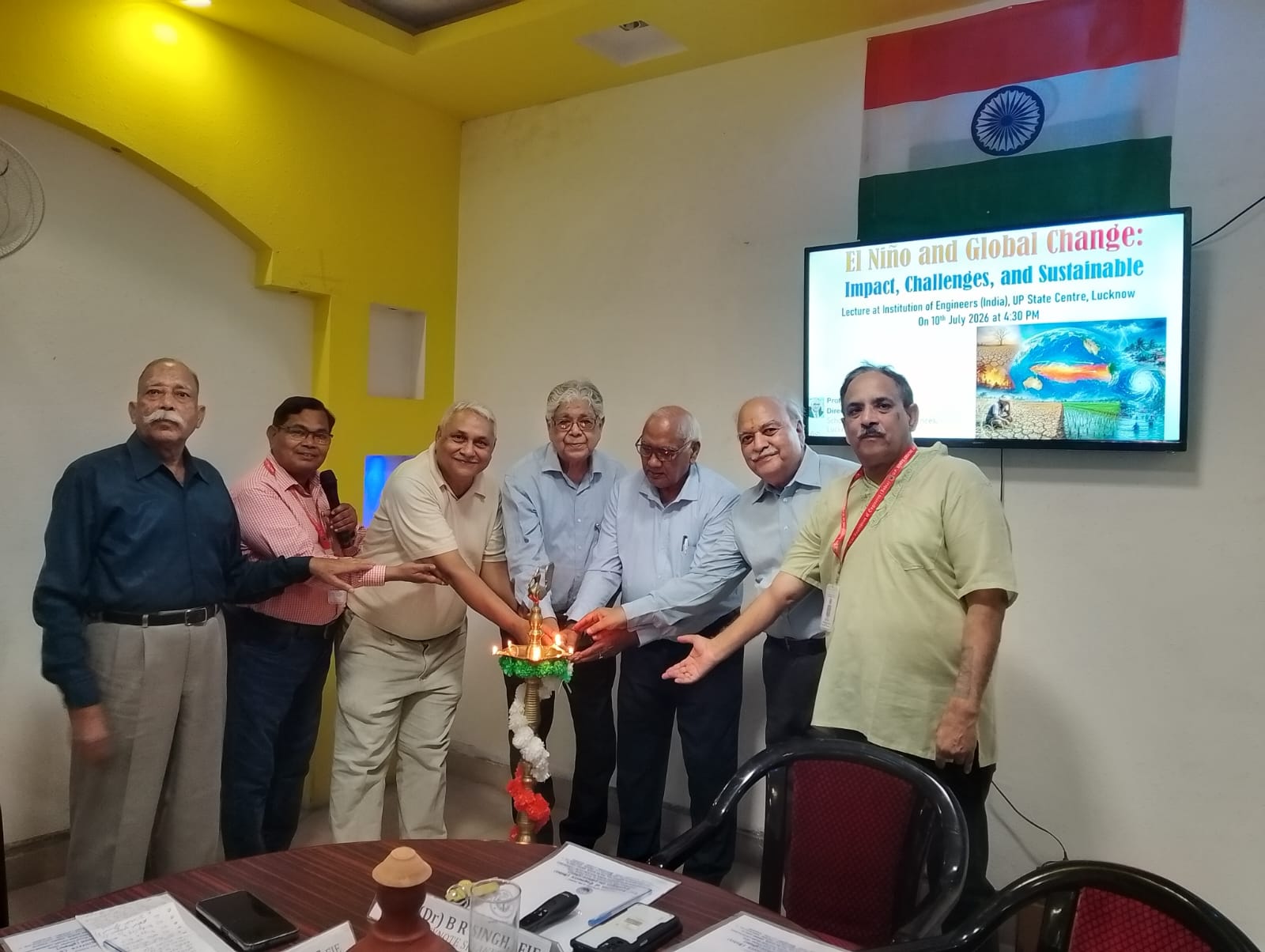
Prof. Singh was delivering a technical lecture on “El Niño and Global Climate”, organised by The Institution of Engineers (India), Uttar Pradesh State Centre, Lucknow, at Engineers Bhawan, River Bank Colony, Lucknow.

Explaining the phenomenon, Prof. Singh said El Niño is a naturally occurring climate event characterised by an abnormal warming of sea surface temperatures in the central and eastern equatorial Pacific Ocean. Although it originates in the Pacific, its effects extend across continents by altering atmospheric circulation and disturbing established global weather patterns.
He noted that a strong El Niño event can significantly weaken India’s southwest monsoon, resulting in below-normal rainfall and drought-like conditions. Such climatic changes can reduce agricultural productivity and food-grain output, deplete reservoirs and groundwater reserves, and increase pressure on drinking water supplies and irrigation systems. These cascading impacts may also contribute to food inflation, strain power generation, affect rural livelihoods, and slow economic activity.
Prof. Singh further explained that the consequences of El Niño are not confined to India. Globally, the phenomenon can trigger extreme weather events, including prolonged heatwaves, floods, droughts, wildfires, and disturbances to marine ecosystems, affecting both biodiversity and economic stability.

“El Niño demonstrates how closely interconnected the world’s oceans, atmosphere, ecosystems, and economies are. Climate risks can no longer be addressed in isolation; they require science-driven policies, advanced forecasting, robust early-warning systems, and coordinated global action,” he said.
Emphasising the need for preparedness, Prof. Singh called for greater investment in scientific research, climate modelling, modern technology, real-time environmental monitoring, and effective early-warning systems. He also stressed the importance of evidence-based public policies and greater public awareness to reduce climate-related risks and strengthen resilience against increasingly unpredictable weather events. He urged policymakers, researchers, and communities to work collectively to safeguard agriculture, water resources, ecosystems, and vulnerable populations.
The programme was chaired by Er. V. P. Singh, Chairman of The Institution of Engineers (India), Uttar Pradesh State Centre, who highlighted the importance of technical discussions in advancing scientific knowledge and promoting environmental conservation and sustainable development.
The proceedings were conducted by Prof. Jamal Nusrat, while Er. N. K. Nishad, Honorary Secretary of the Uttar Pradesh State Centre, delivered the vote of thanks, expressing gratitude to the keynote speaker, distinguished guests, and participants for their valuable contributions to the programme.


 ---------------------------------------------------------------------------------------------------