By Dr. Priyanka Saurabh/ Translated from Ravivardelhi.com

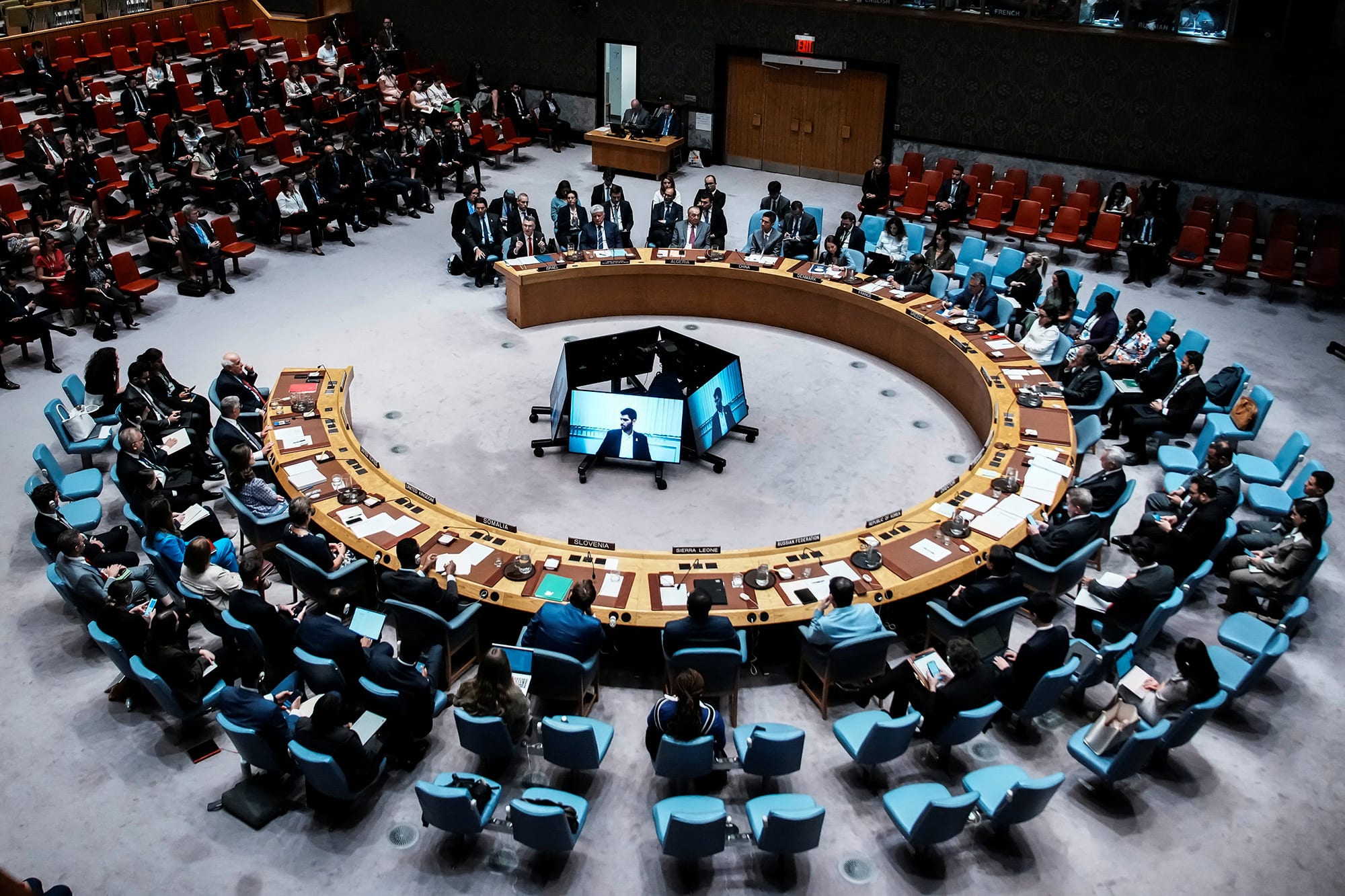
New Delhi: More than eight decades after the establishment of the United Nations, calls for reforming the United Nations Security Council (UNSC) are growing louder across the world. As global power dynamics shift and emerging economies play increasingly influential roles in international affairs, many policymakers and experts argue that the Security Council’s structure no longer reflects contemporary realities.
The UNSC was created in 1945 in the aftermath of World War II, when the geopolitical landscape was vastly different from what it is today. The five permanent members—the United States, Russia (then represented by the Soviet Union), the United Kingdom, France, and China—were granted special status, including veto powers, to maintain international peace and security. While this arrangement reflected the balance of power at the time, critics contend that the world has undergone dramatic transformations since then, making reform both necessary and inevitable.
The end of colonialism, the emergence of dozens of new sovereign nations, the rise of Asia as a major economic center, and the evolution of a multipolar international order have fundamentally altered global governance. Yet the Security Council continues to operate largely within a framework designed for the mid-twentieth century.
Recent international crises have intensified demands for change. Conflicts such as the Russia–Ukraine war and the continuing instability in Gaza, along with transnational challenges including terrorism, climate change, cyber threats, and artificial intelligence governance, have highlighted limitations in the Council’s ability to respond effectively and decisively. Critics argue that repeated deadlocks caused by the veto system have undermined the Council’s credibility and effectiveness.
Within this broader debate, India’s bid for permanent membership has emerged as one of the most significant reform proposals. Supporters argue that India’s inclusion would not only address longstanding representational imbalances but also strengthen the legitimacy of the global governance system.
India’s case for permanent membership rests on several compelling factors. As the world’s most populous nation and the largest democracy, India has become a major political, economic, and diplomatic force. The country’s expanding economy, growing technological capabilities, and increasing influence in international forums have elevated its global profile considerably. Many analysts project that India will rank among the world’s three largest economies in the coming decades.
India has also demonstrated leadership in fields ranging from digital innovation and space exploration to renewable energy, healthcare, and artificial intelligence. Its role in shaping discussions on global development and emerging technologies has reinforced its status as an increasingly important stakeholder in international affairs.
Another pillar of India’s claim is its longstanding contribution to United Nations peacekeeping operations. For decades, Indian soldiers, police personnel, and medical teams have served in some of the world’s most challenging conflict zones under the UN flag. Thousands of Indian peacekeepers have participated in missions across Africa, Asia, and the Middle East, often operating under difficult and dangerous conditions.
India’s commitment to peacekeeping is widely regarded as evidence of its dedication to the principles and objectives of the United Nations. Supporters of reform point out that a nation with such a substantial record of international responsibility remains excluded from the Security Council’s permanent membership structure.
India’s foreign policy philosophy has further strengthened its international standing. Concepts such as “Vasudhaiva Kutumbakam” (the world is one family) and the vision of “One Earth, One Family, One Future” emphasize cooperation, inclusivity, and shared global responsibility. During its presidency of the G20, India placed significant focus on amplifying the concerns of developing nations and played an important role in securing permanent membership for the African Union within the grouping.
The country’s humanitarian initiatives have also attracted international recognition. During the COVID-19 pandemic, India supplied vaccines and medical assistance to numerous countries through its Vaccine Maitri programme. Similar efforts during natural disasters and humanitarian emergencies have contributed to its image as a responsible global actor.
Despite widespread support for reform, the path to expanding the Security Council remains highly complex. One of the principal obstacles is the requirement to amend the UN Charter. Any amendment must receive approval from two-thirds of the UN General Assembly and be ratified by all five permanent members of the Security Council.

This creates a paradox: meaningful reform depends on the consent of those who currently benefit most from the existing structure. As a result, discussions on reform have continued for decades without producing substantial institutional change.
The question of veto power presents another major challenge. If new permanent members are granted veto rights, decision-making within the Council could become even more complicated. Conversely, if they are denied such powers, questions arise about whether their membership would truly be equal to that of the existing permanent members.
The debate over veto reform has become increasingly relevant in light of recent international crises. The inability of the Security Council to act decisively in certain situations due to veto-related divisions has renewed scrutiny of the system and prompted calls for greater accountability and transparency.
Regional geopolitical rivalries further complicate reform efforts. India’s candidature faces opposition from Pakistan, while Japan’s aspirations encounter resistance from China and South Korea. Germany and Brazil also face varying degrees of regional opposition. These competing interests have contributed to the emergence of groups such as “Uniting for Consensus,” which advocates expanding the number of non-permanent members rather than creating new permanent seats.
As a result, Security Council reform has become as much a geopolitical issue as a question of representation and fairness. Nations often assess proposals through the lens of strategic interests, regional influence, and diplomatic calculations.
Observers note that the current permanent members generally support reforms that align with their own national interests while remaining cautious about changes that could dilute their influence. This reluctance has slowed progress despite widespread acknowledgment that the existing structure no longer adequately reflects contemporary global realities.
Experts also emphasize that simply adding new permanent members may not be sufficient. Broader institutional reforms are needed to improve transparency, accountability, and democratic representation within the Security Council. Measures to limit the misuse of veto power, strengthen the participation of developing countries, and enhance decision-making processes are frequently cited as essential components of meaningful reform.
Without such changes, critics argue, the Council may continue to face questions about its legitimacy and effectiveness, regardless of how many new members are added.
The debate ultimately extends beyond any single country’s aspirations. It concerns the future of global governance and the ability of international institutions to adapt to changing circumstances. As emerging economies and developing nations seek a greater voice in world affairs, pressure is mounting on the United Nations to modernize its most powerful decision-making body.
For many supporters of reform, India represents not only a strong candidate for permanent membership but also a symbol of broader demands for equitable representation in international institutions. They argue that a Security Council that better reflects contemporary demographics, economic realities, and geopolitical influence would be more credible and effective in addressing twenty-first-century challenges.
As the international community continues to confront complex crises that transcend national borders, the question remains increasingly difficult to ignore: can a global institution designed in 1945 effectively govern a world transformed by eighty years of political, economic, and technological change?
The growing consensus among reform advocates is clear. If the United Nations is to remain relevant and effective in the decades ahead, meaningful Security Council reform can no longer be viewed as a distant aspiration. It is becoming an urgent necessity. The world has changed dramatically since 1945, and many believe the Security Council must evolve with it.




 ---------------------------------------------------------------------------------------------------