New Delhi: India’s plans to strengthen its air power capability are facing a critical moment as negotiations for the proposed acquisition of 114 Dassault Rafale fighter jets have reportedly slowed over disagreements related to technology access and operational control.
According to reports, the key sticking point in the negotiations is India’s demand for deeper system-level access that would allow the integration of indigenous weapons systems such as the BrahMos and Astra missiles. France is said to be cautious about granting access to sensitive software and mission systems, particularly due to India’s long-standing defence cooperation with Russia.

Without broader access, India could remain dependent on French-certified weapons and upgrades, potentially limiting operational flexibility and increasing long-term costs.
The issue comes at a time when the Indian Air Force is grappling with a significant shortage in squadron strength. The force currently operates around 29 squadrons against a sanctioned strength of 42, creating an urgent requirement for additional combat aircraft amid evolving regional security challenges involving China and Pakistan.
The Rafale, already inducted into the Indian Air Force, has demonstrated operational capability in strategic sectors including Ladakh, Siachen and Rajasthan. Defence analysts view the aircraft as a reliable bridge platform until India’s indigenous fifth-generation fighter programmes become operational.
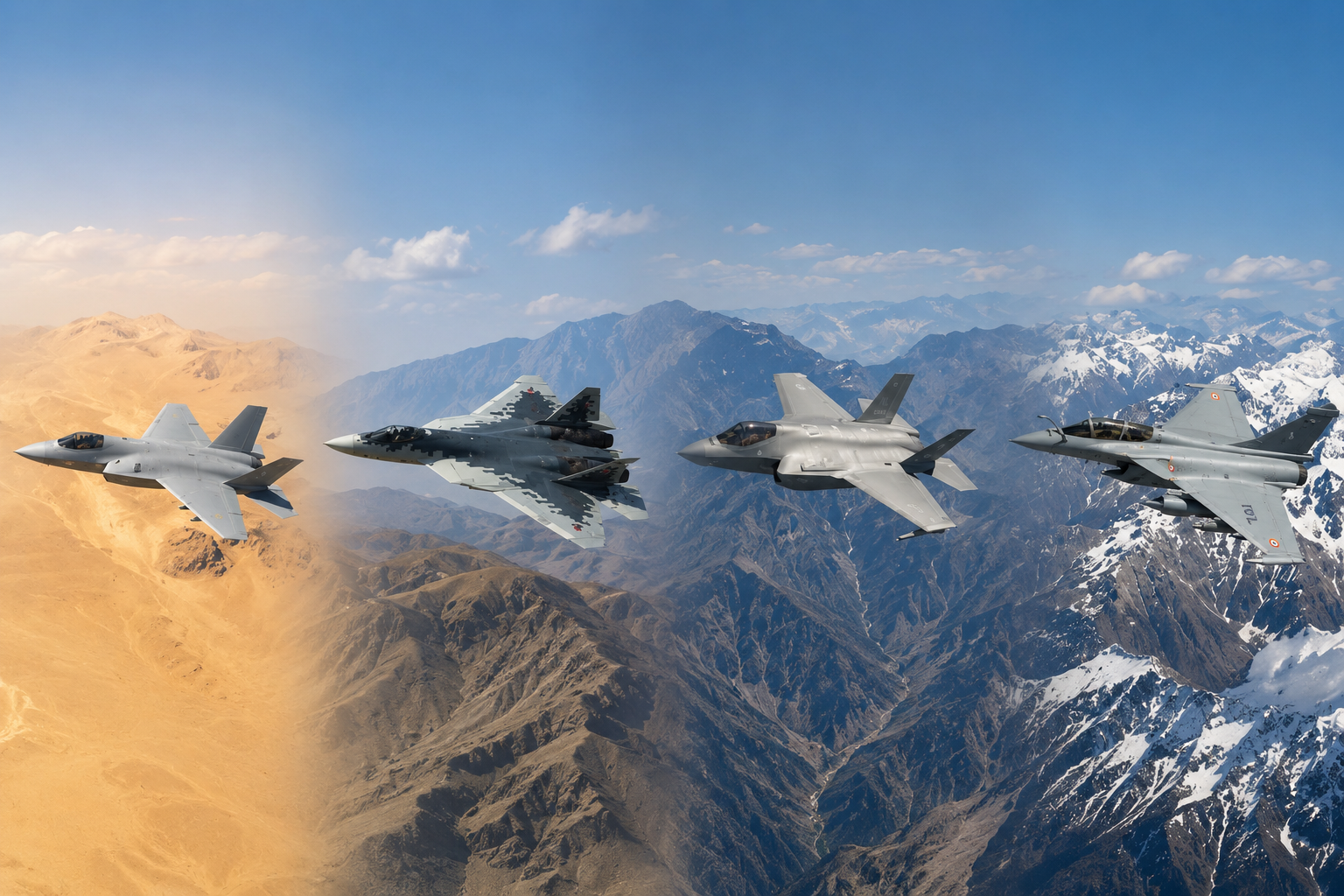
If negotiations fail, India could be compelled to examine alternative fighter platforms, each carrying its own strategic implications.
One option is the Lockheed Martin F-35 Lightning II, regarded as one of the world’s most advanced stealth aircraft. The F-35 offers superior stealth, network-centric warfare capabilities and interoperability with Western defence systems. However, concerns remain over operational restrictions, export controls and dependence on U.S. approval mechanisms.

Another possible alternative is Russia’s Sukhoi Su-57 fighter jet. The aircraft offers high manoeuvrability, larger payload capacity and compatibility with India’s existing Russian-origin defence infrastructure. Yet, procurement could expose India to geopolitical and sanctions-related risks, particularly under the U.S. CAATSA framework.
India’s long-term answer to its air power ambitions remains the indigenous Advanced Medium Combat Aircraft (AMCA) programme, approved in 2024. The project is aimed at delivering a homegrown stealth fighter, but the prototype is not expected before the next decade, making it unsuitable for addressing immediate operational gaps.
Meanwhile, India continues to rely heavily on its fleet of Sukhoi Su-30MKI aircraft, many of which are set to undergo upgrades under the ‘Super Sukhoi’ programme. Indigenous programmes such as the HAL Tejas Mk-1A and Tejas Mk-2 are also progressing slower than expected due to supply chain and engine-related delays.
The regional security environment has further intensified pressure on India’s military planners. China has rapidly expanded its fleet with stealth fighters such as the Chengdu J-20 and J-35, while Pakistan is also expected to strengthen its air capabilities in the coming years.
Defence experts believe India may ultimately adopt a hybrid strategy involving limited imports, accelerated indigenous development and upgrades to existing fighter fleets. However, the outcome of the ongoing Rafale negotiations is likely to play a decisive role in shaping India’s medium-term air combat roadmap and strategic autonomy goals.