Lucknow: The government of Uttar Pradesh is undertaking a large-scale ecological transformation through its ambitious ‘One District-One River’ campaign, aimed at reviving dried and nearly extinct rivers across the state. The initiative builds on the success of the earlier ‘One District-One Product’ model and focuses on restoring water bodies to strengthen rural livelihoods, agriculture, and environmental balance.

Under the leadership of Chief Minister Yogi Adityanath, the campaign is being implemented in coordination with the Namami Gange Programme and the Rural Water Supply Department. Officials say the initiative is not only reviving rivers but also reshaping rural ecosystems through community participation and sustainable water management.
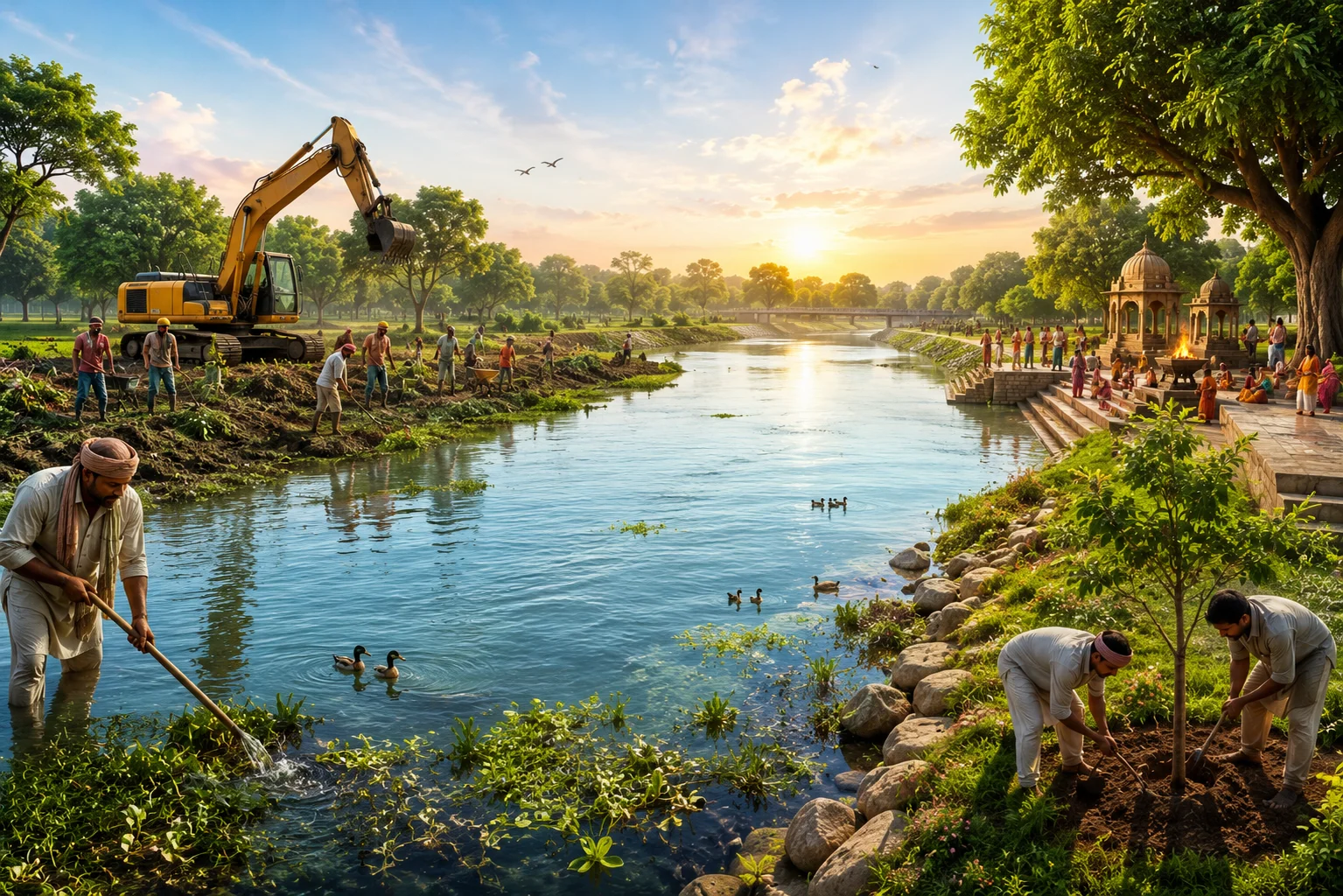
One of the major success stories comes from Pilibhit, where the Gomti River has been rejuvenated across a 47-kilometre stretch covering 16 gram panchayats. Efforts included desilting, canal widening, restoration of 23 ponds, and construction of ghats. The project has generated more than 153,000 human-days of employment and encouraged over 500 farmers to adopt natural farming practices. Evening aartis and yoga sessions at riverbanks have further restored the river’s cultural and spiritual identity.
In Bulandshahr, the Neem River was revived over a 29-kilometre stretch under the ‘VB-G Ram Ji’ initiative, with active participation from farmers and local communities. The effort received national recognition, including appreciation in Prime Minister Narendra Modi’s ‘Mann Ki Baat’ broadcast. Similarly, the Karwan and Kali rivers have been restored through desilting, plantation drives, and community-led conservation across multiple villages, improving irrigation and biodiversity.

In Sambhal, the Soth River—once reduced to a series of small drains—has been brought back to life through sustained public involvement. In Rampur, seasonal streams such as Revati, Nahal, and Neeli have been revived using rainwater harvesting structures, recharge pits, filtration chambers, and extensive plantation drives.
According to State Clean Ganga Mission Project Director Jogindr Singh, the revival of small rivers is delivering visible results across Uttar Pradesh. He noted that previously extinct water channels are now flowing again, helping in flood control, improving irrigation access, and supporting groundwater recharge. He added that integrated departmental coordination and community participation are central to the programme’s success.
The initiative has also created new livelihood opportunities in rural areas, while promoting natural farming and environmental awareness among farmers. Cultural traditions are witnessing a revival as well, with regular evening aartis and yoga sessions being organised along restored riverbanks.
Officials believe that the ‘One District-One River’ mission reflects the long-term vision of the state government to combine ecological restoration with rural development. With continued expansion, the programme is expected to transform water conservation practices and revive hundreds of local rivers and streams across Uttar Pradesh in the coming years.